
Best Roof Top Tent Camping Spots for Couples in Australia – 2026

Ever woken up above the treeline, morning light hitting red dirt, coffee in hand, and your partner right beside you? That’s exactly what rooftop tent camping in Australia delivers – no walls, no noise, just open sky. Australia is enormous, and honestly, that’s your biggest advantage. From the turquoise coastline of Western Australia to the ghost-quiet outback of South Australia, there’s a spot for every couple and every budget. Here are the best rooftop tent camping spots for couples in Australia right now:
- Cape Range National Park, WA – Best for coastal romance and snorkelling
- Flinders Ranges, SA – Best for outback stargazing and silence
- Wilsons Promontory, VIC – Best for rugged southern coastal escapes
- Noosa North Shore, QLD – Best for beach camping with total seclusion
- Cradle Mountain, TAS – Best for dramatic alpine scenery
- Jervis Bay, NSW – Best for 2WD-accessible couples camping
- Mungo National Park, NSW – Best for off-the-beaten-track solitude
- Alpine National Park, VIC – Best for cool-climate autumn getaways
Whether you own a fully kitted 4WD or a standard RAV4, there’s a destination that suits you. This guide covers top spots by region, the best time to visit, booking tips, and how to make the whole experience feel genuinely special not just functional.
What Makes a Roof Top Tent Spot Actually “Couple-Friendly”?
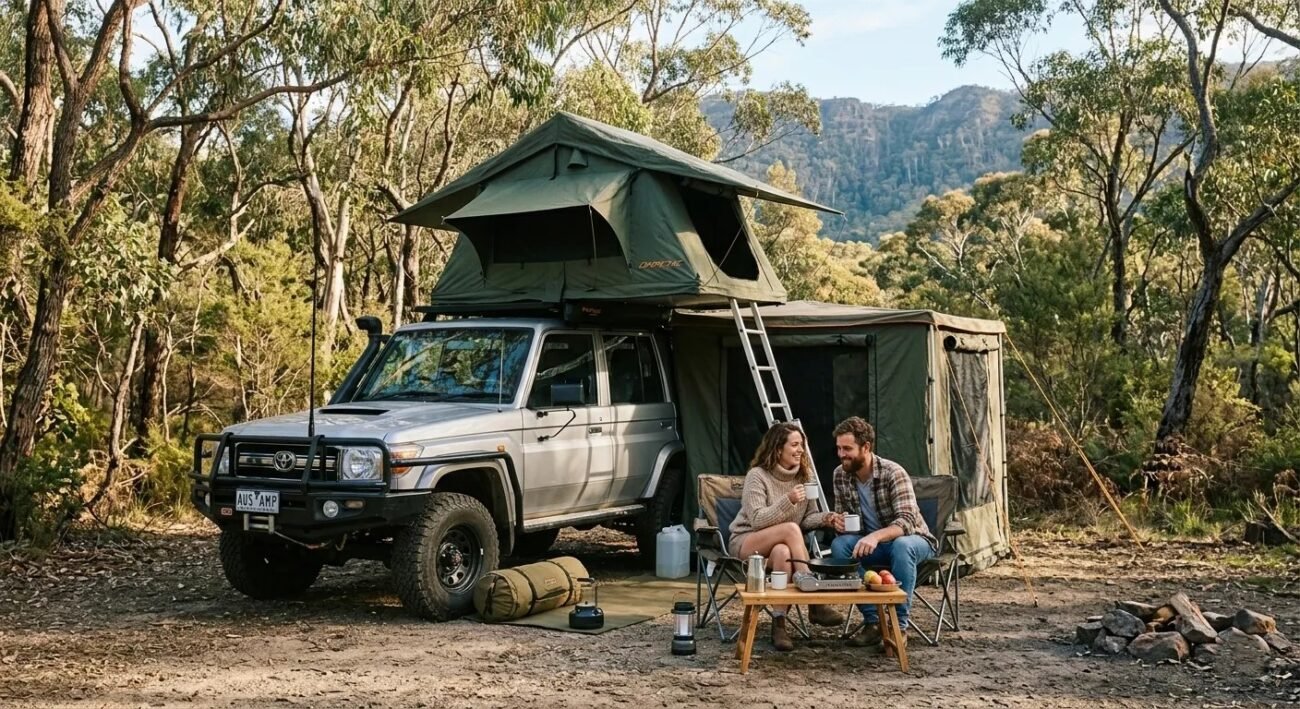
A couple-friendly RTT spot goes well beyond a good view. The details most first-timers overlook are what actually matter. I’ve camped with my partner across WA, Victoria, and Queensland. The best sites consistently had a few things in common. Privacy always comes first. Nothing ruins a trip faster than camping five metres from strangers. After that, it comes down to comfort, atmosphere, and a few overlooked practicalities.
Here is what actually makes a spot work for couples:
- Privacy from neighbours: Natural vegetation between sites matters more than any view. Always check site spacing before booking.
- Level ground: A tilted sleeping platform is genuinely uncomfortable for two adults. Never underestimate this one.
- Low ambient noise: Generator hum or busy facilities will ruin the atmosphere completely. Choose sites well away from communal areas.
- No height restrictions: RTTs add 600 to 900mm to your roofline. Some campgrounds have strict limits. Always confirm this ahead of arrival.
- East or west orientation: Parking your vehicle toward sunrise or sunset transforms ordinary mornings into something memorable.
- Fire or BBQ access: Cooking together is part of the whole experience. Check what each campground permits before leaving home.
Which Coastal Spots Are Best for Couples with a Roof Top Tent?
Australia’s coastline offers some of the most spectacular RTT camping on the planet. The trick for couples is knowing which spots deliver genuine seclusion, not just scenery. I’ve pitched at crowded coastal campgrounds that looked incredible on Instagram but felt like a caravan park by noon. The spots below are genuinely different. Each one offers real atmosphere, accessible enough to reach without a full expedition rig, and beautiful enough to make the drive completely worthwhile.
| Location | State | Vehicle Access | Best Season | Why Couples Love It |
|---|---|---|---|---|
| Cape Range National Park | WA | 2WD to campground | April to October | Ningaloo Reef snorkelling, turquoise water, private beach access |
| Noosa North Shore | QLD | 4WD on beach section | May to September | Total seclusion, no day crowds after dark, beach fires permitted |
| Wilsons Promontory | VIC | 2WD to main sites | October to April | Dramatic coastline, abundant wildlife, iconic granite headlands |
| Freycinet National Park | TAS | 2WD | November to March | Wineglass Bay views, pink granite cliffs, genuinely peaceful |
| Jervis Bay | NSW | 2WD | Year-round | Dolphins, world-class white sand, easy drive from Sydney |
Which Outback Spots Are Best for Couples Who Want Real Silence?
The outback is where rooftop tent camping truly earns its reputation. Out there, you get a silence that city life simply never offers. My partner and I spent three nights at Mungo National Park and genuinely heard nothing but wind. No generators, no traffic, no voices from neighbouring sites. That silence does something real to your relationship. The spots below offer genuine remoteness without requiring a fully built overlanding rig. Plan ahead, carry extra water, and you are completely set.
| Location | State | Vehicle Access | Best Season | Signature Experience |
|---|---|---|---|---|
| Flinders Ranges (Ikara) | SA | 2WD to Wilpena Pound | April to October | World-class stargazing, ancient geology, total outback silence |
| Mungo National Park | NSW | 2WD on main roads | April to September | UNESCO landscapes, zero light pollution, genuine solitude |
| Carnarvon Gorge | QLD | 2WD | April to October | Towering sandstone walls, Aboriginal rock art, peaceful creek walks |
| Gibb River Road | WA | 4WD recommended | May to September | Station stays, dramatic gorges, true outback immersion |
| Sturt National Park | NSW | 4WD tracks | May to August | Red sand plains, dingoes at dusk, complete remoteness |
Which Mountain and Alpine Areas Are Worth the Drive?
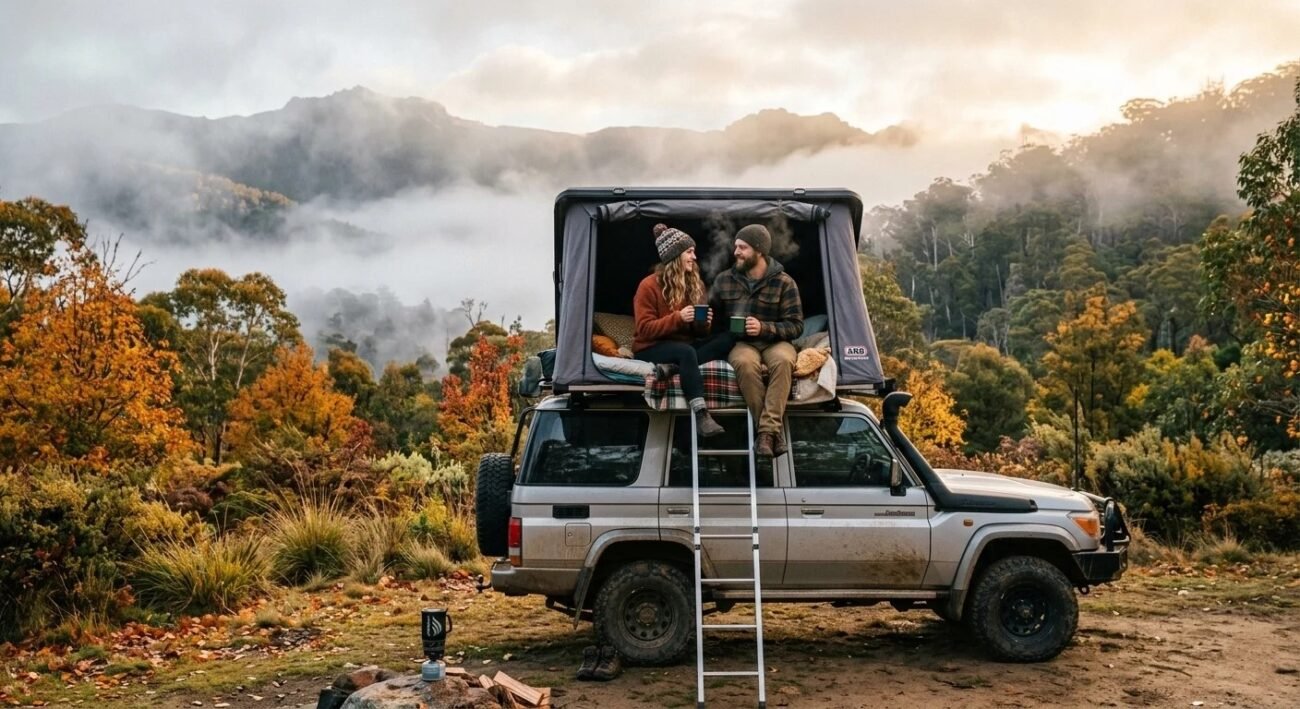
Alpine RTT camping feels completely different from coastal or outback trips. The mornings are colder, the air is cleaner, and the autumn colours across Victoria and NSW are something every couple should experience once.
Cold temperatures actually make sharing a rooftop tent more comfortable. A 1400mm wide mattress paired with sleeping bags rated to minus 5 degrees Celsius covers most Australian alpine conditions. The challenge is simply picking which area to visit first.
Here are the alpine and mountain areas genuinely worth the drive:
- Alpine National Park, VIC: Autumn is the standout season. Colours peak through March and April. Some tracks require a 4WD.
- Cradle Mountain, TAS: Permits are required for camping. Weather shifts fast here, so pack waterproofs regardless of the forecast.
- New England Tablelands, NSW: Significantly underrated and far less crowded than the Victorian alps. Mostly 2WD accessible throughout.
- Kosciuszko National Park, NSW: Summer wildflowers make this area extraordinary for couples. Avoid winter unless fully equipped for snow camping.
- Barrington Tops, NSW: Rainforest meets alpine plateau here. Misty mornings, cool temperatures, and genuine privacy define this region perfectly.
What Are the Best Free RTT Camping Spots for Couples on a Budget?
Free camping with an RTT is one of the genuinely underrated experiences in Australian travel. Most content online pushes you toward paid national park campgrounds exclusively. But some of the most memorable nights I’ve had cost absolutely nothing.
The Murray River corridor alone offers hundreds of kilometres of free riverside camping with no crowds, no bookings, and no facilities nearby. The catch is you must be self-sufficient. Water, waste management, and fire safety become entirely your own responsibility out there.
Here are the best free RTT camping options for budget-conscious couples:
- Murray River corridor, NSW and VIC: Hundreds of free riverside sites spread across both states. Peaceful, flat ground, perfect for couples.
- Gibb River Road stations, WA: Station campgrounds charge minimal fees or nothing at all. Genuine outback atmosphere without the national park price tag.
- Murchison River area, WA: Remote gorge country with solid free bush camping options scattered throughout the surrounding area.
- Hay Plains, NSW: Not conventionally scenic but absolutely silent and completely free. Underrated for couples chasing real solitude.
- Apps worth using: WikiCamps Australia and GeoExplorer are the most reliable tools for locating verified free sites across the country.
Which Spots Are Accessible Without a 4WD?
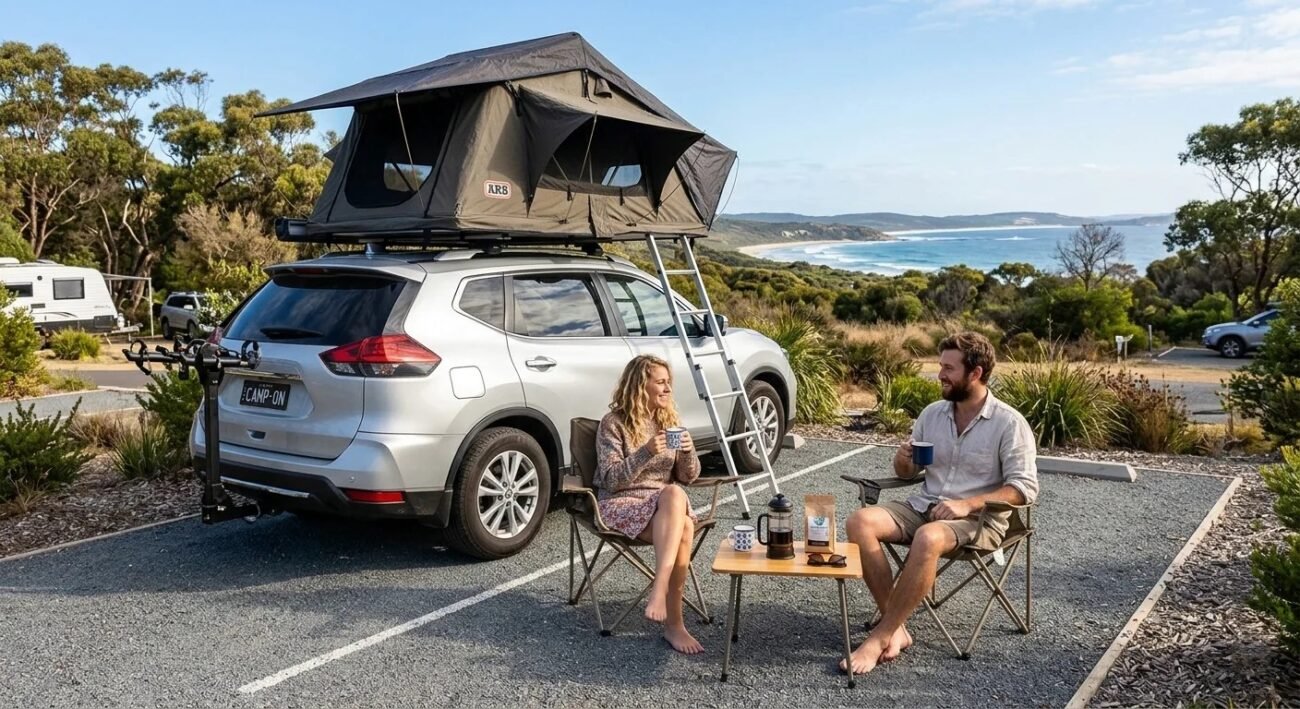
A huge misconception in the RTT community is that you need a 4WD to reach great camping. That simply is not true. I ran a soft-shell RTT on a Toyota RAV4 for two years straight. I accessed genuinely brilliant locations throughout that time.
The key is understanding what “2WD accessible” actually means on the ground. It means sealed or well-maintained gravel roads. It does not mean corrugated dirt tracks that destroy tyres and test relationships at the same time. Every spot below suits any modern SUV or dual-cab ute without modifications.
Here are solid RTT spots accessible without a 4WD:
- Jervis Bay, NSW: Sealed roads the entire way in. Stunning white sand beaches and regular dolphin sightings reward every kilometre.
- Freycinet National Park, TAS: Well-maintained access road throughout. Wineglass Bay lookout is a short walk from the main campground.
- Great Ocean Road pull-offs, VIC: Multiple 2WD friendly sites along the full route. Ocean views without needing any off-road capability.
- Wilpena Pound, SA: The resort campground is completely 2WD accessible. Flinders Ranges surrounds you on every side.
- Noosa North Shore, QLD: The ferry crossing itself is 2WD friendly. You only need 4WD if driving directly on the beach section.
When Is the Best Time to Visit Each Region?
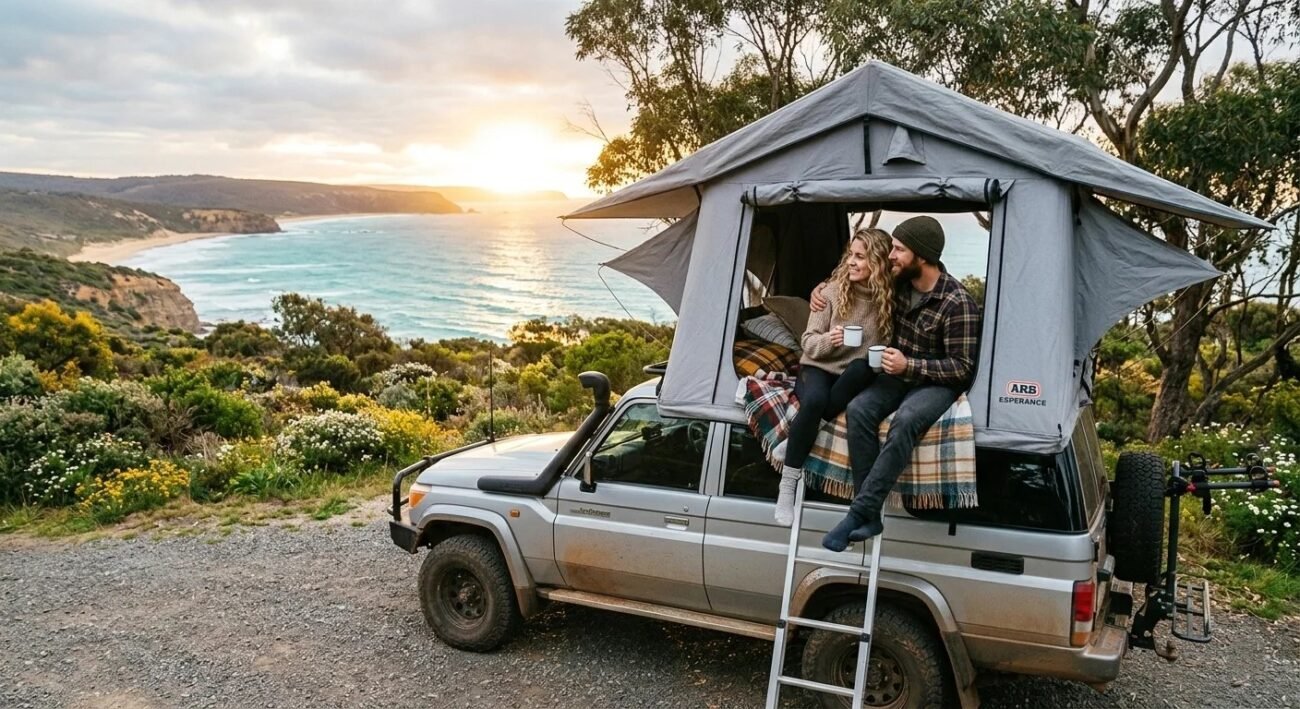
Timing makes or breaks an RTT trip in Australia. The country covers multiple climate zones. What works perfectly in one region is genuinely miserable in another. Northern Australia, including the Kimberley, Kakadu, and tropical Queensland, is strictly a May to October destination. The wet season brings flooding, extreme humidity, and closed roads.
Southern states like Victoria, New South Wales, and South Australia suit year-round travel with some adjustments. Autumn between March and May is the standout season for alpine and inland areas. Spring works brilliantly for coastal destinations. Western Australia’s Ningaloo coast and Cape Range National Park are ideal April through October. Summer temperatures regularly exceed 40 degrees Celsius there.
Canvas and hard shell tents absorb and hold heat at those temperatures. Tasmania is best November through March. Winter brings cold, wet, and unpredictable conditions that demand proper cold-weather gear. Shoulder seasons across every region give you better availability, lower campsite competition, and noticeably more comfortable sleeping temperatures throughout.
Do You Need to Book Ahead, and How?
Booking ahead is absolutely essential for popular national park campgrounds in Australia. Many first-time RTT couples get caught out by this completely. Sites at Cape Range National Park and Wilsons Promontory fill six months ahead of peak season. Each state runs its own separate booking platform. New South Wales uses the NPWS online portal.
Victoria operates through the Parks Victoria website. Western Australia uses the CALM WA system via the Department of Biodiversity, Conservation and Attractions. Queensland manages bookings through the QPWS online platform. South Australia uses SA Parks directly. Free camping spots outside national parks generally need no booking at all.
That flexibility suits couples who prefer a spontaneous travel style naturally. If you miss the main booking window, check for cancellations regularly. Cancellations happen frequently in the week before long weekends. For walk-in only sites, arriving before midday on weekdays improves your chances significantly. Always have a backup campground identified before you leave home. Running out of options at 5pm on a Friday is genuinely stressful.
What Should Couples Pack for a Roof Top Tent Trip?
Packing for an RTT trip as a couple is different from solo camping. Two people means two comfort needs to manage simultaneously. Start with sleep quality first. Bring real pillows from home rather than inflatable versions. A sleeping bag rated to minus 5 degrees Celsius covers most Australian camping conditions comfortably.
A compact AeroPress and small gas burner adds almost no weight but transforms every morning completely. Privacy accessories matter more than most couples anticipate before their first trip. A side-zip awning changes how exposed your campsite feels to nearby neighbours. An outdoor rug, two quality camp chairs, and a small folding table creates a proper lounge space beneath your vehicle.
For power, a 100Ah lithium battery paired with a 12V outlet runs lights, a fan, and phone charging without issue overnight. Warm-white LED fairy lights inside the tent cost almost nothing and immediately improve the atmosphere noticeably. Pack a headlamp each. Sharing one creates more friction than couples ever expect before leaving.
How Do You Make a Roof Top Tent Feel Romantic, Not Just Functional?
The tent is just the structure. What you build around it creates the actual experience. Small intentional details separate a memorable couple’s trip from a functional overnight stop.
- Park facing sunrise or sunset: Position your vehicle deliberately before dark. The view from an open RTT defines the entire mood of the site.
- Bring real pillows and quality linen: Comfort directly affects how relaxed and present you both feel throughout the trip.
- Arrive with two hours of daylight remaining: Setting up in the dark is stressful and removes the calm from the whole experience.
- Use warm LED fairy lights inside the tent: A 12V warm-white string costs almost nothing. The atmosphere shift is immediate and genuinely noticeable.
- Cook a proper meal together: A two-burner camp stove and a simple pasta dish beats a protein bar every single time.
- Download Stellarium before leaving home: Knowing exactly what stars you are looking at transforms stargazing from passive to genuinely engaging together.
- Create a ground-level lounge beneath your awning: An outdoor rug, two chairs, and a small lantern makes the space feel like your own private outdoor room.
- Go phone-free after sunset: Simple advice. Most couples still do not actually follow through on this one.
My wife is always happy when I cook a proper meal for her, so I prefer Cook a meal together.
Which RTT Setup Works Best for Couples Specifically?
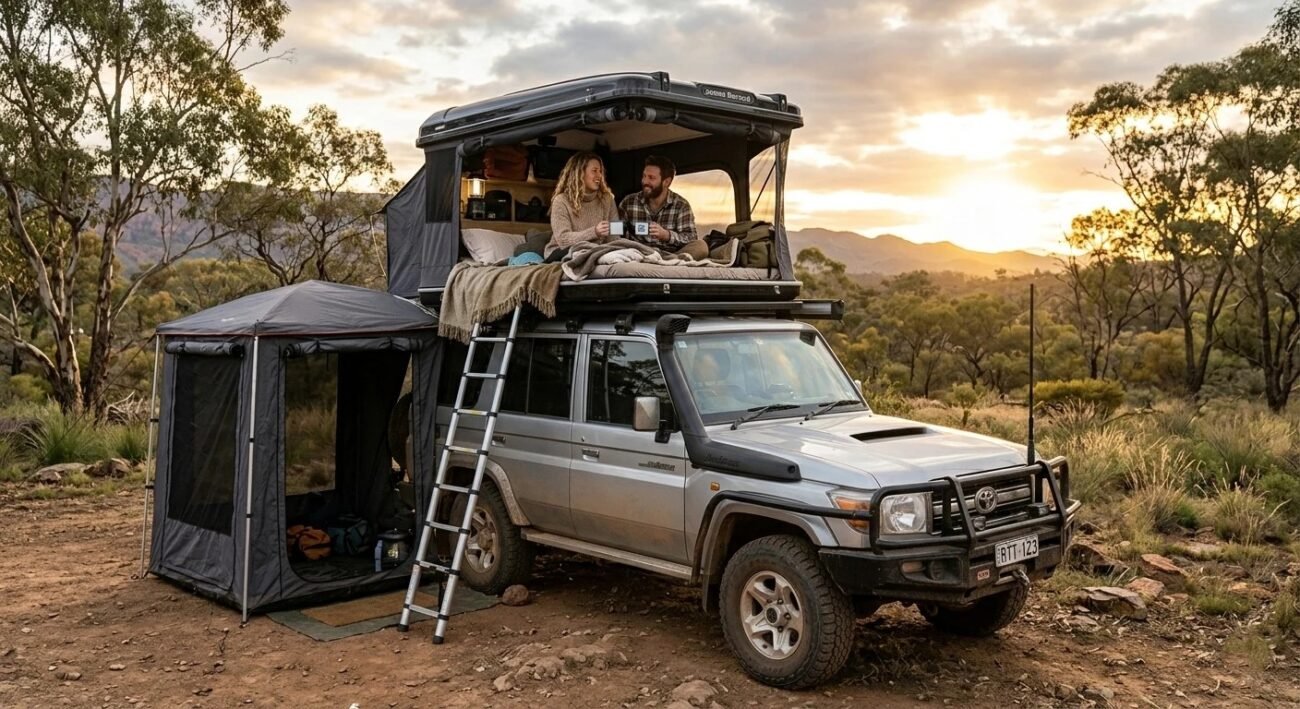
Hard shell tents genuinely suit couples better than soft shells for regular couple camping. Setup is faster, weather protection is stronger, and the sleeping area feels noticeably more private. Here are five RTT setups worth considering in 2026:
- Rigdup 1.8m Hard Shell Roof Top Tent ($3,400): The 210cm x 180cm sleeping area fits two adults properly without feeling cramped. The 40mm memory foam mattress is noticeably more comfortable than standard foam found in most competitors. An aluminium honeycomb base adds insulation and structural strength in one. Integrated solar panel, 12V Anderson plug, YKK zippers, 260cm ladder, and crossbars are all included from the factory. Anti-condensation matting handles Australian overnight temperature swings reliably. Backed by a one-year Australian warranty.
- ARB Simpson III: Trusted Australian-built hard shell. Suits most roof rack systems. Proven weather resistance across all Australian conditions.
- iKamper Skycamp 2.0: Generous interior space with a fast hydraulic opening system. Suits couples wanting extra headroom and a premium feel.
- Darche Panorama 1400: A solid budget-friendly soft shell entry point. Good build quality for first-time RTT couples testing the lifestyle.
- Tentco Senior Roof Top Tent: Durable canvas construction with excellent ventilation. Well suited to warmer Australian nights where airflow matters most.
Final Thoughts
Australia genuinely has some of the most breathtaking rooftop tent camping locations in the world. The best spots for couples sit along the Ningaloo coast in WA, the silent outback of South Australia, and the dramatic alpine country of Victoria and Tasmania. Free camping along the Murray River corridor and accessible sites at Jervis Bay prove you do not need a big budget or a 4WD to have an unforgettable trip together.
The right season matters just as much as the right location. Booking ahead for national park campgrounds is non-negotiable during peak periods. Packing with intention, positioning your vehicle for the best view, and going phone-free after sunset are the small choices that actually make the experience memorable.
If you are planning your first RTT couple’s trip or looking for a new destination to add to your list, every spot covered in this guide delivers something genuinely worth the drive. Bookmark this page, share it with your partner, and start planning before your favourite spot books out. Explore top Camping Destinations & Adventures across Australia by visiting this guide.
FAQs
Most national park campgrounds in Australia allow rooftop tents. However, some sites have vehicle height restrictions between 2.2 and 2.4 metres. Always check with the relevant state parks authority before booking. Calling ahead directly saves you a frustrating surprise on arrival.
National park campground fees typically range from $15 to $55 per night depending on the state and site facilities. Free bush camping is available on much of Australia’s crown land and road reserves. Apps like WikiCamps Australia help you locate verified free sites quickly and easily.
Hard shell RTTs manage heat better than soft shells in summer due to their sealed construction and reflective surface. Parking under shade is the single most effective strategy. A 12V fan and a well-ventilated inner greatly improves sleeping comfort during warm Australian overnight temperatures.
Yes, when properly mounted on a rated roof rack. Most quality RTTs handle winds up to 80 kilometres per hour without issue. Parking with your vehicle’s nose into the prevailing wind direction reduces movement and flapping significantly. Avoid exposed cliff-top sites during forecast storm conditions.
Your roof rack should carry a dynamic load rating of at least 150 kilograms. Static load ratings are higher but dynamic ratings apply while driving. Always check both your rack rating and your vehicle’s roof load limit. Most quality RTTs for couples weigh between 45 and 70 kilograms packed.