
What to Pack for an Aussie 4WD Trip – RTT Packing Checklist

You’ve bolted the rooftop tent on, the 4WD’s fuelled up, and you’re ready to hit the track. But then it hits you — have I actually packed everything? Forgetting the right gear in remote Australia isn’t just inconvenient; it can be genuinely dangerous.
A solid roof top tent packing checklist takes the guesswork out completely. It means you roll out of the driveway confident, not scrambling at the servo 20 minutes down the road. To cover all your bases, here’s what you’ll need across the key categories:
- Tent & Sleep Gear – sleeping bag, pillow, liner, condensation mat
- Camp Kitchen – stove, cookware, fridge or icebox, washing kit
- Food & Water – jerry cans, purification, heat-proof pantry staples
- Clothing – layers, UV protection, wet weather gear, sturdy footwear
- Recovery Gear – snatch strap, shackles, traction boards, shovel
- Safety & Emergency – first aid kit, PLB, fire extinguisher, snake kit
- Tools & Spares – tyre repair, compressor, basic tool kit, spare fluids
- Power & Lighting – headtorch, lantern, solar or dual battery, charging gear
This guide walks you through every category from what goes in the tent to what keeps you safe when you’re hours from the nearest town.
What Does a Complete RTT 4WD Packing Checklist Actually Look Like?
Whether it’s your first trip or your fiftieth, a written checklist stops the “I’m sure I packed it” moment from turning into a real problem. Here’s everything broken down, with why it matters and how urgent it is to have.
| Item | Why You Need It | Priority |
|---|---|---|
| Rooftop Tent (RTT) | Main sleeping shelter mounted on your vehicle | Essential |
| Roof Rack / Mounting System | Supports and safely mounts the RTT | Essential |
| Ladder | Allows safe access to the rooftop tent | Essential |
| Mattress / Bedding | Comfortable sleeping setup for overnight trips | Essential |
| Sleeping Bag / Blanket | Keeps you warm during cold nights | Essential |
| Camping Pillow | Improves sleep comfort on longer trips | Medium |
| Awning | Provides shade and rain protection beside your vehicle | High |
| Folding Camp Chairs | Comfortable seating at camp | Medium |
| Folding Table | Cooking, eating, and gear organization | Medium |
| Portable Fridge / Cooler | Keeps food and drinks fresh | High |
| Stove / Portable Cooker | Allows you to cook meals anywhere | Essential |
| Gas Canister / Fuel Bottle | Fuel source for cooking | Essential |
| Cooking Kit (pots, pan, utensils) | Required for preparing meals | Essential |
| Water Storage (20–40L) | Drinking, cooking, and cleaning water | Essential |
| Extra Fuel Can / Jerry Can | Extends travel range in remote areas | High |
| Recovery Tracks | Helps free your vehicle from sand or mud | Essential |
| Recovery Kit (snatch strap, shackles) | Vehicle recovery during off-road situations | Essential |
| Air Compressor | Adjust tire pressure for sand or rough tracks | High |
| Tire Repair Kit | Fix punctures in remote locations | Essential |
| First Aid Kit | Handles injuries or emergencies | Essential |
| Headlamp / Flashlight | Lighting for nighttime tasks | Essential |
| LED Camp Light | Illuminates your campsite after dark | High |
| Power Setup (12V battery / solar) | Powers fridge, lights, and devices | High |
| Navigation (GPS / offline maps) | Helps navigate remote areas without signal | Essential |
| Communication Device (UHF / satellite) | Emergency communication where there is no phone signal | High |
| Trash Bags | Keeps campsite clean and organized | Medium |
✅ Tip: Many experienced overlanders organize gear into 4 zones:
- Sleeping Setup
- Cooking & Food
- Recovery & Safety
- Power & Navigation
What Do You Need Inside the Roof Top Tent Itself?
Most people think the RTT does all the work on its own. It doesn’t. The tent gives you the shell, but the inside setup decides how well you actually sleep. Australian nights drop sharply, even in summer. Getting this right matters more than most first-timers expect.
| Item | Why You Need It | Priority |
|---|---|---|
| RTT Mattress | Base sleeping comfort and insulation from the tent floor | Essential |
| Sleeping Bag | Keeps body warm during cold outback nights | Essential |
| Lightweight Blanket | Extra warmth or comfort in mild weather | Medium |
| Camping Pillow | Improves sleep quality during multi day trips | Medium |
| Fitted Mattress Sheet | Protects mattress from dust, sweat, and sand | High |
| Small Storage Organiser | Keeps torch, phone, and gear easy to reach | Medium |
| Headlamp | Hands free light for climbing ladder or night tasks | Essential |
| Condensation Mat | Reduces moisture build up under the mattress | High |
| Window Mesh Screens | Stops insects entering while allowing airflow | Essential |
What Camp Kitchen Gear Should You Pack?
The camp kitchen is where most people either over-pack or seriously under-pack. I’ve seen blokes rock up with a full restaurant kit and no room left in the vehicle. I’ve also seen people forget a can opener for a trip built around tinned food. The goal is a lean, functional kitchen that handles real cooking without eating your storage space.
| Item | Why You Need It | Priority |
|---|---|---|
| Portable Gas Stove | Reliable cooking system for any campsite | Essential |
| Gas Canisters | Fuel supply for stove operation | Essential |
| Cooking Pot | Boiling water, pasta, and simple meals | Essential |
| Frying Pan | Cooking meat, eggs, and vegetables | High |
| Cooking Utensils | Spatula, spoon, and tongs for food handling | Essential |
| Folding Camp Table | Clean surface for food prep and cooking | High |
| Cutting Board | Safe surface for preparing food | Essential |
| Sharp Kitchen Knife | Essential tool for meal preparation | Essential |
| Dishwashing Kit | Cleaning plates and cookware after meals | High |
| LED Camp Light | Provides safe cooking light after sunset | High |
What Food and Water Do You Need for Remote Aussie Tracks?
Water is the one thing that genuinely keeps you alive out there. Most people plan their food carefully but underestimate their water needs by a significant margin. In Australian heat, an adult doing moderate activity needs at least four litres per day. Plan for more, not less. Food spoilage in a warm fridge or a leaky icebox causes more trip disasters than people admit.
| Item | Why You Need It | Priority |
|---|---|---|
| Drinking Water Storage | Hydration for travel, cooking, and cleaning | Essential |
| Extra Water Reserve | Backup supply for emergencies or delays | Essential |
| Portable Fridge | Keeps fresh food safe in hot weather | High |
| Dry Food Supplies | Rice, pasta, oats, and long shelf meals | Essential |
| Tinned Food | Reliable meals that store for long periods | High |
| Fresh Meat or Vegetables | Adds nutrition and meal variety | Medium |
| Energy Snacks | Quick calories during long driving days | Medium |
| Cooking Oil and Spices | Improves flavour and cooking quality | Medium |
| Coffee or Tea | Boosts morale during early camp mornings | Medium |
What Clothing Should You Pack for an Aussie 4WD Trip?
Clothing is where people either overpack entirely or forget the basics that matter most. The trick in Australia is packing for two completely different climates in the same day. Forty degrees by midday and nine degrees by midnight is completely normal in the outback. Every layer needs to earn its place in your kit.
| Item | Why You Need It | Priority |
|---|---|---|
| Lightweight Shirts | Breathable clothing for hot daytime travel | Essential |
| Long Sleeve Shirt | Sun protection during extended outdoor time | Essential |
| Warm Jacket or Fleece | Insulation for cold evenings and mornings | Essential |
| Waterproof Jacket | Protection during unexpected rainstorms | High |
| Durable Pants | Protection from scrub, insects, and rough terrain | Essential |
| Comfortable Shorts | Ideal for relaxed camp conditions | Medium |
| Wide Brim Hat | Critical protection from harsh Australian sun | Essential |
| Hiking Boots | Foot protection when exploring or collecting firewood | Essential |
| Warm Socks | Prevent cold feet during overnight temperatures | High |
What Recovery Gear Do You Need for Australian Bush Tracks?
Recovery gear is the one category where cutting corners gets people seriously hurt or stranded. I’ve seen brand-new snatch straps with no rated shackles attached to them, which is genuinely dangerous. Every piece of recovery gear works as a system. One weak link fails the whole setup under load. Buy rated gear, learn how to use it before you need it, and never skip the dampener.
| Item | Why You Need It | Priority |
|---|---|---|
| Recovery Tracks | Helps vehicle escape sand, mud, or loose terrain | Essential |
| Snatch Strap | Allows safe recovery between two vehicles | Essential |
| Rated Shackles | Secure connection points for recovery straps | Essential |
| Air Compressor | Adjusts tyre pressure for sand or rough tracks | Essential |
| Tyre Deflator | Quickly lowers tyre pressure for traction | High |
| Tyre Repair Kit | Repairs punctures in remote areas | Essential |
| Shovel | Digging tyres out of sand or mud | High |
| Work Gloves | Protects hands during recovery operations | Medium |
| Tow Hitch Recovery Point | Strong attachment point for recovery gear | Essential |
What Safety and Emergency Gear Do You Need in Remote Australia?
When you’re out on remote Aussie tracks, help can be hours away. Safety gear keeps you and your crew protected. I always pack a first aid kit, reliable comms, and emergency tools. Simple gear can make a huge difference in a real emergency.
| Item | Why You Need It | Priority |
|---|---|---|
| First Aid Kit | Treats injuries when medical help is far away | Essential |
| Satellite Communicator | Sends emergency messages without phone signal | Essential |
| UHF Radio | Communicates with nearby vehicles and convoys | High |
| Personal Locator Beacon | Emergency distress signal for rescue services | Essential |
| Fire Extinguisher | Controls vehicle or camp fire emergencies | Essential |
| Emergency Blanket | Retains body heat during cold or shock | High |
| Whistle or Signal Mirror | Helps rescuers locate you quickly | Medium |
| Snake Bite Bandage | Critical treatment for Australian snake bites | Essential |
| Emergency Contact List | Important numbers stored in waterproof form | Medium |
What Tools and Spare Parts Should You Carry?
Remote tracks can test any 4WD. I always carry a compact tool kit and key spares. Most problems are easy fixes if you’re prepared. Tyre repairs, belts, and hoses are the most common issues on Aussie tracks.
| Item | Why You Need It | Priority |
|---|---|---|
| Basic Tool Kit | Handles general repairs and adjustments | Essential |
| Spare Fuses | Replaces blown electrical protection quickly | Essential |
| Spare Drive Belts | Prevents engine failure from broken belts | High |
| Spare Radiator Hose | Fixes cooling system leaks | High |
| Electrical Tape | Temporary fix for wiring problems | Medium |
| Multi Tool | Quick solution for small mechanical jobs | Medium |
| Tyre Repair Kit | Repairs punctures on remote roads | Essential |
| Spare Engine Oil | Replaces lost oil during long trips | High |
| Hose Clamps | Repairs damaged hoses quickly | Medium |
What Lighting and Power Gear Do You Need?
Power and lighting make life easier at remote camps. I keep a dual battery, solar panels, and bright LED lights. It keeps fridges running and makes night tasks safe. Good lighting is essential after sundown.
| Item | Why You Need It | Priority |
|---|---|---|
| Dual Battery System | Powers gear without draining starter battery | Essential |
| Portable Solar Panel | Recharges batteries during extended trips | High |
| LED Camp Light | Bright lighting for campsite activities | Essential |
| Headlamp | Hands free lighting for night tasks | Essential |
| Power Distribution Box | Safely manages electrical connections | High |
| USB Charging Ports | Charges phones and small electronics | Medium |
| Battery Monitor | Tracks power usage and battery health | High |
| Extension Power Cables | Connects devices around camp easily | Medium |
| Spare Torch | Backup light if main system fails | Essential |
How Do You Pack a 4WD Efficiently With All This Gear?
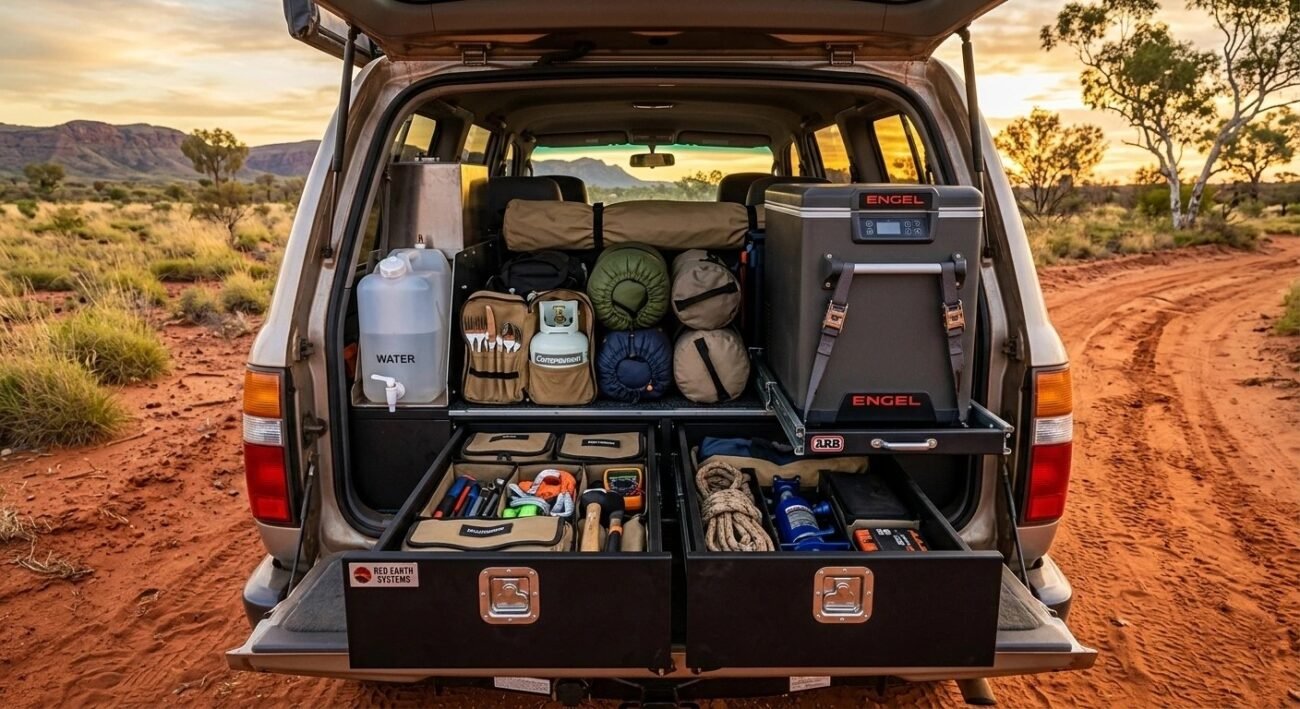
Loading a 4WD badly shows up immediately on the track. The vehicle handles poorly, gear shifts around, and every stop becomes a dig-through exercise. Weight distribution is the foundation of smart packing. Heavy items go low and centred, directly over the axles where possible.
Your fridge, water storage, and tool kit should sit as low as possible inside the vehicle. A drawer system with a fridge slide makes this genuinely straightforward to manage. Gear you need every day goes into first-access positions. Your recovery kit, first aid bag, and fire extinguisher must always be reachable quickly and without unpacking anything.
The roof rack carries lightweight but bulky items only. Sleeping gear, camp chairs, and annexe poles work well up top. Never load heavy recovery gear onto the roof. It raises your centre of gravity and directly affects your handling on rough corrugated tracks. Pack methodically before every trip. It protects your gear, saves time at camp, and keeps the vehicle safe and predictable on outback roads.
What Do First-Timers Always Forget on Their First RTT Trip?
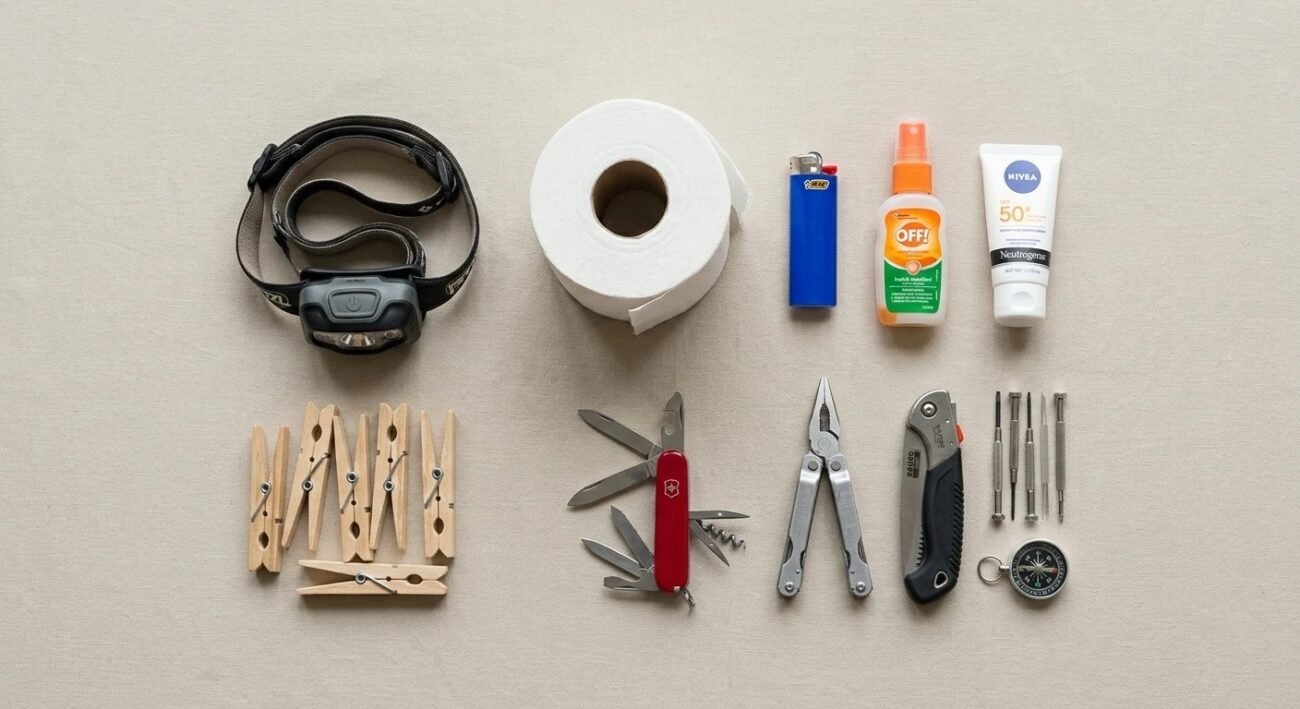
First trips are exciting and genuinely chaotic at the same time. Almost every first-timer forgets at least three things from this list. I personally forgot a can opener on my very first overnight trip. It sounds ridiculous until you are standing there holding a tin of baked beans with nothing to open it.
I also skipped packing clothes pegs, thinking I would not need them. By day two, wet clothes had nowhere to dry properly. The small stuff causes the biggest headaches out in the bush. Here is what consistently gets left behind:
- Can opener
- Toilet paper and a small trowel for bush toileting
- Headtorch with fresh backup batteries
- Clothes pegs and a small washing line
- Insect repellent, especially for northern Queensland and the Top End
- Sunscreen in quantities that actually last the full trip
- Bin liners and rubbish bags
- Matches or a lighter as a backup to the stove ignitor
- Cooking oil and basic condiments
- A written emergency contact list
- Boot tray or doormat for the tent ladder
- Wet weather gear, even when the forecast looks clear
Does Your Packing List Change for Different Aussie Regions or Seasons?
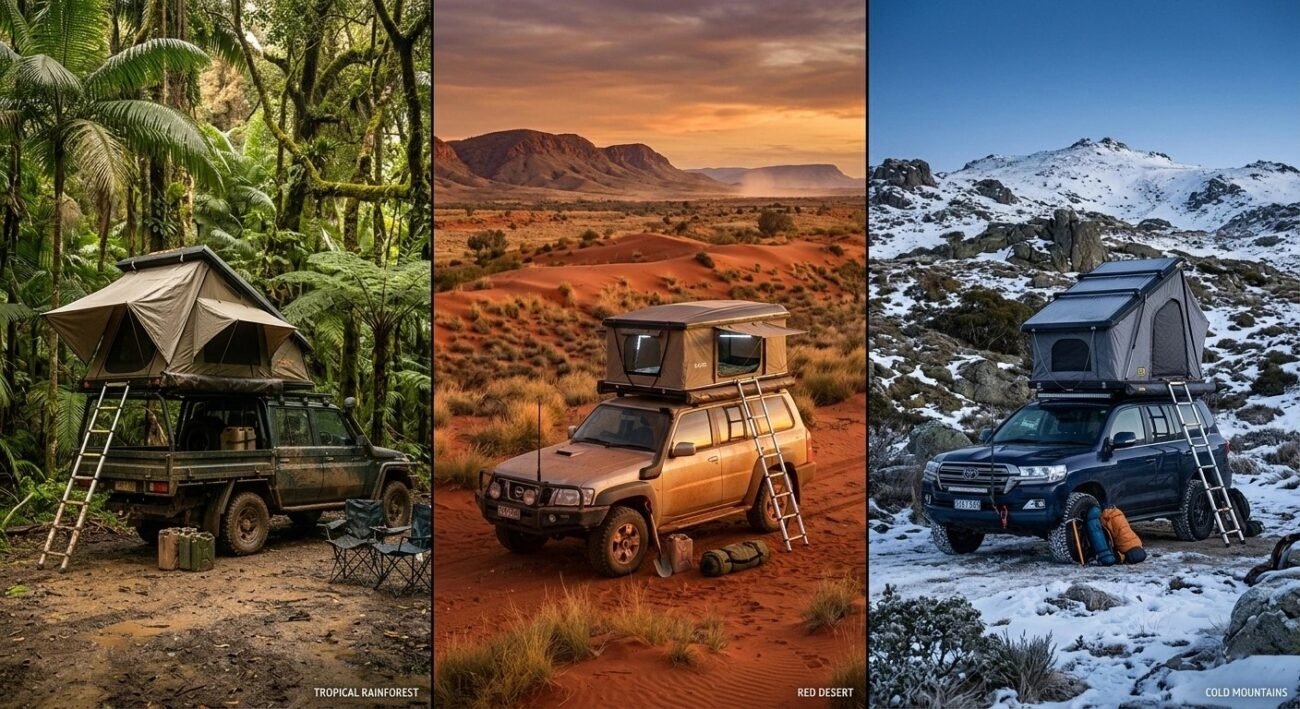
Australia is not one climate. It is roughly six different climates packed into a single country. I learnt this properly on a Kimberley trip during the tail end of wet season. My standard kit was completely wrong for the conditions. What works in the Victorian high country in July will fail you badly in tropical Queensland in February.
The wet tropics demand serious waterproofing, heavy insect protection, and dry bags for every electronic item you carry. The outback in summer needs double your water capacity and sun protection well beyond basic sunscreen. The Red Centre in winter regularly drops below five degrees overnight. A three-season sleeping bag that handles summer coastal trips will not cut it in the desert in July.
Coastal and high country winter trips need proper thermal layers, waterproof everything, and a sleeping bag rated to at least minus five degrees. Regional research before every trip is genuinely non-negotiable. It is the single biggest difference between a comfortable trip and a trip you regret within the first night.
Final Thoughts
Pack Smart, Drive Confident, Enjoy Every Camp
A rooftop tent trip through Australia is one of the best experiences you can have. But the quality of that experience comes down directly to how well you prepared before leaving the driveway. Getting the sleep setup right means you actually rest. Packing a proper camp kitchen means you eat well, not just survive. Carrying the right recovery gear means a bog stays a minor inconvenience instead of a genuine emergency.
I always do one full run-through of my checklist the night before departure. Not on the morning of, when the excitement kicks in and things get missed. That one habit has saved me from forgetting something important more times than I can count.
The checklist above covers everything from the tent itself to tools, food, water, clothing, and emergency gear. Adapt it to your specific trip, your region, and the season you are travelling in. Australia is a big, unforgiving, and brilliantly rewarding place to explore. Respect the conditions, pack the right gear, and it will give you experiences worth talking about for years.
Print the checklist, tick it off properly, and go have an incredible trip. Explore our guide to see how your 4WD or SUV works with rooftop tents.
FAQs
Most quality rooftop tents carry between 200kg and 300kg of static load. That covers the tent, two adults, and bedding. Always check your specific model’s rating. Exceeding it puts stress on your roof rack and mounting points. Stick within the rated limit and you will have no problems.
The Engel MT45 and ARB Elements series are trusted by serious Aussie overlanders for good reason. They run efficiently on a dual battery setup and handle corrugated tracks without failing. A quality 12V fridge keeps food safe in outback heat where an icebox simply cannot compete.
Yes, a dual battery system is strongly recommended for any trip longer than one night. Running a fridge, lighting, and phone charging overnight will flatten a single battery quickly. A DC-DC charger or battery isolator keeps your starter battery protected while your auxiliary battery handles all camp power.
Condensation builds when warm air from your body hits the cold tent shell. Open roof vents slightly to allow airflow through the tent overnight. A condensation mat under your mattress reduces moisture buildup significantly. Wiping the interior down each morning and airing the tent before packing it up helps long-term.
Absolutely, especially for remote tracks in WA, the NT, and outback Queensland. A Garmin inReach Mini gives you two-way messaging and SOS capability without phone signal. A registered PLB is the legal minimum for serious remote travel. Having both gives you communication options in a genuine emergency.