
Roof Top Tent Camping in the Kimberley: What You Need to Know

Not every camping trip tests you. The Kimberley does. It is one of the most remote and spectacular regions in Australia, and rooftop tent camping in the Kimberley rewards those who prepare properly. The right timing, a capable vehicle, solid gear, and honest logistics planning are what separate a brilliant trip from a dangerous one.
Before we break it all down properly, here is a quick snapshot of what you need to know going in – then this guide covers everything in full, from the best RTT spots and permit requirements to crocodile safety, fuel stops, and what first-timers consistently get wrong.
- Go dry season only – May to September is the only safe and accessible window for most travellers
- Gibb River Road is the spine – 660km of corrugated dirt connecting the Kimberley’s best spots
- A capable 4WD is non-negotiable – minimum high-clearance 4WD with all-terrain tyres and two spare tyres
- Top spots include – El Questro, Bell Gorge, Mitchell Falls, Windjana Gorge, Purnululu (Bungle Bungle)
- Permits are required – Aboriginal land permits needed for Kalumburu and several key access roads
- Carry serious water reserves – minimum 20 litres per person per day in remote sections
- Satellite communicator is essential – mobile coverage is near zero across most of the Kimberley
- Free camps exist – but most iconic spots charge fees through DPaW WA booking systems
- Crocodile risk is real – saltwater crocs inhabit most waterways; always check signage before swimming
What Actually Makes the Kimberley Different From Other RTT Destinations in Australia?
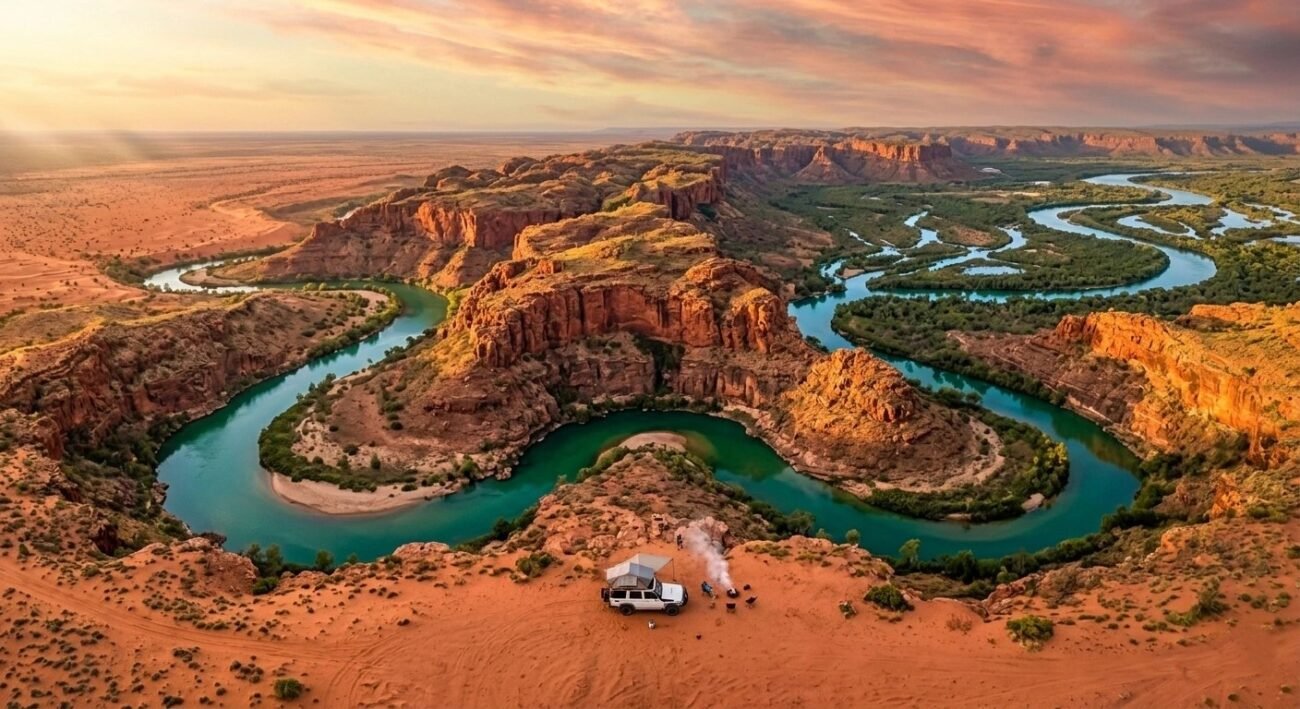
I have camped across Queensland, Victoria, and New South Wales. Nothing prepared me for the Kimberley. It operates on a completely different scale to anywhere else in this country. The distances are genuinely punishing and the landscape is unforgiving in ways that catch travellers off guard. Here is what sets it apart from every other RTT destination in Australia.
- Scale is extreme – a single driving day can cover 300km on corrugated dirt roads
- Roads are genuinely technical – creek crossings, bull dust, and deep corrugations are standard
- Wildlife risk is serious – saltwater crocodiles inhabit most waterways across the entire region
- Self-sufficiency is mandatory – fuel gaps of 300km or more exist between reliable stops
- Mobile coverage is almost zero – satellite communication is essential, not optional
- Permit requirements are unique – Aboriginal land permits are required for major access routes
- Heat is extreme – temperatures regularly exceed 40 degrees Celsius during shoulder months
- Weather closes everything – the wet season makes most roads completely impassable for months
When Is the Right Time to Go RTT Camping in the Kimberley?
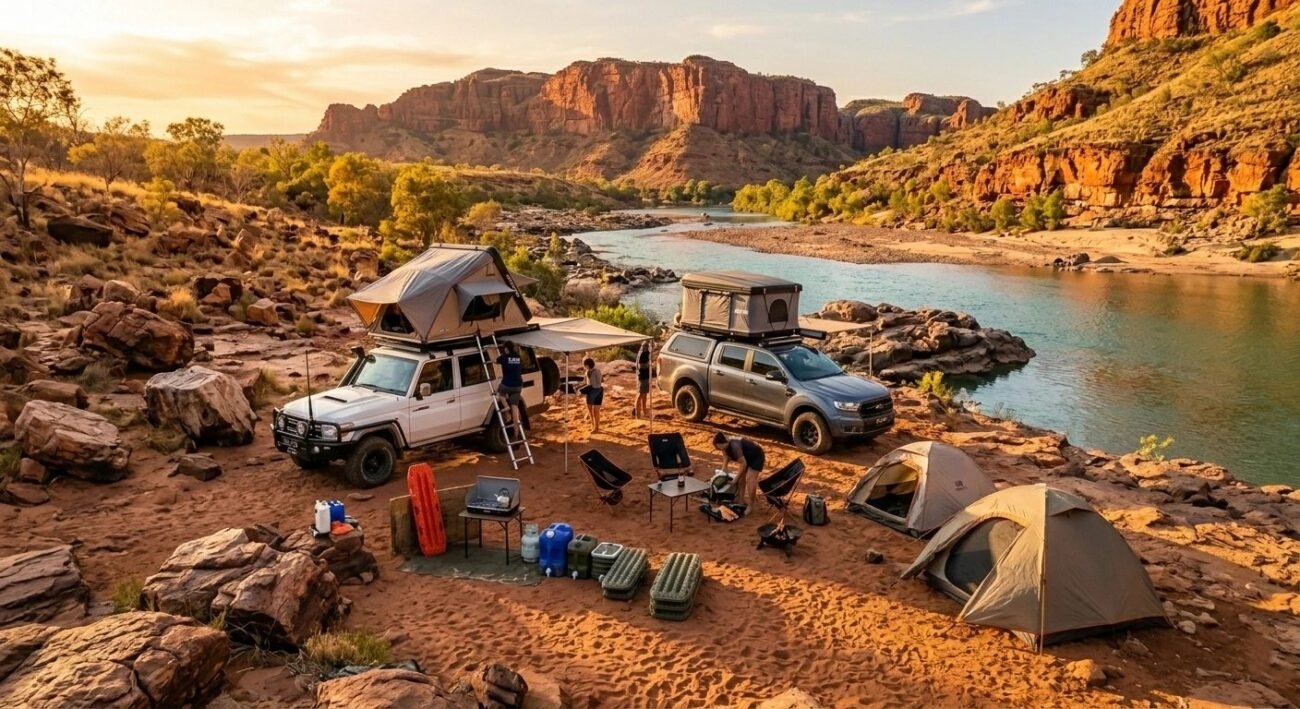
Timing the Kimberley correctly is not a preference. It is a safety decision. The region has two distinct seasons and they could not be more different from each other. The dry season runs from May through to September.
This is the only reliable window for RTT camping across most of the Kimberley. Roads are open, creek crossings are manageable, and temperatures are comfortable enough for family camping.
April and October are shoulder months and carry real risk. Roads can still be wet in April and start closing again in October. I personally target June through August for the best balance of conditions, crowd levels, and temperature.
July is peak season and the most popular spots fill quickly. The wet season from November through March brings extreme flooding, road closures, and dangerous crocodile activity near all waterways. Some experienced travellers attempt the wet season deliberately for the dramatic waterfalls. I would never recommend it for a first-time Kimberley trip or any trip with children on board.
Which Roads Will You Actually Be Driving in the Kimberley?
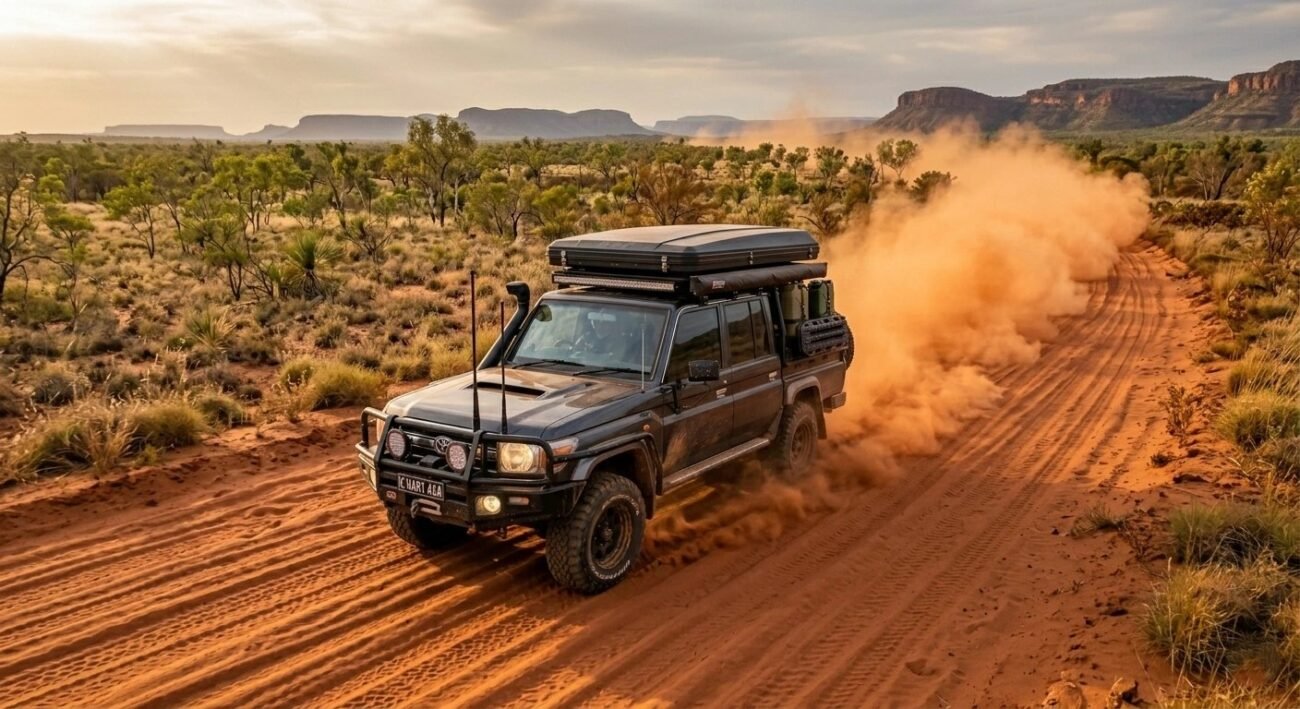
The Kimberley road network is nothing like driving in southern Australia. Understanding what you are actually facing before you leave home changes how you prepare your vehicle and your mindset. The Great Northern Highway is sealed and manageable in any vehicle. It connects Broome to Kununurra and serves as the main access corridor into the region.
The Gibb River Road is the main event. It runs 660km between Derby and Kununurra through the heart of the Kimberley. It is corrugated dirt for almost its entire length. Corrugations vibrate every bolt on your vehicle and will loosen roof rack mounts if you do not check them daily.
Speed management matters enormously here. I travel at 80km per hour maximum to reduce vibration stress on my RTT and vehicle. The Kalumburu Road branches north from the Gibb and is significantly rougher.
It demands a well-prepared 4WD and a Kalumburu community permit. Purnululu access road is 53km of rough track requiring genuine 4WD capability with good clearance.
Which Are the Best RTT Camping Spots Across the Kimberley?
The Kimberley has more genuinely world-class camping spots than anywhere else I have visited in Australia. The challenge is not finding good spots. The challenge is choosing between them. Every location in this table offers something distinct and memorable.
My personal favourite is Bell Gorge. The swimming hole there stopped me completely the first time I saw it. I sat on that rock ledge for an hour just taking it in.
| Spot | Access Difficulty | Facilities | Why It Is Best | Personal Pick |
|---|---|---|---|---|
| Bell Gorge (Silent Grove) | Moderate 4WD | Toilets, water, sites | Most beautiful gorge swimming hole in WA | My top Kimberley camp |
| El Questro Wilderness Park | Moderate 4WD | Full facilities available | Thermal springs, gorge walks, various site grades | Perfect for families |
| Windjana Gorge NP | Easy 4WD | Toilets, water, sites | Freshwater crocs, ancient reef walls, stunning scenery | Great first Kimberley stop |
| Purnululu NP (Bungle Bungle) | Hard 4WD | Toilets, basic water | Iconic beehive domes, remote and extraordinary | Worth every corrugation |
| Mitchell Falls (Ngauwudu) | Hard 4WD | Basic facilities | Most spectacular waterfall in the Kimberley | Save for experienced trips |
| Manning Gorge | Moderate 4WD | Toilets, water, boat crossing | Stunning pools, overnight camping, rewarding walk | Brilliant for adventurous families |
Is Your Vehicle Actually Ready for the Kimberley?
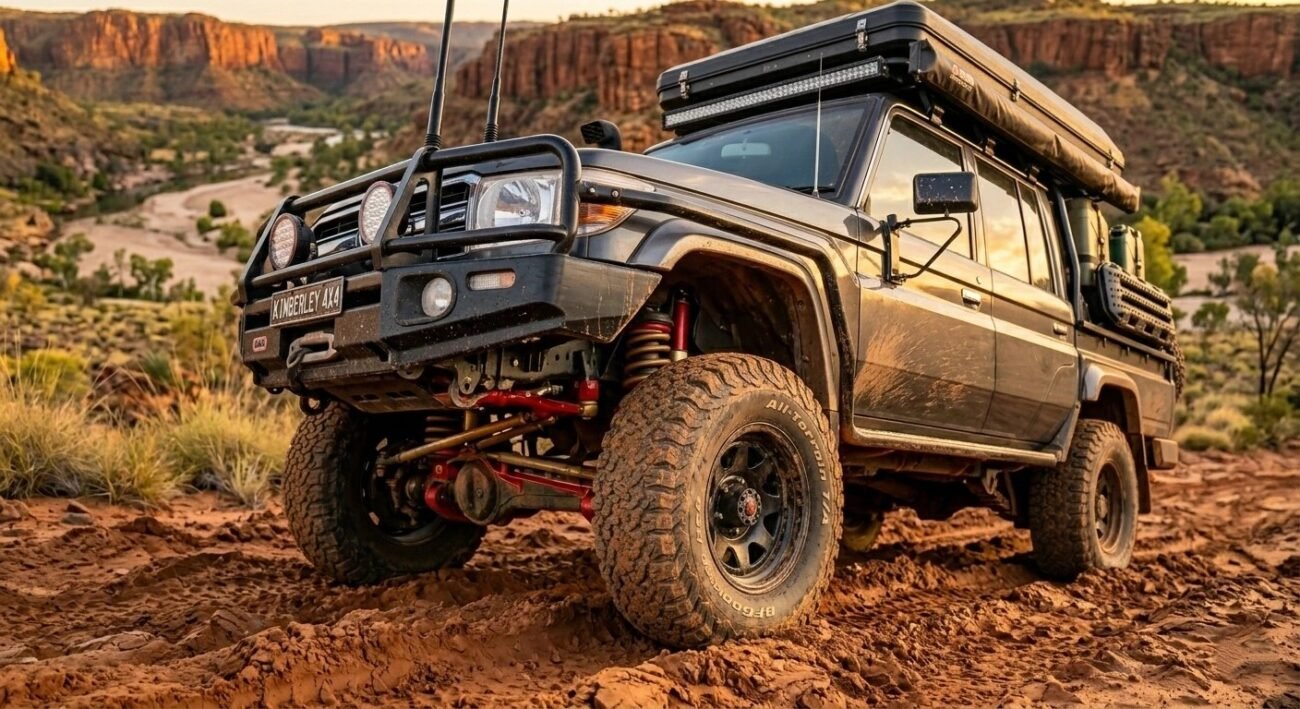
This is the question most people answer too optimistically before their first Kimberley trip. I have seen brand-new dual-cabs limp into Kununurra with blown tyres and cracked suspension components. The Kimberley exposes every weakness in your vehicle setup, and it does it fast. A standard showroom 4WD is not enough without proper preparation beforehand.
Tyres are the most critical starting point. I run 265/75R16 all-terrain tyres and carry two full-size spares, not one. A single spare is genuinely not enough for the Gibb River Road. Tyre punctures happen regularly on sharp rock crossings and corrugated sections. Suspension lift of at least 2 inches improves clearance significantly for creek crossings.
Check your roof rack dynamic load rating carefully before loading your RTT. Most quality racks handle 70 to 80 kilograms while driving. Corrugations multiply stress forces on rack mounts dramatically. I check every rack bolt every single morning on Kimberley trips.
A snorkel is strongly recommended for any creek crossings above 400mm water depth. Engine air intake without snorkel protection risks catastrophic water ingestion during crossings.
How Do You Handle Fuel, Water, and Food Across the Kimberley?
Logistics in the Kimberley is where underprepared travellers get into serious trouble fast. I learned this on my first Gibb River Road run when I nearly miscalculated fuel between Drysdale River Station and Kalumburu.
The distances between reliable supply points are genuinely long. Planning these three essentials before leaving home is not optional out here.
| Essential | Challenge | My Solution | Minimum Recommended Carry |
|---|---|---|---|
| Fuel | 300km+ gaps between reliable stops | Dual long-range tanks plus 40L jerry cans | 150% of calculated requirement |
| Water | No reliable water at many remote camps | 60L water tank plus 20L backup jerry cans | 20L per person per day minimum |
| Food | Heat spoils food fast above 35 degrees | 60L fridge (ARB Elements or Engel) plus dry goods | 3 days extra beyond planned trip length |
| Fuel Stops | Some stations close or run dry | Always refuel at every available opportunity | Never pass a servo assuming the next one is open |
| Water Sources | Creek water quality is unreliable | Carry a Sawyer Squeeze filter as backup | Always treat any collected natural water |
Refuelling at every opportunity is a rule I never break in the Kimberley. Assuming the next station has fuel has stranded people before.
What Safety Risks Are Real in the Kimberley and How Do You Manage Them?
The Kimberley demands honest risk assessment before you go. I am not saying this to frighten anyone away from the trip. The opposite is true. Understanding the real risks makes you confident rather than anxious.
Most dangers here are completely manageable with the right preparation and behaviour on the ground.
- Saltwater crocodiles – present in virtually every waterway; never swim without confirmed safe signage from Parks WA
- Flash flooding – can transform dry creek crossings into raging water within minutes; always check Bureau of Meteorology alerts daily
- Remote vehicle breakdown – carry a comprehensive spare parts kit including belts, hoses, fuses, and a tyre repair kit
- Extreme heat – temperatures above 40 degrees cause heat exhaustion fast; start driving by 6am and rest between 11am and 3pm
- Road corrugations – cause tyre blowouts and suspension damage; drive at 80km per hour maximum and check tyre pressures daily
- Night driving – cattle and kangaroos on roads after dark cause serious accidents; never drive in the Kimberley after sunset
- Medical emergencies – nearest hospitals are in Broome or Kununurra; carry a comprehensive first aid kit and know how to use it
- Drowning at water crossings – always walk crossings before driving; water depth and current strength change rapidly after rain
What Communications Gear Do You Need in the Kimberley?
Mobile coverage in the Kimberley is effectively non-existent once you leave the Great Northern Highway. I have zero bars of signal for days at a time on the Gibb River Road. This is not an inconvenience.
It is a genuine safety reality. Carrying the right communications gear is as important as carrying spare tyres out here. It is not an area to cut costs.
| Device | Usage | Price (AUD) |
|---|---|---|
| Garmin inReach Mini 2 | Two-way satellite messaging, SOS, GPS tracking | Around $500 to $600 plus subscription |
| SPOT Gen4 | One-way satellite messaging and SOS activation | Around $200 to $250 plus subscription |
| PLB (GME MT410G) | Emergency rescue beacon, one-time SOS only | Around $300 to $400, no subscription needed |
| UHF CB Radio (GME TX3520S) — | Vehicle-to-vehicle communication on Gibb River Road | Around $150 to $250 |
| Satellite Phone (Iridium 9575) | Two-way voice calls anywhere in Australia | Around $1,200 to $1,500 plus call costs |
My personal setup is a Garmin inReach Mini 2 combined with a GME UHF CB radio. The inReach handles emergency communication and trip tracking. The UHF handles road communication with other travellers on the Gibb.
What RTT Setup Works Best for the Kimberley’s Conditions?
The Kimberley punishes the wrong RTT setup quickly. Dust penetrates soft shell zippers and seams within days on corrugated roads. Heat builds inside dark-coloured canvas tents at alarming rates during shoulder months.
I switched to a hardshell RTT before my second Kimberley trip and the difference in durability and comfort was significant. Hardshells seal tightly against dust and set up in under sixty seconds after a long driving day.
| Feature | What to Look For | Why It Matters in the Kimberley |
|---|---|---|
| Shell type | Hardshell aluminium construction | Dust-proof sealing, faster setup, better heat reflection |
| Mattress | Minimum 40mm foam or memory foam | Corrugation fatigue makes good sleep critical |
| Flooring | Anti-condensation mat with carpeted base | Kimberley humidity creates condensation inside tents overnight |
| Solar integration | Built-in panel with 12V Anderson plug | Off-grid power for fridge and lighting between stations |
| Ladder length | Minimum 260cm for lifted vehicles | Lifted 4WDs require longer ladder reach for safe access |
| Zippers | YKK rated zippers | Cheap zippers fail in dust and heat within days |
The Rigdup 1.8m hardshell RTT covers these requirements well for the Kimberley. It features an aluminium honeycomb base, 40mm memory foam mattress, integrated solar panel, 12V Anderson plug, and a 260cm ladder suited to lifted vehicles.
At $3,400 it sits at a competitive price point for a hardshell with this specification level.
What Recovery Gear Should You Carry in the Kimberley?
Recovery gear in the Kimberley is not a box-ticking exercise. It is the difference between a manageable problem and a multi-day ordeal waiting for help. I carry a full recovery kit every single time I drive the Gibb River Road. Soft sand, creek crossings, and bull dust bog vehicles regularly even on the main track.
- MaxTrax MKII recovery boards – essential for sand, mud, and soft creek bank exits; I carry two sets
- Kinetic recovery rope (11,000kg rated minimum) – for vehicle-to-vehicle extraction from serious bogs
- Snatch block and tree trunk protector – extends winch capacity and protects trees during recoveries
- Electric winch (Warn VR EVO 10-S or equivalent) – self-recovery when no other vehicle is present
- Hi-Lift Jack with base plate – lifts vehicle clear of mud and doubles as a manual winching tool
- Tyre repair kit (plugs plus CO2 inflators) – fast roadside puncture repair before using the spare
- 12V tyre inflator (ARB Digital or equivalent) – re-inflate after airing down for creek crossings and soft terrain
- Bow shackles rated at 4,750kg minimum – connecting recovery gear safely under load
I have needed recovery gear on every single Kimberley trip without exception. Carrying it is not paranoia. It is experience talking.
How Much Does a Full Kimberley RTT Trip Actually Cost?
Budget planning for the Kimberley catches most first-timers completely off guard. I budgeted $4,000 for my first Gibb River Road trip and spent closer to $6,200.
The costs add up faster than you expect when fuel prices, permit fees, and station camp charges stack together. Here is a realistic breakdown based on my personal experience for a two-week Kimberley RTT trip for two people.
| Cost Category | Estimated Cost (AUD) | Notes |
|---|---|---|
| Fuel | $800 to $1,200 | Remote stations charge premium prices above city rates |
| Campsite fees | $400 to $700 | National parks plus station camps across 14 nights |
| Permits | $50 to $150 | Kalumburu permit plus national park passes |
| Food and supplies | $600 to $900 | Extra provisions beyond normal shop prices |
| Vehicle servicing | $300 to $600 | Pre-trip Kimberley service plus post-trip checks |
| Emergency contingency | $500 minimum | Tyre replacements, unexpected mechanical issues |
| Total realistic budget | $2,650 to $4,050 | Per couple for two weeks excluding gear purchases |
Never budget at minimum figures for the Kimberley. Build in at least 30 percent extra across every category. Remote Australia always costs more than you plan for.
Are There Free Camping Spots in the Kimberley Worth Knowing About?
Free camping in the Kimberley genuinely exists and some spots are extraordinary. Most travellers assume everything costs money out here. That is not true. The key is knowing where to look and understanding that free camps usually mean minimal or zero facilities. Carrying your own water, waste management system, and supplies becomes even more important at free locations. I have had some of my best Kimberley nights at completely free roadside camps.
- Pentecost River crossing area – iconic free camp near the famous river crossing on Gibb River Road; basic but stunning
- Horseshoe Lagoon (near Kununurra) – free lakeside camp popular with long-term travellers and birds
- Mornington Wilderness Camp (select areas) – some free zones exist within the broader AWC managed property
- Roadside camps along Gibb River Road – designated free rest areas exist roughly every 100km for overnight stops
- Keep River National Park (basic sites) – self-registration free camping near the NT/WA border
- Drysdale River area bush camps – free dispersed camping available in designated zones before the station
- Emma Gorge surrounds (outside fee zone) – some travellers camp just outside the paid El Questro boundary legally
Always confirm current access rules before relying on free camp locations. Conditions and permissions change each season.
What Permits and Permissions Do You Need Before Entering the Kimberley?
Permit requirements in the Kimberley trip up more first-timers than almost any other planning issue. I nearly drove into an Aboriginal community without the right paperwork on my first trip. A ranger stopped me at a checkpoint and I had to turn back and lose a full day. Getting permits sorted weeks before departure is not bureaucratic box-ticking. It is genuine respect for the communities and land you are travelling through.
- Kalumburu Aboriginal Community permit – required for all visitors travelling north on Kalumburu Road; apply through Kalumburu Aboriginal Corporation at least two weeks ahead
- Ngauwudu (Mitchell Plateau) permit – required for access to Mitchell Falls via the Wunambal Gaambera country; apply through their dedicated permit system online
- Purnululu National Park vehicle permit – required separately from general WA national park passes; book through DPaW WA online before departure
- WA Annual Parks Pass – covers entry to all WA national parks including Windjana Gorge and Tunnel Creek; costs around $16 per visit or $26 annual pass
- El Questro Wilderness Park entry permit – private property entry fee required at the gate; covers access to gorges and camps
- Private station access permissions – Drysdale River Station and several others require advance contact before accessing their roads or camps
- Camping permits for DPaW sites – book all Parks WA campgrounds online before travelling; peak season sites book out months ahead
What Do First-Timers Wish They Knew Before RTT Camping the Kimberley?
Every experienced Kimberley traveller carries a mental list of things they wish someone had told them before trip one. I have been collecting these lessons from my own trips and from conversations at campsites across the Gibb River Road for years. These are not generic safety tips. These are specific, hard-earned insights that change how you experience the whole trip.
- Corrugations slow everything down – 200km on the Gibb takes four to five hours, not two; replan your daily distances completely
- Check road conditions every single morning – Main Roads WA has a live road conditions map; conditions change overnight after any rain event
- Your trip will take longer than planned – build minimum three extra days buffer into every Kimberley itinerary without exception
- Dust gets into everything – seal camera gear, food containers, and clothing bags in zip-lock bags before you leave home
- Arrive at camps before 3pm – best sites fill by mid-afternoon; late arrivals get the worst positions or nothing
- Tell someone your full detailed route – leave a written itinerary with a trusted contact who knows when to call for help
- Water crossings look shallower than they are – always walk every crossing before driving it regardless of how experienced you feel
- Your vehicle needs a post-Gibb service – corrugations stress every component; budget for a mechanical check immediately after returning
Can Families With Kids Do the Kimberley in a Rooftop Tent?
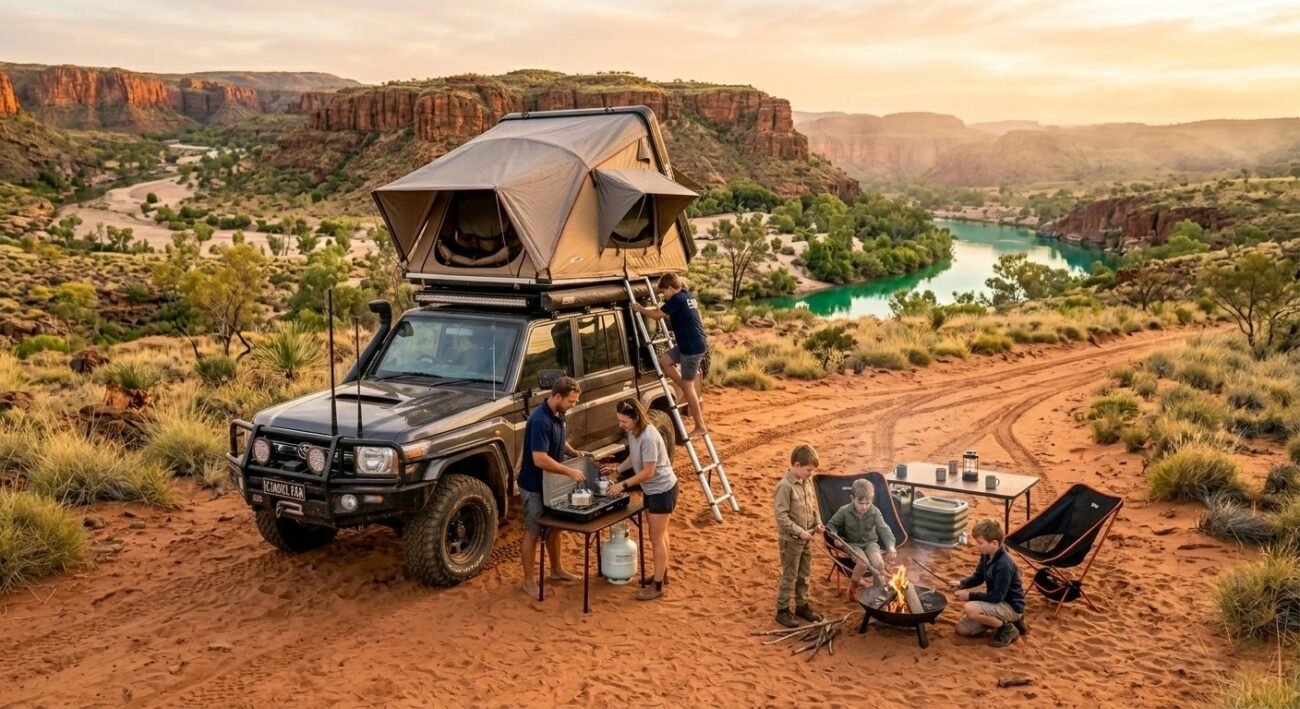
Yes, families absolutely can do the Kimberley with kids in a rooftop tent. I know several families who have done it brilliantly and come home with stories their kids still talk about years later.
The honest qualifier is this. It depends heavily on the ages of your children, the experience level of the adults, and how thoroughly you have prepared. The Kimberley is not a trip to attempt as your family’s first RTT adventure. Build up to it over one or two easier trips first.
Kids aged eight and above generally handle the Kimberley well with the right preparation. Younger children can manage it but require more careful spot selection. Stick to accessible spots like Windjana Gorge, El Questro, and Tunnel Creek for families with children under eight.
These locations have reliable facilities and manageable access roads. Avoid Kalumburu Road and Mitchell Falls with young children. Those tracks are genuinely demanding and add serious stress to any trip.
My strongest advice for Kimberley family trips is to target June specifically. Temperatures are comfortable, roads are dry and stable, and the crowds at top spots are manageable for a relaxed family pace.
Final Thoughts
The Kimberley is not just another camping destination. It is one of the most remote, spectacular, and genuinely demanding regions in Australia. Rooftop tent camping in the Kimberley rewards the travellers who plan properly, vehicle up correctly, and respect what the landscape actually asks of you.
Dry season timing, a capable and well-prepared 4WD, satellite communication, realistic fuel and water planning, and the right RTT setup are not optional extras out here. They are the foundation of every successful Kimberley trip I have done and every successful trip I have heard about from others.
The mistakes I made on my first Kimberley run cost me time, money, and stress that could have been completely avoided. This guide exists so you do not repeat those same lessons from scratch. The Kimberley is extraordinary precisely because it asks something real of you. That challenge is what makes coming home from it feel so deeply satisfying.
If you are still finalising your gear or trying to decide whether your vehicle setup is genuinely ready, take that question seriously before you leave. The Kimberley does not forgive underprepared travellers quietly. Start planning your permits, book your sites early, and check your vehicle thoroughly before the dry season window opens. Find incredible Camping Destinations & Adventures in Australia – check here to learn more.
FAQs
Allow five to seven days minimum for the full 660km Gibb River Road. Most travellers underestimate drive times on corrugated dirt. Factoring in gorge stops, camp setup, and rest days, seven to ten days gives you a far more enjoyable experience than rushing it.
All-terrain tyres in 265/75R16 or larger are the minimum I would recommend for the Kimberley. Brands like BF Goodrich KO2 and Toyo Open Country AT3 handle corrugations and sharp rock well. Always carry two full-size spare tyres. One spare is genuinely not enough for the Gibb River Road.
You can reach some spots without one, but it is a real risk. Creek crossings on the Gibb River Road regularly reach 400mm to 600mm depth. A snorkel protects your engine air intake from water damage during crossings. I would not attempt the Kimberley without one on my own vehicle.
Parks WA online booking handles most national park sites including Purnululu, Windjana Gorge, and Tunnel Creek. El Questro books directly through their own website. Kalumburu permits go through the Kalumburu Aboriginal Corporation directly. Book everything at least six to eight weeks ahead during peak dry season months.
Honestly, the Kimberley is not ideal as a first 4WD trip. The distances, corrugations, creek crossings, and remote conditions demand solid experience. I recommend completing at least two or three easier outback trips first. Build your vehicle recovery skills and navigation confidence before attempting anything as demanding as the Gibb River Road.