
Best Roof Top Tents in Australia for 2026

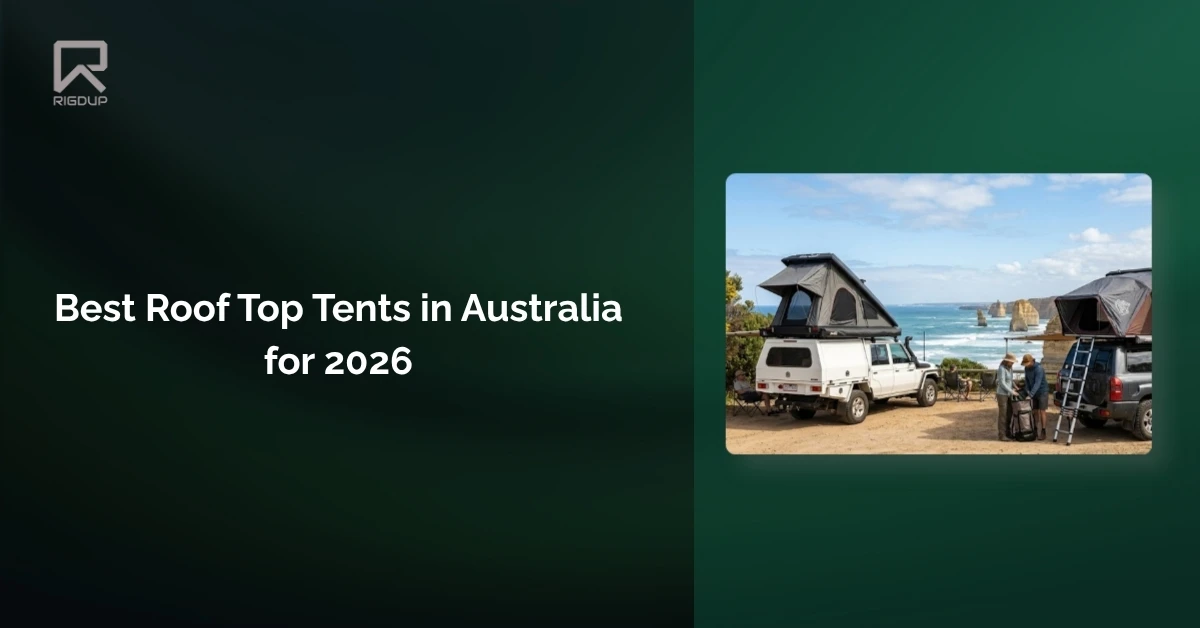
Ever had to sleep on rocky ground while hearing something rustle outside your tent? Not exactly relaxing. That’s why many campers are switching to rooftop tents.
The best roof top tents in Australia for 2026 get you up off the ground, away from bugs and damp soil, and into a much more comfortable sleep. Most of them set up in just a few minutes and once you try it, the difference in sleep quality is huge. Here are the top five RTTs worth your money right now:
- Rigdup 1.8m Hard Shell RTT – Best Overall
- ARB Simpson III – Best for Harsh Aussie Conditions
- Darche Panorama 1400 – Best Soft Shell
- iKamper Skycamp Mini – Best for Smaller Vehicles
- OzTent RV-5 – Best Budget Pick
In this guide, you’ll find honest reviews, key specs, common pitfalls to avoid, and everything you need to pick the right RTT for your rig.
What Are the Best Roof Top Tents in Australia in 2026?
After spending serious time across different setups, talking to owners, and understanding what actually fails in the field versus what looks good on a spec sheet, here are the five rooftop tents that genuinely make sense for Australian touring in 2026. The table below breaks each one down honestly, including what they do well, where they fall short, and who they actually suit.
| Products | #1 Rigdup 1.8m Hard Shell RTT | #2 ARB Simpson III | #3 Darche Panorama 1400 | #4 iKamper Skycamp Mini 2.0 | #5 OzTent Tagalong Tent |
|---|---|---|---|---|---|
| Type | Hard Shell | Soft Shell | Soft Shell | Hard Shell | Soft Shell |
| Why Best? | Best all-round hard shell for couples with built-in solar and power. Engineered for off-grid Aussie touring without needing extra accessories bolted on. | Best for serious outback touring. ARB is an Australian brand that understands corrugated roads, heat, and dust better than almost anyone. | Best soft shell for space and ventilation. The panoramic windows are genuinely useful in warm weather camping across most of Australia. | Best for smaller vehicles and solo travellers who want hard shell convenience without the bulk and weight of full-size units. | Best budget entry point from a trusted Australian brand. No frills, but reliable and widely supported across the country. |
| How It Benefits You | You get off-grid power (solar + 12V Anderson plug) straight out of the box. No need to run extra cables across your roof or purchase add-ons. The aluminium honeycomb base insulates from cold metal and adds rigidity without heavy weight. The 40mm memory foam mattress means you are not waking up stiff after a long day on dirt roads. The 260cm ladder works properly on lifted vehicles, which most Aussie 4WDs are. | Built and tested for Australian conditions specifically. The canvas construction breathes well in heat and handles condensation better than most hard shells. Roof rack compatibility is broad because ARB racks are everywhere. Spare parts, support, and dealer network are nationwide. | The large opening panels and panoramic windows mean serious airflow, which matters enormously in tropical northern Australia. You get a huge sleeping area and the option to add an annex easily. Great for couples who want comfort on extended trips. | Compact footprint when closed means less wind drag and less fuel impact on long drives. Opens quickly and gives you a solid, weatherproof hard shell without the size penalty. Good for RAV4s, Jimnys, and mid-size SUVs that cannot carry a full 1.8m unit. | Familiar brand with genuine Aussie roots. Gets you into RTT camping at a lower price point. Widely available in-store across BCF and ARB dealers, so if something goes wrong in the field, getting help is easier. |
| Key Features | Hard shell aerodynamic design, aluminium honeycomb base, 40mm memory foam mattress, YKK zippers, integrated solar panel + mounting bracket, 12V socket with Anderson plug underneath, 260cm ladder, crossbars + luggage bracket included, carpeted flooring with anti-condensation mat, branded hardware | 280g polycotton canvas, internal LED lighting, includes annex and poles, heavy duty zippers, integrated ladder, fits most ARB and aftermarket roof racks, Australian-designed for outback use | 320gsm ripstop canvas body, panoramic PVC windows, aluminium poles, large sleeping area, annex compatible, good ventilation design, internal storage pockets | ABS hard shell, 3-layer foam mattress, opens in 60 seconds, compact when closed, fits bars rated 50kg+, available in multiple sizes, good wind resistance | Polycotton canvas, lightweight design, fast setup, annex compatible, suits most standard roof rack setups |
| Sleeping Capacity | 2 Adults | 2 Adults | 2 Adults (3 at a stretch) | 1 to 2 Adults | 2 Adults |
| Dimensions (Open) | 210L x 180W x 100H cm | 240L x 140W cm approx | 240L x 140W cm approx | 200L x 120W cm approx | 210L x 130W cm approx |
| Pricing (AUD) | $3,400 (includes crossbars, solar, mounting hardware) | $2,800 to $3,200 approx | $1,800 to $2,400 approx | $3,500 to $4,000 approx | $1,200 to $1,800 approx |
| Value Assessment | Strong value when you account for what is included. Solar, Anderson plug, crossbars, and mounting hardware are all in the box. Competitors charge separately for each of those. | Strong brand value. You are paying for Australian engineering, dealer support, and a proven track record in tough conditions. | Good mid-range value for the space and ventilation you get. Darche is a well-regarded Aussie brand with solid after-sales support. | Premium price for a compact unit. You are paying for the engineering that makes a small tent perform like a bigger one. Worth it if your vehicle limits your options. | Excellent entry-level value. Best for people trying RTT camping for the first time before committing to a premium unit. |
| Lacks / Watch Out For | Warranty details are not currently listed publicly. Confirm this directly with the supplier before purchasing. As a newer brand compared to ARB or Darche, long-term owner feedback is still building. | Soft shell means longer setup than a hard shell. Heavier than most hard shell options. Canvas needs proper drying before storage or mould becomes a real issue. | Setup takes longer than a hard shell. Canvas care is essential in humid northern climates. Not ideal for travellers who want a quick one-minute deploy. | Smaller sleeping area limits it to solo or slim couples. Premium price point is harder to justify if you are on a budget. | Thinner canvas than premium options. Less weatherproof in extreme conditions. Accessories and extras are not included. |
| Best Suited For | Couples, weekend overlanders, and anyone wanting a complete hard shell setup with built-in off-grid power. Works well on lifted utes and SUVs. | Serious outback tourers, grey nomads, and four-wheel drivers who prioritise breathability, proven durability, and strong local support. | Warm weather campers, Queensland and NT travellers, and couples who want maximum space and ventilation on extended trips. | Solo travellers, lighter vehicles (RAV4, Jimny, mid-size SUVs), and anyone prioritising low drag and fast setup without giving up hard shell performance. | First-time RTT buyers, budget-conscious campers, and weekend warriors who do not need off-grid power systems built in. |
The Rigdup 1.8m sits at the top of this list for a specific reason that goes beyond just specs on a page. Most rooftop tents at the $3,400 price point hand you a tent and nothing else.
What’s the Difference Between Hard Shell and Soft Shell Roof Top Tents in Pricing?
Hard shell and soft shell rooftop tents solve the same problem but in very different ways. That difference shows up clearly in the price tag.
| Feature | Hard Shell RTT | Soft Shell RTT |
|---|---|---|
| Average Price Range (AUD) | $2,800 to $5,500 | $900 to $2,800 |
| Why the Price Difference? | Rigid shell, precision engineering, aerodynamic moulding | Canvas, poles, and simpler construction |
| Setup Speed | 60 seconds or less | 5 to 15 minutes |
| Durability | Higher, withstands UV and hail better | Canvas degrades faster without proper care |
| Fuel Impact | Lower drag when aerodynamically designed | Bulkier profile increases fuel consumption |
| Included Accessories | Often includes mounting hardware | Usually tent only |
| Long Term Value | Better resale value | Lower resale value |
| Maintenance Cost | Lower ongoing cost | Canvas re-proofing needed regularly |
After using both types across different Australian trips, hard shell wins every time against soft shell RTT. You save time at camp, spend less on fuel long term, and avoid the canvas maintenance cycle completely. The higher upfront cost pays itself back quickly on extended touring.
How Do These Roof Top Tents Compare on Price?
Price comparison between rooftop tents gets confusing fast. Most listings show the tent price only. They leave out mounting hardware, crossbars, annexes, and accessories. That is where buyers get stung.
Budget soft shell tents start around $900 to $1,500 AUD. They get you camping, but extras add up quickly. Mid-range soft shells sit between $1,500 and $2,800. You get better canvas weight and more reliable zippers at this level.
Entry hard shells start around $2,800 and climb to $5,500 for premium units. The Rigdup 1.8m sits at $3,400 and includes crossbars, solar panel, mounting hardware, and Anderson plug.
That all-in packaging changes the value equation significantly. Buying those extras separately from another brand easily adds $800 to $1,200 on top. Always calculate the total setup cost, not just the tent sticker price. A $1,800 soft shell with $1,000 in required add-ons is no longer a budget option.
Which Roof Top Tent Is Best for Your Vehicle Type?
Your vehicle’s roof load rating determines what tent you can safely run. Always check your static and dynamic load limits before buying anything.
| # | RTT Model | Best Vehicle Type | Why It Works |
|---|---|---|---|
| 1 | Rigdup 1.8m Hard Shell | Lifted utes and large SUVs (HiLux, LandCruiser, Patrol) | 260cm ladder suits lifted rigs perfectly. Integrated solar and Anderson plug suit long-distance touring builds. Aerodynamic shell reduces wind drag at highway speeds. |
| 2 | Darche Panorama 1400 | Large SUVs and wagons (LandCruiser 200, Patrol GU, Prado 150) | Wide sleeping area needs a longer roof platform. Excellent ventilation suits warm climate touring up north. |
| 3 | OzTent Tagalong | Standard SUVs and wagons with factory or aftermarket racks | Lightweight design suits vehicles with lower roof load ratings. Easy to source support nationwide. |
| 4 | iKamper Skycamp Mini 2.0 | Smaller SUVs and crossovers (RAV4, Jimny, Forester, CX-5) | Compact closed dimensions reduce overhang on shorter roof lengths. Hard shell convenience without the size penalty. |
| 5 | ARB Simpson III | Mid to large SUVs and utes (Prado, Everest, BT-50, Ranger) | Broad ARB rack compatibility across most Aussie 4WD builds. Proven in outback conditions specifically. |
| 6 | Thule Tepui Kukenam 3 | Mid-size SUVs and wagons (Kluger, Outlander, Sorento) | Suits vehicles with moderate roof ratings. Well-suited to families doing weekend trips and school holiday runs. |
| 7 | 23Zero Kabuto 1400 | Performance 4WDs and dual-cab utes (Triton, Colorado, D-Max) | Low profile when closed works well on aggressive builds with bull bars and long-range tanks already loaded up. |
| 8 | CVT Mt. Shasta | Large platform utes with tray racks (LandCruiser 79 Series, Ram 1500) | Heavy duty construction suits tray-mounted setups where roof load limits are less restrictive. Serious outback build favourite. |
| 9 | Smittybilt Overlander | Budget-friendly fit for mid-size SUVs (Pajero, Fortuner, MU-X) | Straightforward mounting, widely compatible with most aftermarket racks. Good starter tent for new overlanders. |
| 10 | Howling Moon Rooftop Tent | Camper trailer combo rigs and large wagons | Popular with grey nomads running full touring setups. Pairs well with drawer systems and longer wheelbase vehicles. |
Utes with trays deserve a separate mention here. Mounting to a tray rack gives you significantly higher load capacity than a cab-mount setup. That opens up heavier hard shell options that a cab roof simply cannot support safely. If you are running a 79 Series or a full-size ute tray, your tent options expand considerably compared to a standard SUV roof mount.
Smaller vehicles like the Jimny and RAV4 need extra attention on dynamic load ratings. The static rating is what the roof holds when parked. The dynamic rating is what it holds at speed on rough roads. Those two numbers are very different. Always work off the dynamic number when selecting your tent weight.
What Do Real Aussie Owners Say After 12 Months of Use?
Once you get past the first few trips, the honeymoon phase wears off. Real owners stop talking about specs. They talk about what actually held up and what did not. Here is what genuine Australian owners consistently report after a full year of use.
- Setup speed genuinely changes how often you go camping. This comes up constantly across Australian forums and ProductReview. Owners who camp regularly report that quick setup and pack-down keeps the whole experience feeling effortless, even on one-night stops. Hard shell owners especially say they stopped overthinking short overnight trips because the tent is up in under two minutes.
- Condensation is the number one complaint across all brands. It is not a fault. It is physics. Warm air from breathing hits the cooler shell or canvas surface overnight, and if that moisture cannot escape, it turns into droplets, damp fabric, and eventually mould. Experienced owners say keeping vents at least half open, even in cold temperatures as low as minus seven degrees, stops condensation almost entirely.
- Budget tent buyers report mattress failure first. Owners on extended trips report the floor bowing and buckling after one week, with the mattress compressing flat right where your hips and lower back sit. Memory foam units hold up significantly better over 12 months of regular use.
- Canvas care separates long-term owners from frustrated ones. Packing up a damp tent without airing it out is the single biggest cause of mould problems. Experienced owners recommend placing a mesh mat under the mattress to allow air circulation underneath, especially through colder winter nights. Australian Land Rover Owners
- Zip quality becomes obvious fast. Owners report that misaligned canvas rivets cause zips to pull tight and become difficult to close, and seam leaks appear on cheaper units even without heavy rain. Tents with YKK zippers consistently receive far fewer complaints after 12 months than those with generic hardware.
- Warranty support reveals the real brand quality gap. Owners with Australian-supported brands report resolving issues quickly, while those with brands lacking local dealer networks describe spare parts as genuinely difficult to source. After a year of use, that support gap becomes very real.
What Size Roof Top Tent Do You Actually Need?
Size decisions come down to three things: who is sleeping in it, what vehicle it is going on, and how long your trips are.
Solo travellers genuinely do not need anything wider than 120cm. A 120cm wide sleeping area is comfortable for one person and keeps weight and drag down considerably on smaller vehicles.
Couples need a minimum of 140cm width for comfort. Anything under that and you will feel it after night three on a longer trip. The Rigdup 1.8m provides 180cm width, which is genuinely comfortable for two adults without feeling cramped.
Families with kids need an annex room combination rather than just a bigger tent. Most standard RTTs max out at two adults comfortably. Adding an annex below gives kids a separate sleeping zone without needing a second tent entirely.
Also consider the closed dimensions carefully. A longer tent overhangs your roof rack on shorter vehicles. That creates wind noise, stability issues, and potential clearance problems on tight bush tracks. Match the tent length to your rack platform length before buying.
Are Australian-Made Roof Top Tents Worth It Over Imported Brands?
This question comes up constantly, and the answer is more nuanced than a simple yes or no.
For example, Australian brands like Rigdup, ARB, Darche, OzTent, and Ironman 4×4 design their products specifically for local conditions. Therefore, heat cycling, UV exposure, road vibration, and dust are all considered from the start. As a result, material choices and hardware selection reflect this local expertise.
Imported brands are not automatically inferior. For instance, iKamper from South Korea and Thule from Sweden produce high-quality products. However, after-sales support, spare parts availability, and warranty resolution differ. If a zipper fails in Broken Hill, an Australian brand dealer is easier to contact than an international support line.
Price sometimes favors imported brands. You might get a well-engineered hard shell for less than a comparable Australian unit. Nevertheless, consider freight times, spare part delays, and limited local support before committing.
In most Australian touring scenarios, local brands justify their premium. Moreover, the support network provides peace of mind on remote trips, which is genuinely valuable.
What Accessories Do You Need With a Roof Top Tent in Australia?
The tent itself is just the starting point. What you add around it determines how comfortable and functional your setup actually becomes in the field.
| Accessory | What It Does | Approx. Price (AUD) |
|---|---|---|
| Annex Room | Creates enclosed ground-level space for gear, changing, or extra sleeping | $300 to $800 |
| Mattress Topper | Adds comfort layer over stock foam, especially on budget tents | $80 to $250 |
| 12V Fan | Critical for airflow in Queensland and NT heat | $60 to $180 |
| LED Strip Lighting | Internal lighting without draining your main battery | $30 to $90 |
| Ladder Mat | Protects paint and stops mud tracking into the tent | $25 to $60 |
| Ground Sheet / Annex Floor | Keeps dirt and moisture out of your annex space | $60 to $150 |
| Awning (2m to 2.5m) | Shade and rain cover directly off the side of your vehicle | $350 to $900 |
| Condensation Mat | Sits under mattress to allow airflow and prevent mould | $40 to $100 |
| Solar Panel (if not built-in) | Powers lights, fan, and device charging off-grid | $150 to $500 |
| Anderson Plug Adapter | Connects tent power system to vehicle battery setup | $30 to $80 |
Tents like the Rigdup 1.8m already include the solar panel, Anderson plug, and crossbars. That removes four items from this list immediately. Most other tents leave all of that to you.
What Are the Most Common Problems With Roof Top Tents (And How to Avoid Them)?
Every RTT owner hits at least one of these problems. Knowing them before you buy saves you money, frustration, and ruined camping trips.
- Condensation buildup overnight. Warm breath hits a cool shell and moisture collects inside. Keep vents partially open every night, even in cold weather. It works better than any spray treatment.
- Mould on canvas. Always air the tent fully before packing it away. Never pack damp canvas. One damp pack-down in humid weather can start a mould problem that is very hard to reverse.
- Zip failure and stiff zippers. Cheap zippers bind and split under repeated use. Apply beeswax or a dry zipper lubricant every few months. YKK zippers last significantly longer with basic maintenance.
- Ladder wobble and instability. Usually caused by loose hinge bolts or incorrect ladder angle. Check and tighten ladder connection points every few trips. Set the ladder at roughly 70 degrees for best stability.
- Wind rattle and road noise. Loose mounting bolts vibrate against crossbars on long drives. Check every bolt on the mounting system before each major trip.
- Roof rack overload. Exceeding your dynamic load rating causes rack failure at speed. Always verify your vehicle’s dynamic roof load limit before installing any RTT.
Where’s the Best Place to Buy a Roof Top Tent in Australia?
Buying a rooftop tent in Australia has never had more options. That makes it easier to find the right product, but also easier to get burned by poor after-sales support.
For the best all-round hard shell RTT with solar, Anderson plug, crossbars, and mounting hardware included, Rigdup delivers genuine value at $3,400 AUD. Everything arrives ready to install. You are not chasing parts from three different suppliers. Rigdup is the smartest starting point for serious Aussie touring builds.
For other brands, ARB stores nationwide offer in-person fitting, expert advice, and strong warranty backup. BCF and SuperCheap Auto 4×4 carry accessible mid-range options with easy returns. For premium imports like iKamper and Thule, authorised Australian dealers give you local warranty support, which matters enormously on expensive units.
Buying secondhand saves money but carries real risk. Always inspect zippers, canvas seams, base welds, and hinge points in person. Never buy a secondhand RTT without seeing it fully opened. Damage hides easily in photos. For remote and regional buyers, confirm freight costs early. Some oversized RTT shipments attract significant delivery charges outside major cities.
Final Thoughts
The Best Roof Top Tent in Australia 2026 Comes Down to This!
Choosing the right rooftop tent is not just about picking the most popular name. It is about matching the right tent to your vehicle, your trips, and your budget. Australia’s conditions are tough. Not every tent is built to handle them.
After looking at everything, the Rigdup 1.8m Hard Shell RTT is my personal pick for 2026. No other tent at the $3,400 price point bundles solar, Anderson plug, crossbars, and mounting hardware into the box. It is a complete setup from day one, and that matters enormously when you are planning serious Aussie touring.
If you are a couple doing weekend trips or extended outback runs on a lifted ute or SUV, this is the tent to get. If you are a first-time buyer on a tighter budget, OzTent gets you started without a massive upfront commitment. For serious canvas lovers, ARB Simpson III still holds its ground.
Whatever direction you go, buy once and buy right. A cheap tent that fails in the Kimberley is not a bargain. Check the Rigdup 1.8m out and see if it fits your build. If you want to know everything before buying a rooftop tent, visit this guide.
FAQs
A decent rooftop tent in Australia starts around $1,200 for a reliable soft shell. Hard shell units start near $2,800. Always factor in crossbars, mounting hardware, and accessories. Your real all-in budget is usually $500 to $1,000 more than the tent price alone.
You can, but it affects fuel consumption and tyre wear over time. The added roof weight shifts your vehicle’s centre of gravity. Most experienced tourers remove the tent between trips if they are not camping regularly. Hard shells handle permanent mounting better than soft shells.
Yes, when properly mounted to a rated roof rack. Hard shell tents handle wind significantly better than soft shells. Always check your mounting bolts before trips. In extreme wind conditions above 60 km/h, close vents and ensure all zippers and panels are fully secured.
Most rooftop tents fit standard 40mm to 75mm crossbars. Always check your rack’s dynamic load rating first. Popular Australian racks from ARB, Rhino-Rack, and Yakima are widely compatible. The Rigdup 1.8m includes its own crossbars, removing compatibility guesswork completely.