
Fraser Island – K’gari Roof Top Tent Guide – Rules, Tips & Spots

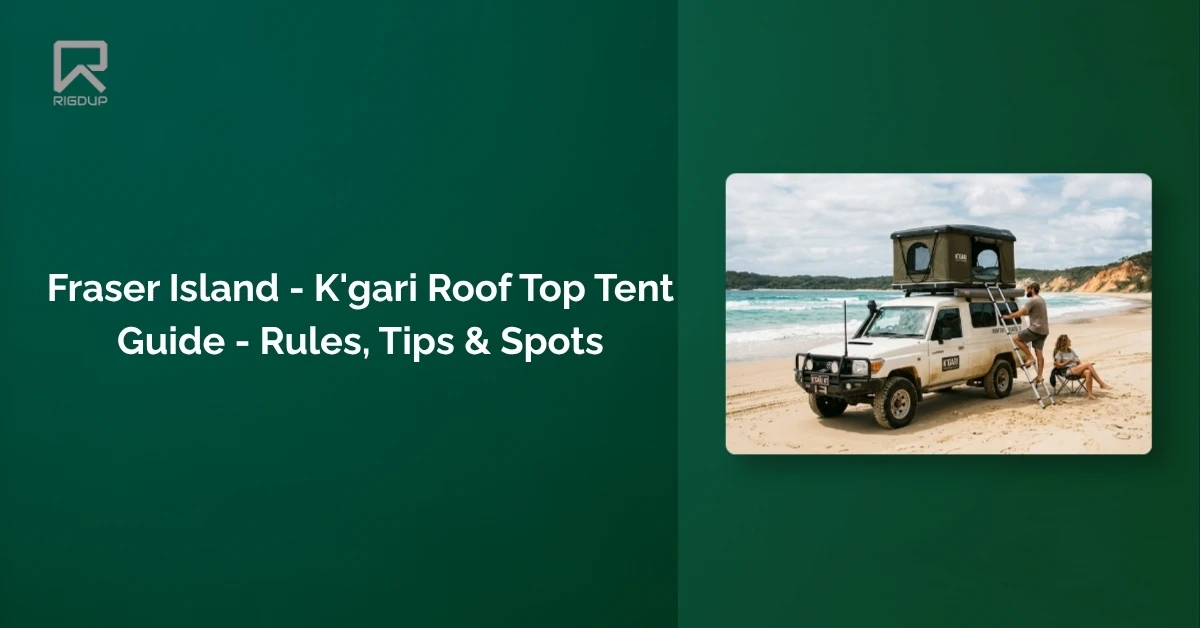
Imagine waking up above the beach on K’gari, with a dingo sniffing around your campsite below. That’s the reality of rooftop tent camping on Fraser Island and it’s genuinely brilliant, if you get it right.
Rooftop tents are allowed on K’gari, but the rules, permit categories, and campsite types catch a lot of campers completely off guard. Before you roll onto the barge, you need the right permits and the correct site type sorted. Get that wrong, and rangers will fine you on the spot 0 no warnings, no second chances.
Fraser island K’gari roof top tent guide covers everything: which zones welcome RTTs, the dingo rules that actually affect you, gear you’d never think to pack, and the classic first-timer mistakes worth avoiding. Before starting here is a short guide on rules:
- Rooftop tents are permitted on K’gari with the correct permits.
- You need a Vehicle Access Permit (VAP) and a camping permit booked through QPWS.
- RTTs must be booked as a camper trailer site, not a standard tent site.
- Dingo safety rules still apply – secure all food and zip your tent at all times.
- Beach camping zones (1–9), Dundubara, and Waddy Point are the best RTT-friendly spots.
- No campfires anywhere on K’gari – gas stoves only.
Can You Take a Rooftop Tent to K’gari (Fraser Island)?
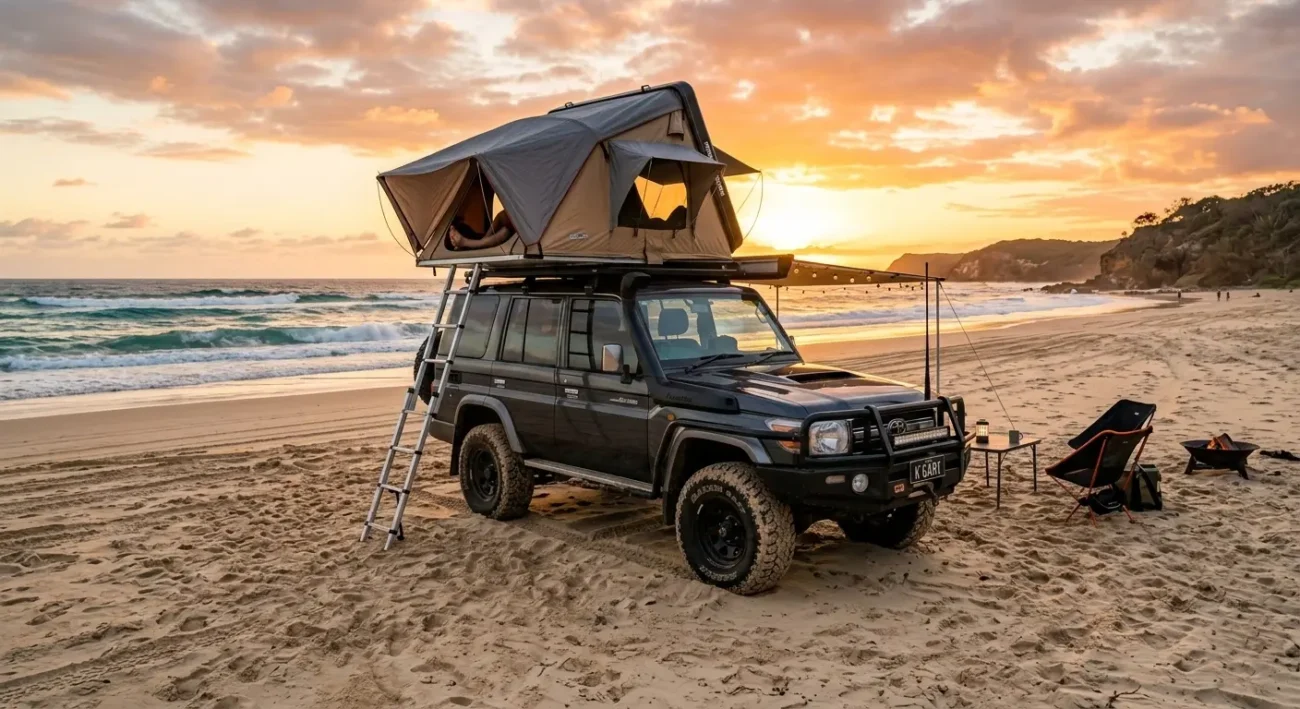
Yes, you absolutely can take a rooftop tent to K’gari. QPWS officially recognises rooftop tents as a camping setup on the island. But here’s the part most people miss. QPWS classifies a rooftop tent the same way it classifies a camper trailer.
That means you cannot book a standard tent site and roll in with an RTT on your roof. You need to specifically book a designated camper trailer site. If you get that wrong, rangers will fine you without hesitation. They’re on the island daily and they check bookings against setups.
The reason for this classification makes sense when you think about it. A rooftop tent is not a freestanding ground tent. It’s attached to a vehicle. It takes up more space than a standard tent and requires vehicle clearance around it.
Designated camper trailer sites are sized and positioned to accommodate exactly that kind of footprint. Booking correctly protects both you and other campers sharing the zone.
Which Camping Sites on K’gari Actually Accept Rooftop Tents?
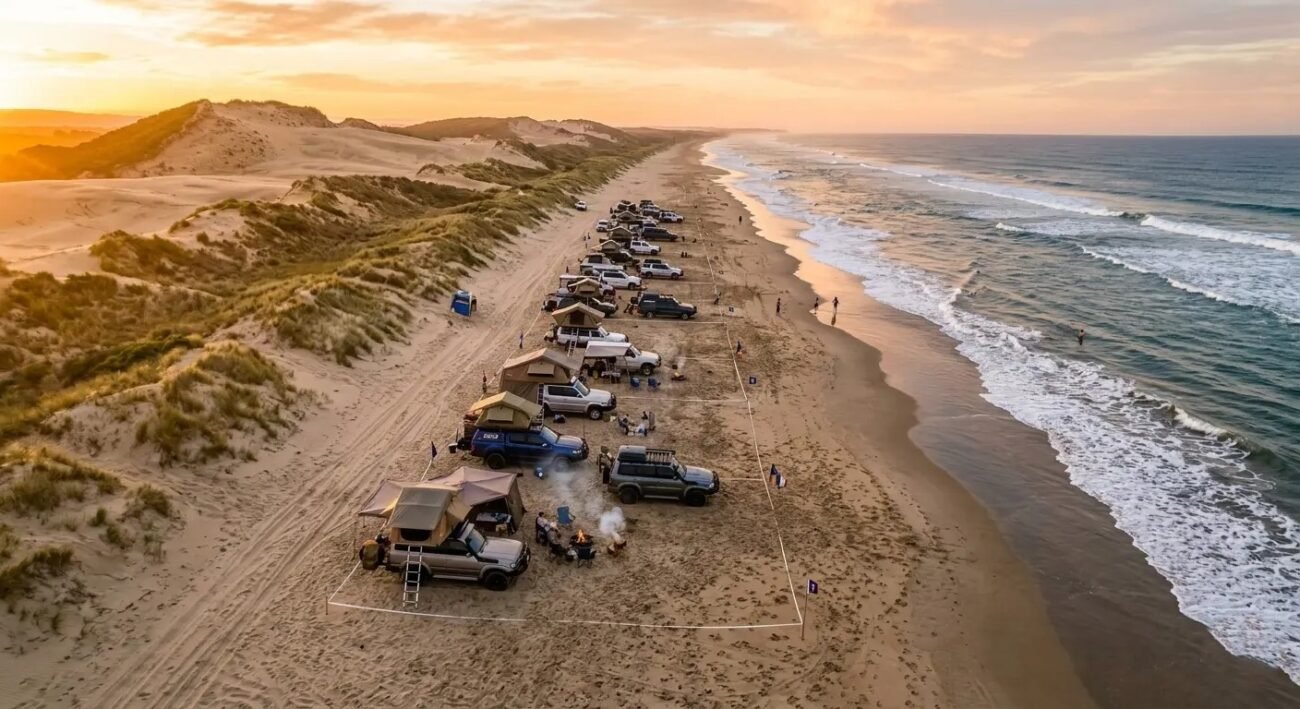
Not every one of the 45 camping areas on K’gari is set up for rooftop tents. Because RTTs are classified as camper trailers, you need to find sites with defined or undefined camper trailer allocations. The eastern beach camping zones are your primary option.
Zones 1 through 8 along 75 Mile Beach all have camper trailer access. These are open beach sites with no set infrastructure. You drive in, find your allocated area, and set up directly on the sand above the high-tide mark.
Dundubara is one of the better-equipped options further north. It has undefined camper trailer sites and is fenced, which matters a lot for families. Eli Creek camping area also has defined camper trailer sites and sits in a great central location.
Small off-road camper trailers and RTTs can also set up at Waddy Point Top. Central Station and some walk-in zones are tent-only. Always confirm the site type on the QPWS booking system before you lock anything in.
What Are the Best Spots on K’gari for a Rooftop Tent?
From personal experience, the eastern beach zones give you the most genuine K’gari RTT experience. But a few specific sites stand out above the rest. Note that Beach Zone 9 (Diray and Carree) is closed until June 2026, so plan around that.
| Camping Spot | Type | Why It Suits an RTT | Best For |
|---|---|---|---|
| Beach Zone 5 (near Eli Creek) | Top pick | Central location, firm sand at low tide, easy access from Hook Point barge | First-timers, base camping |
| Beach Zone 3 (near Eurong) | Top pick | Close to Eurong services, good sand firmness, well-used track | Campers wanting a safety net nearby |
| Dundubara | Fenced | Dingo deterrent fence, undefined camper trailer sites, showers on-site | Families, first-time K’gari visitors |
| Waddy Point Top | Fenced | Fenced area, fire rings permitted, stunning ocean views, very quiet | Couples, experienced campers |
| Beach Zone 7 (near Maheno wreck) | North | Wake up metres from the Maheno shipwreck, remote feel, long open beach | Adventurers wanting an iconic backdrop |
| Eli Creek camping area | Top pick | Defined camper trailer sites, close to Eli Creek swim, very sheltered | Families, longer stays |
What Permits Do You Need for a Rooftop Tent Trip to K’gari?
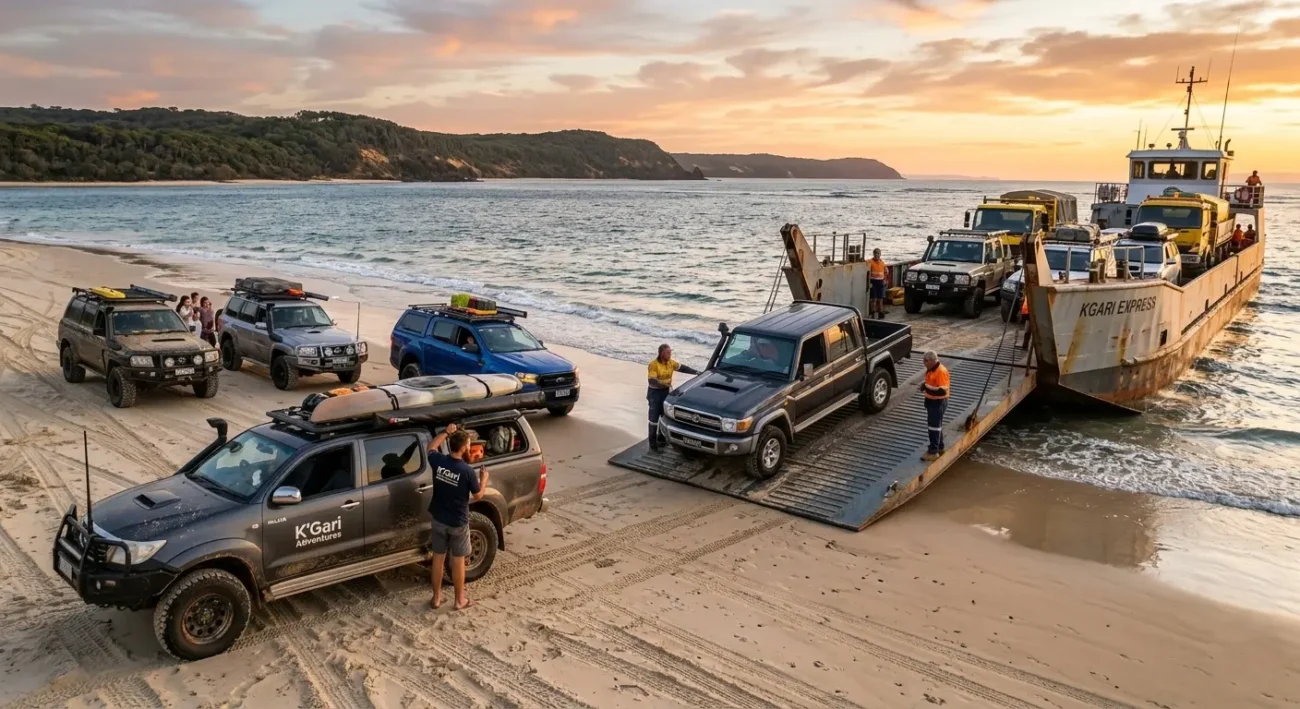
Getting permits wrong is the most common mistake first-time K’gari campers make. There are two mandatory permits, and both must be purchased before you board the barge. The booking system is online through QPWS and takes about 15 minutes.
Get it done at least two weeks before your trip. Availability for camper trailer sites disappears fast, especially in school holidays.
- Vehicle Access Permit (VAP): $57.80 for up to one month. Required for every vehicle entering K’gari. Must be displayed on your windscreen at all times. Book at qld.gov.au/camping.
- Camping permit: $7.25 per person per night, or $29 per family per night. Must be booked at the same time as your site selection. Cannot swap sites without amending your booking first.
- Camper trailer site booking: Not a separate fee, but a mandatory site type selection. Choose “camper trailer” not “tent” when booking. Rooftop tents must use this category.
- Camping permit tag: Must be physically displayed at your campsite. Rangers check it daily against their records. A digital version on your phone is not enough on its own.
- Organised group permit: Required if you are bringing a school group or a registered commercial group. Apply separately through QPWS before your booking is confirmed.
Do You Need to Worry About Dingoes When Camping in a Rooftop Tent?
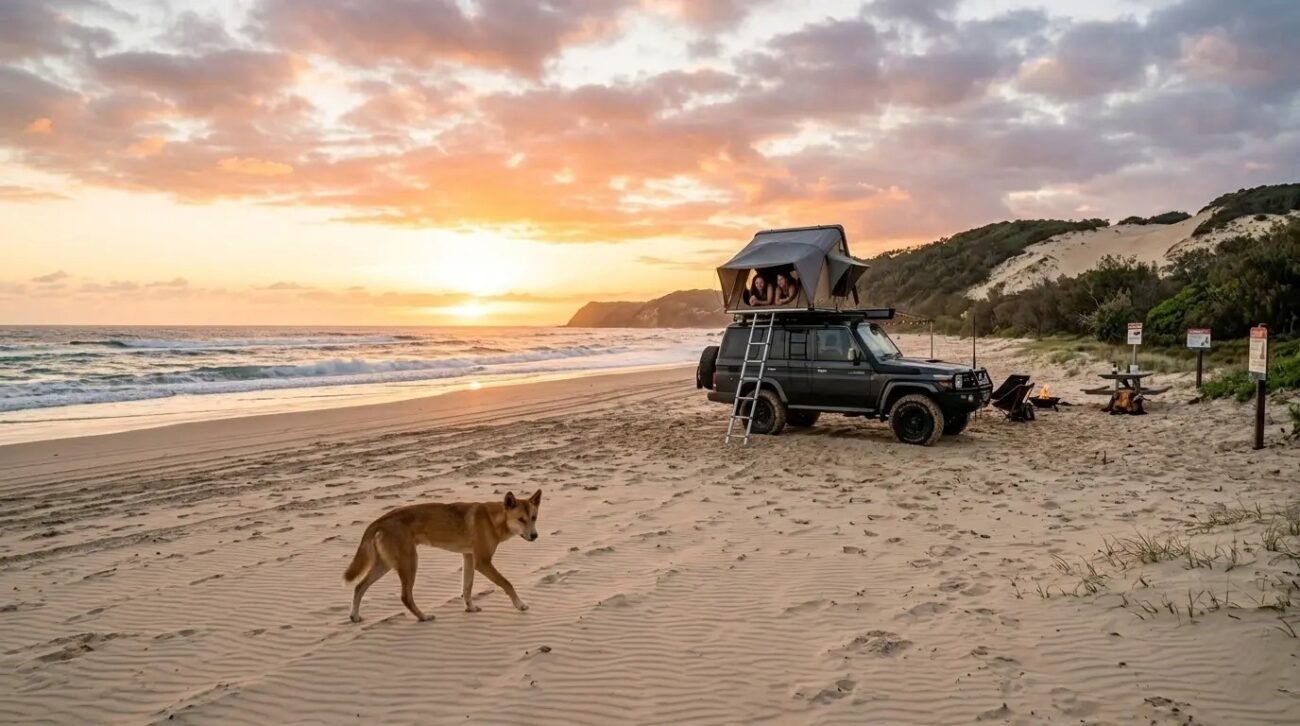
Sleeping two metres off the ground does take dingo risk off the table while you’re actually in your tent. That’s a genuine advantage of an RTT over a ground tent on K’gari. Dingoes cannot reach you up there.
But the mistake people make is thinking the RTT itself keeps them safe for the whole trip. It doesn’t. Dingo risk is about what happens on the ground, not just where you sleep.
QPWS requires you to store all food in hard-sided, lockable containers at all times. A soft-sided cooler on your camp table is a dingo invitation. They’re smart animals and they’ll work at a zip or a latch. Fines for attracting dingoes start at $2,670 on the spot and can reach $27,538 for serious offences.
If you have kids under 14, book a fenced campsite like Dundubara or Waddy Point. The fence means dingoes cannot enter the camping area overnight. That extra layer matters more than the RTT height advantage when children are part of the trip.
Will Your 4wd Handle K’gari with a Rooftop Tent on the Roof?
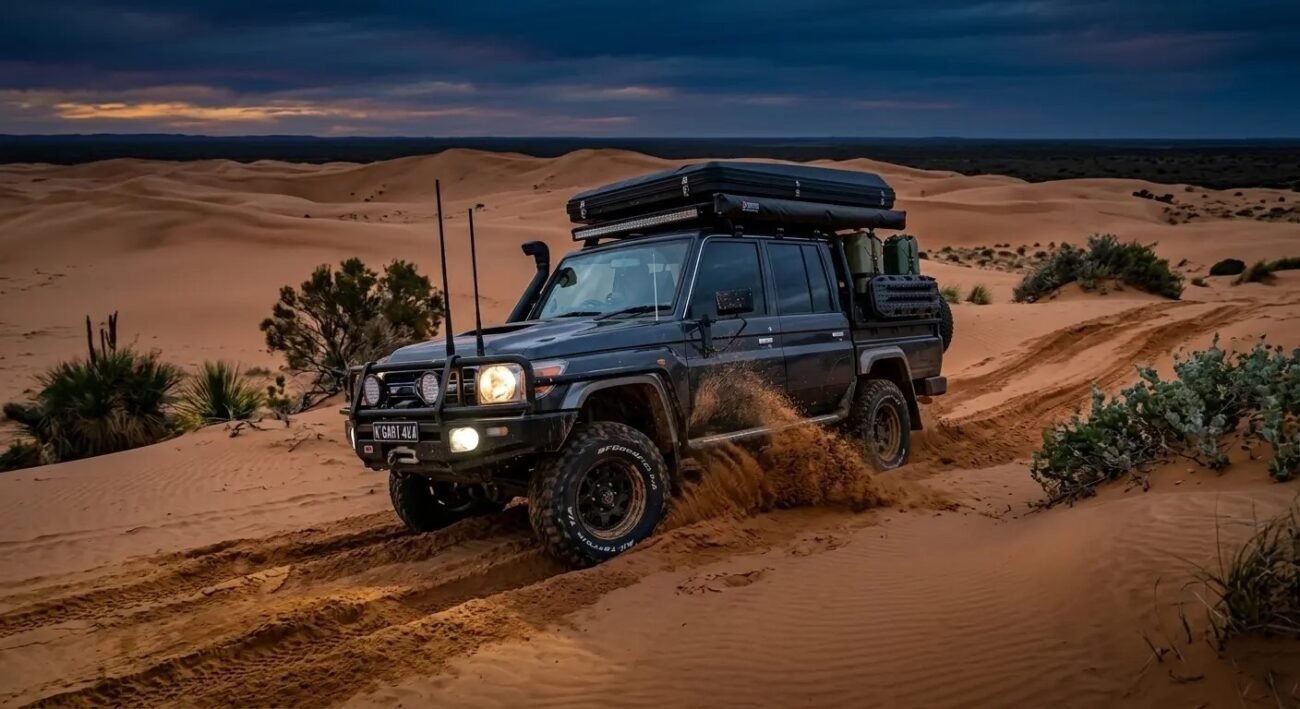
Most full-size 4WDs handle K’gari just fine. Adding a rooftop tent does change the equation though. A typical RTT weighs between 50 and 80 kilograms. That weight sits up high on your roof rack, raising your vehicle’s centre of gravity.
On soft sand, this makes the whole rig feel less planted through corners and on dune crossings. It also means your engine works harder through the deeper, softer sections of 75 Mile Beach.
Before you load up and roll onto the barge, check your roof rack’s rated load. Most racks handle between 70 and 100 kilograms dynamic load. Your RTT, the rack itself, and any extra rooftop gear all count toward that figure. Exceed the rating and you risk damaging the rack or the vehicle’s roof rails.
Once you hit the sand, air down to around 18 to 20 PSI. This widens the tyre’s contact patch so it floats rather than digs in. Vehicles like the 200 Series Land Cruiser, Prado 150, or Patrol Y62 handle K’gari well with an RTT fitted. Just ensure your rack is correctly rated, and always air down before you drive off the barge.
What Gear Do You Actually Need for K’gari in a Rooftop Tent?
The island removes conveniences fast. There’s no phone signal in most areas of K’gari. There’s no tap water at beach campsites either. And there’s no servo to duck to if you forget something critical. What you load before the barge is what you’ve got. For an RTT setup, a few items matter far more than they would in a regular ground tent.
| Category | What You Need | Why It Matters on K’gari |
|---|---|---|
| Water | 20L per person minimum | No fresh water at most beach campsites |
| Recovery gear | Snatch strap, traction boards, shovel | Getting bogged with an RTT deployed is a serious situation |
| Communications | UHF radio (Ch. 40), satellite communicator | No mobile coverage across most of the island |
| Cooking | Gas stove, extra gas canisters | Campfires are banned at nearly all sites |
| RTT awning setup | Sand anchor pegs, guy ropes | K’gari wind is strong and unpredictable on the beach |
| Food storage | Hard-sided dingo-proof container | QPWS requirement — fines apply if food is unsecured |
| First aid | Fully stocked kit, including bandages | Medical help is a long drive and ferry away |
| Bedding | Warm sleeping bag rated to 10°C | Nights cool sharply between June and August |
| Fuel | Full tank plus spare jerry can | Island fuel costs up to 50% more per litre |
| Navigation | Paper maps plus offline GPS downloaded | No mobile data on most sand tracks |
How Much Does a K’gari Rooftop Tent Trip Cost?
K’gari is genuinely affordable once you understand what the fees cover. Most of the cost hits before you even roll onto the barge. The permit fees are reasonable for a World Heritage-listed island. Where budgets blow out is fuel, ferry, and food if you haven’t planned ahead. The breakdown below is based on two adults, four nights, self-catering from the mainland.
| Cost Item | Est. Cost (AUD) | Notes |
|---|---|---|
| Vehicle Access Permit (VAP) | $57.80 | Per vehicle, up to 1 month. Book via QPWS online. |
| Camping permit | $7.25 per person / night $29 per family / night | 2 adults x 4 nights = $58. Book in advance. |
| Ferry return (vehicle + passengers) | $105 to $350 | Cheapest via Manta Ray Barge from Inskip Point |
| Mainland fuel (fill up before barge) | $60 to $100 | Always fill a full tank before you leave the mainland |
| Island fuel (avoid if possible) | 30 to 50% more per litre | Carry a 20L jerry can to reduce island fuel stops |
| Food and drinks (4 days, 2 people) | $150 to $250 | Buy and prep everything on the mainland |
| Recovery gear hire (if needed) | $50 to $150 | Traction boards can be hired from Hervey Bay operators |
Estimated total for 2 adults, 4 nights: approximately $450 to $750 AUD
When’s the Best Time to Visit K’gari with a Rooftop Tent?
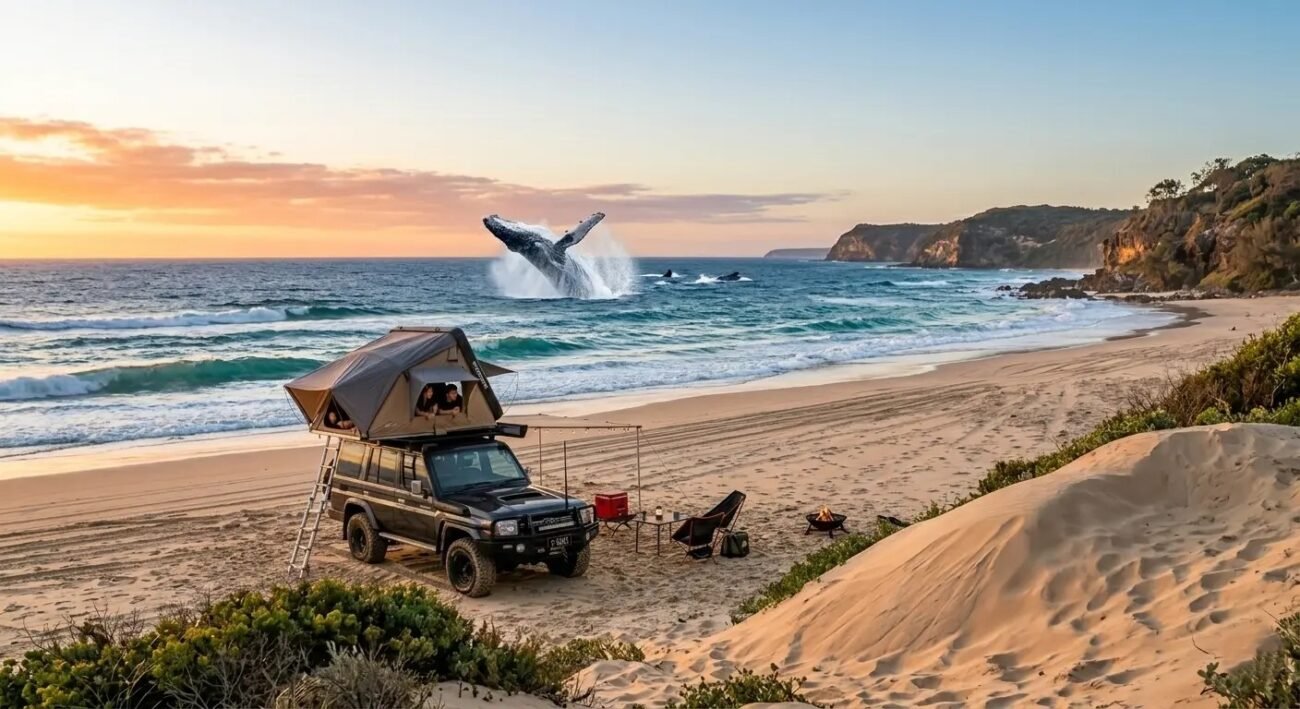
This depends on what you want from the trip, but for rooftop tent camping the dry season wins. That runs from May through to October. Daytime temperatures sit between 15 and 25 degrees Celsius during this window. That’s ideal for sleeping in a rooftop tent because nights are cool but not cold. The sand tracks are also firmer in the dry, which means less chance of getting bogged with a loaded 4WD.
June through August brings the added bonus of humpback whale season. You can watch them from the beach along 75 Mile Beach without booking a tour. These months are also the quietest on the island. Campsite bookings are easier to get, especially midweek.
September and October are the sweet spot for most RTT campers. Daytime temps hit around 22 to 27 degrees, nights are comfortable, and permit availability is still reasonable. Avoid the Christmas and January school holiday period entirely. Every campsite books out months ahead, beach traffic gets heavy, and summer storms make soft sand driving genuinely unpredictable.
What Are the Rules You Must Follow When Camping at K’gari?
K’gari is one of the most tightly regulated national parks in Queensland. Rangers patrol beaches and campsites daily and issue fines without warning. Knowing the rules before you board the barge is not optional.
- Display your camping permit tag on your tent and your windscreen at all times.
- Display your Vehicle Access Permit on your windscreen throughout the entire trip.
- Camp only at your booked designated site. You cannot move without amending your booking first.
- No campfires anywhere on K’gari, except at QPWS-regulated fire rings at Dundubara and Waddy Point only.
- Never feed, approach, or interfere with dingoes. Heavy on-the-spot fines apply.
- Keep all food secured inside a hard-sided container at all times, including inside your vehicle.
- No pets are permitted anywhere on K’gari, full stop.
- No drones at Lake McKenzie or within any camping areas on the island.
- Set your camp up above the high-tide mark. Rangers enforce this at all beach sites.
- Air your tyres back to road pressure before returning to the barge.
- Group sizes are capped at 8 people per site at most QPWS campgrounds.
- Never collect firewood or disturb any vegetation. Carry all your own firewood from the mainland.
How Do You Set Up a Rooftop Tent on K’gari Without Getting It Wrong?
Setting up an RTT on K’gari is more environment-specific than most people expect. The beach shifts with tides. The wind off 75 Mile Beach is consistent and strong. A poorly placed camp means a sleepless, stressful night. Follow these steps every single time you stop to set up.
- 1Check the tide chart before you park. Always set up at least 30 metres above the high-tide mark.
- 2Park on firm, damp sand. Soft, dry sand shifts overnight and slowly tilts your rig.
- 3Face your ladder away from the prevailing wind. This reduces flap noise and makes entry safer.
- 4Open the RTT fully before you stake the awning. Never sequence it the other way around.
- 5Use dedicated sand anchor pegs only. Standard steel pegs pull straight out of K’gari sand overnight.
- 6Zip all food and scented items inside your vehicle before climbing up for the night.
- 7Fully latch and zip your RTT before sleeping. Dingoes can work a partially closed zip with ease.
What Mistakes Do First-Time Rooftop Tent Campers Make on K’gari?
The same mistakes appear on K’gari trip after trip and nearly all of them are avoidable. First-time RTT campers underestimate what the island demands. The beach is not a standard campground. It is a tidal, wind-exposed environment with active dingo patrols and sand that behaves very differently at different times of day.
- Booking a tent site instead of a camper trailer site. Rangers will fine you on the spot without warning.
- Parking on soft, dry sand above the tide line. That zone is the loosest sand on the beach and will slowly sink your tyres overnight.
- Skipping the tide chart entirely. The tide moves fast on K’gari and it will not announce itself.
- Not airing down before leaving the barge. Driving at road pressure bogs most vehicles within the first kilometre of beach.
- Using standard tent pegs for the awning. They are useless in beach sand. Carry sand anchors.
- Leaving food in soft-sided bags or on the camp table. Dingo on-the-spot fines start at $2,670.
- Assuming mobile coverage exists for navigation or emergencies. It does not on most of the island.
How Do You Stay Safe and Prepared in a Rooftop Tent on K’gari?
K’gari strips back modern conveniences fast. There is no mobile signal across most of the island. The nearest hospital is on the mainland. A vehicle bogged with an RTT deployed overhead is a complicated situation to recover from. Preparation before the barge is not optional. Follow these steps before and during your trip.
- 1Download offline maps via Hema Explorer before leaving the mainland. Mobile data does not work on most island tracks.
- 2Set your UHF radio to Channel 40 before driving onto the beach. This is the standard 4WD beach communication channel.
- 3Carry a satellite communicator such as a Garmin inReach Mini 2 for real emergency contact off-grid.
- 4Pack a minimum of 20 litres of fresh water per person for the full trip duration.
- 5Carry a snatch strap, two traction boards, and a shovel as your minimum vehicle recovery kit.
- 6Check the QPWS K’gari conditions report at parks.des.qld.gov.au before you board the barge.
- 7Leave your exact itinerary with someone on the mainland, including which campsite zone you are in each night.
Is a Rooftop Tent Better Than a Tent, Camper Trailer or Van on K’gari?
There is no single best option for everyone on K’gari. Sand, tidal access, dingo rules, and site classification all influence the answer. Your budget and how much comfort you need overnight matter just as much. This comparison covers what each setup actually delivers on the island.
| Category | Rooftop Tent | Ground Tent | Camper Trailer | Campervan / Van |
|---|---|---|---|---|
| Site access on K’gari | Camper trailer sites | Tent sites | Camper trailer sites | Very limited |
| Dingo safety | Elevated, off ground | Ground level, highest risk | Enclosed, moderate | Fully enclosed |
| Beach sand access | Drive-in, no trailer | Drive-in, no trailer | Manageable with skill | High bog risk |
| Setup time on site | Under 5 minutes | 10 to 20 minutes | 15 to 30 minutes | Nil, live-in |
| Sleeping comfort | Integrated mattress, flat | Ground, uneven surface | Full bed, enclosed | Best comfort |
| Overall cost to entry | $1,000 to $4,500 | $200 to $800 | $15,000 to $60,000+ | $40,000 to $120,000+ |
| Best suited for K’gari | Solo travellers, couples, experienced 4WDers | Budget campers, fenced sites only recommended | Families wanting space and comfort | Resort access only, not beach camping |
Sample 4-Day K’gari Rooftop Tent Itinerary
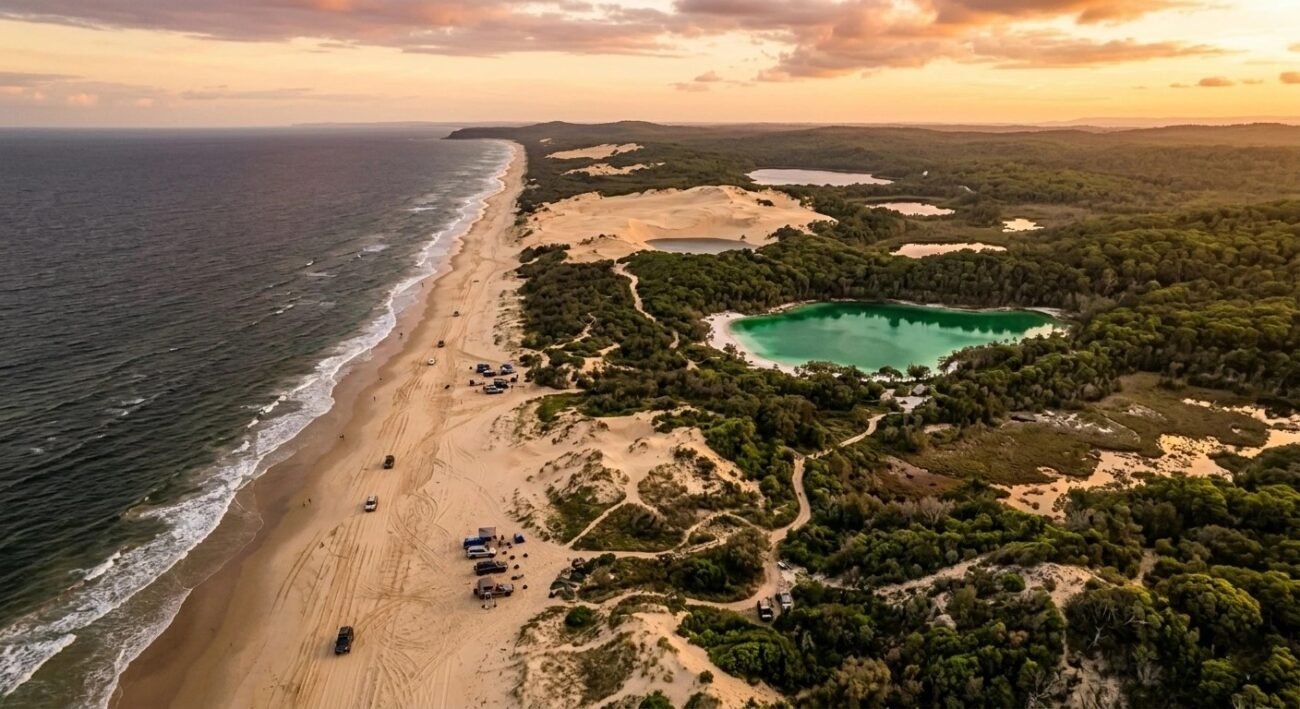
Four days is the minimum to do K’gari properly in a rooftop tent. This itinerary is built around driving two hours either side of low tide. Check the tide chart before you finalise your booking dates and adjust each day’s drive window accordingly.
Day 1: Arrive and set up camp
Board the Manta Ray Barge at Inskip Point near Rainbow Beach. Air down to 18 PSI before leaving the barge. Drive north on 75 Mile Beach and set up at Beach Zone 3 near Eurong. This zone sits close to the Eurong General Store for any last-minute supplies. Set up well above the high-tide mark before dark.
Day 2: Southern and central lakes circuit
Leave camp early and drive inland to Lake McKenzie (Boorangoora). Arrive before 9am to beat the tour buses. Continue to Central Station for the forest walk and swimming at Wanggoolba Creek. Swim at Lake Birrabeen on the return. It is less crowded than McKenzie and just as beautiful. Return to camp via Beach Zone 5 near Eli Creek.
Day 3: Eastern beach north run
Float down Eli Creek first thing in the morning. Walk to the Maheno Shipwreck. Continue north past the Pinnacles to Indian Head lookout. Time your arrival at low tide for the best rock pool access. Camp at Beach Zone 7, just 10 kilometres south of Indian Head. It is remote, quiet, and brilliant for night skies.
Day 4: Champagne Pools and return south
Drive north to Champagne Pools at low tide. These are the only safe ocean swimming spots on K’gari. Take your time here. Drive south along 75 Mile Beach and air back up before joining Hook Point. Board the return barge to Inskip Point. Allow at least two hours of buffer for soft sections near Waddy Point.
Warpping Up
K’gari is one of those places that rewards campers who prepare properly and makes life hard for those who wing it. A rooftop tent is one of the smartest setups you can bring to the island. You get off the sand, away from dingo access at night, and you wake up with a view that most people only see in photos.
But getting it right means booking a camper trailer site, not a tent site. It means airing down before the barge, carrying your own water, and knowing your tide chart before you park. Rangers patrol daily. They check permits against setups. The fines are real and they are not small.
The best RTT spots sit along the eastern beach zones, particularly around Eli Creek and the Maheno wreck. If you’re travelling with kids, Dundubara and Waddy Point with their fenced layouts are the right call. If you want that true open-beach K’gari experience, Beach Zones 5 and 7 deliver it every time.
Your trip is only as good as your preparation. Book early, confirm your site type, and check the QPWS K’gari conditions report the week before you leave. If you’ve found this guide useful, share it with your crew before your next trip. See our full guide to Camping Destinations & Adventures throughout Australia right here.
FAQs
Yes, several Hervey Bay and Rainbow Beach hire companies offer rooftop tent-fitted 4WDs ready to go. Companies like Aussie Trax include full camping packages. Always confirm the RTT is included in the hire agreement and that the vehicle access permit covers the specific hire vehicle before booking.
QPWS allows bookings up to 12 months ahead. For popular zones like Eli Creek and Beach Zone 5, aim for at least three months out. School holiday periods and long weekends fill within hours of opening. Weekday bookings outside of holidays are easier to secure at shorter notice.
No. Only high-clearance 4WD vehicles are permitted on 75 Mile Beach and inland sand tracks. Standard AWDs and low-clearance vehicles are not suitable. The beach is a gazetted Queensland road with a speed limit of 80km/h. Rangers enforce vehicle compliance at the barge landing.
Yes. Dundubara and Waddy Point Top both have dingo-deterrent fencing and accept RTTs as camper trailer bookings. Eli Creek camping area is also fenced and has defined camper trailer sites. These are the best options for families or anyone wanting an extra layer of overnight dingo protection.
The speed limit on 75 Mile Beach is 80km/h. On inland sand tracks, the limit drops to 30km/h. Both are strictly enforced by QPWS rangers. Turtle nesting season between November and April brings additional speed restrictions in nesting zones along the eastern beach.