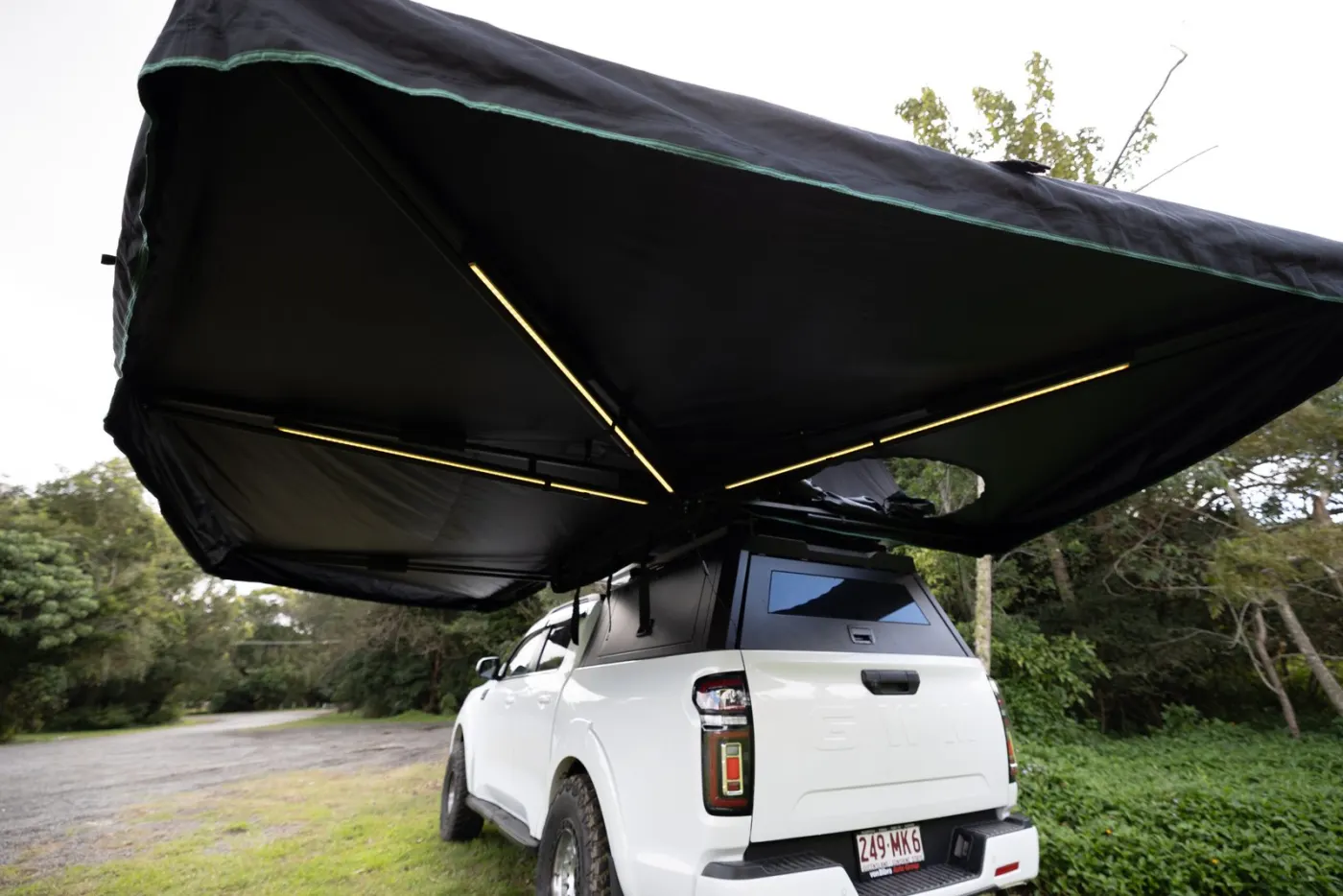
Kimberley camping with a rooftop tent is best in the dry season, from about May to September, in a well-prepared high-clearance 4WD. Plan your fuel, water, permits and park passes before you go, because the distances are huge and mobile coverage is close to zero.
Here is a quick snapshot. The rest of this guide covers the best spots, the Gibb River Road, permits, crocodile safety, fuel stops and what first-timers get wrong.
- Go in the dry season - May to September is the safest window for most travellers
- The Gibb River Road is the spine - about 660 km of mostly dirt road linking many of the best spots
- A capable 4WD is a must - high clearance, all-terrain tyres and two spare tyres
- Top spots include - El Questro, Bell Gorge, Mitchell Falls, Windjana Gorge, Purnululu (Bungle Bungle)
- Some areas need passes - Mitchell Falls needs an Uunguu Visitor Pass, and Kalumburu needs a community permit
- Carry plenty of water - many camps have none, or only untreated water
- Carry a satellite communicator - mobile coverage is close to zero across most of the Kimberley
- Free camps exist - but most well-known spots charge camping fees
- Crocodile risk is real - saltwater crocs live in most waterways, so treat all water as crocodile country
What Actually Makes the Kimberley Different From Other RTT Destinations in Australia?
The Kimberley works on a different scale to the rest of the country. The distances are long and the land is harsh in ways that catch people out. Here is what sets it apart.
- Scale is extreme - a single driving day can be 300 km on corrugated dirt roads
- Roads are technical - creek crossings, bull dust and deep corrugations are normal
- Wildlife risk is serious - saltwater crocodiles live in most waterways across the region
- Self-sufficiency is a must - fuel stops can be 300 km or more apart
- Mobile coverage is almost zero - satellite communication is essential, not optional
- Some areas need permits - Kalumburu and the Mitchell Plateau need passes from Traditional Owners
- Heat is extreme - temperatures can top 40°C in the shoulder months
- The wet season closes roads - many roads shut for months at a time
When Is the Right Time to Go RTT Camping in the Kimberley?
In the Kimberley, timing is a safety call, not a preference. The dry season runs from about May to September. This is the most reliable window for rooftop tent camping. Roads are open, creek crossings are easier and the weather is mild enough for families.
April and October are shoulder months with real risk. Roads can still be wet in April and start closing again in October. June to August gives the best balance of weather, crowds and heat for most people.
July is peak season and popular camps fill fast. The wet season, from about November to March, brings floods, road closures and more crocodile activity near water. Parks close too. Purnululu, for example, is generally open from April or May until late November, weather permitting (checked October 2026). Do not plan a first Kimberley trip, or any trip with kids, in the wet.
What Is the Gibb River Road Like to Drive and Camp On?
The Kimberley road network is nothing like southern Australia. The Great Northern Highway is sealed and suits any vehicle. It is the main road between the Broome area and Kununurra.
The Gibb River Road is the main event. It runs about 660 km from Derby towards Kununurra through the heart of the Kimberley, and most of it is dirt. Corrugations shake every bolt on your vehicle and can loosen roof rack mounts, so check them every day.
Slow down on corrugations. It cuts the shaking on your tent, rack and vehicle. The Kalumburu Road heads north off the Gibb and is much rougher. It needs a well-prepared 4WD, and you need a permit to visit Kalumburu community itself.
Purnululu is reached by the Spring Creek Track: 53 km of unsealed track from the Great Northern Highway, for high-clearance 4WDs only. Allow 1.5 to 3 hours. The speed limit on the track is 50 km/h, and only single-axle trailers are allowed (checked October 2026).
What Are the Best Kimberley Camping Spots for a Rooftop Tent?
The hard part is not finding a good spot. It is choosing between them. Each place below offers something different.
| Spot | Access | Camping | Why Go | Good For |
|---|---|---|---|---|
| Bell Gorge (Silent Grove) | Moderate 4WD | Silent Grove campground | Gorge, waterfall and swimming hole | Most travellers |
| El Questro Wilderness Park | Moderate 4WD | Private camps with their own fees | Thermal springs, gorge walks, a range of sites | Families |
| Windjana Gorge NP | Easy 4WD | Windjana Gorge campground | Freshwater crocs, ancient reef walls | A good first Kimberley stop |
| Purnululu NP (Bungle Bungle) | High-clearance 4WD only | Walardi and Kurrajong, bookable | Beehive domes, Cathedral Gorge | Worth every corrugation |
| Mitchell Falls (Ngauwudu) | Hard 4WD | Mitchell Falls Campground, not bookable | The Kimberley’s best-known waterfall | Experienced trips |
| Manning Gorge | Moderate 4WD | Camp at Mount Barnett Roadhouse | Big swimming pools, a rewarding walk | Adventurous families |
Is Your Vehicle Actually Ready for the Kimberley?
Most people answer this one too hopefully before their first trip. The Kimberley finds every weak spot in your vehicle, and it does it fast. A standard showroom 4WD needs proper preparation first.
Tyres come first. Run strong all-terrain tyres and carry two full-size spares, not one. Punctures are common on sharp rock crossings and corrugated sections.
Check your roof rack’s dynamic load rating before you load the tent. Many racks are rated around 70 to 80 kg while driving, and corrugations add a lot of stress to the mounts. Our guide to roof rack weight limits for a roof top tent explains how to check yours. Check every rack bolt each morning.
A snorkel is worth fitting if you will cross deep water. Water in the engine’s air intake can wreck it. Always walk a crossing before you drive it.
How Do You Handle Fuel, Water, and Food Across the Kimberley?
Logistics is where unprepared travellers get into trouble fast. The gaps between supply points are long, so plan these before you leave home.
| Essential | Challenge | What Works | How Much to Carry |
|---|---|---|---|
| Fuel | 300 km+ gaps between reliable stops | Long-range tank or jerry cans | 150% of what you calculate |
| Water | Many camps have none, or only untreated water | Water tank plus backup jerry cans | Enough for every day between reliable taps, plus a reserve |
| Food | Heat spoils food fast | 12V fridge (ARB, Engel or similar) plus dry goods | 3 days more than your plan |
| Fuel Stops | Some stations close or run dry | Refuel at every chance | Never assume the next one is open |
| Water Sources | Creek water quality is unreliable | Carry a filter, such as a Sawyer Squeeze | Always treat any collected water |
Purnululu shows why. There is no fuel in the park, so arrive with enough for at least 300 km. The bore water there is untreated, so treat it before you drink it (checked October 2026).
What Safety Risks Are Real in the Kimberley and How Do You Manage Them?
The Kimberley needs an honest look at the risks. That is not to scare you off. Knowing the real risks makes you confident, not anxious. Most are easy to manage with the right preparation.
- Saltwater crocodiles - in most waterways; follow the warning signs, but a missing sign does not mean no crocodiles
- Flash flooding - a dry crossing can flood within minutes; check Bureau of Meteorology warnings daily
- Remote breakdowns - carry spare belts, hoses, fuses and a tyre repair kit
- Extreme heat - heat exhaustion comes on fast; start driving early and rest through the hottest part of the day
- Road corrugations - cause blowouts and suspension damage; slow down and check tyre pressures daily
- Night driving - cattle and kangaroos are on the roads after dark; avoid driving at night
- Medical emergencies - the main hospitals are in Broome and Kununurra; carry a full first aid kit and know how to use it
- Water crossings - always walk a crossing first; depth and current change fast after rain
What Communications Gear Do You Need in the Kimberley?
Mobile coverage is close to zero once you leave the towns and the highway. That is a safety issue, not an inconvenience. The right communications gear matters as much as spare tyres. Prices are a rough guide from early 2026. Check each brand’s site for today’s price.
| Device | Usage | Price (AUD) |
|---|---|---|
| Garmin inReach Mini 2 | Two-way satellite messaging, SOS, GPS tracking | Around $500 to $600 plus subscription |
| SPOT Gen4 | One-way satellite messaging and SOS | Around $200 to $250 plus subscription |
| PLB (GME MT410G) | Emergency rescue beacon, SOS only | Around $300 to $400, no subscription needed |
| UHF CB Radio (GME TX3520S) | Vehicle-to-vehicle talk on the Gibb River Road | Around $150 to $250 |
| Satellite Phone (Iridium 9575) | Two-way voice calls anywhere in Australia | Around $1,200 to $1,500 plus call costs |
A common setup is a two-way satellite messenger plus a UHF CB radio. The messenger handles emergencies and trip tracking. The UHF lets you talk to other drivers on the Gibb.
What RTT Setup Works Best for the Kimberley’s Conditions?
The wrong tent setup suffers fast out here. Dust gets into soft shell zips and seams on corrugated roads. Dark canvas heats up in the shoulder months. Hardshells tend to keep dust out better and set up faster after a long driving day. Compare the two in our guide to hard shell vs soft shell roof top tents.
| Feature | What to Look For | Why It Matters in the Kimberley |
|---|---|---|
| Shell type | Hard shell, aluminium | Keeps dust out better, faster setup |
| Mattress | At least 40mm foam or memory foam | Good sleep matters after a day of corrugations |
| Flooring | Anti-condensation mat | Cold nights after hot days can cause condensation |
| Power | Solar panel and a 12V socket | Off-grid power for lights and charging between towns |
| Ladder length | Long enough for your lifted vehicle | Lifted 4WDs need more reach for safe climbing |
| Zippers | YKK or similar quality zips | Cheap zips fail in dust and heat |
The Nomad 1.4M hardshell ticks this list. It has an aluminium shell, an aluminium honeycomb base, a 70mm memory foam mattress, YKK zips and a 2.6 m telescopic ladder. A 255W solar panel comes included, and the power socket has USB-C, USB-A and 12V. It sleeps 2 adults, so a family of 4 will need a second bed, such as a ground tent or swag for the kids.
What Recovery Gear Should You Carry in the Kimberley?
Recovery gear is the difference between a small problem and a multi-day wait for help. Soft sand, creek crossings and bull dust bog vehicles even on the main track.
- Recovery boards (MaxTrax or similar) - for sand, mud and soft creek bank exits
- Kinetic recovery rope rated for your vehicle - for vehicle-to-vehicle recoveries from serious bogs
- Snatch block and tree trunk protector - extends winch pulls and protects trees
- Electric winch (Warn or similar) - self-recovery when no other vehicle is around
- High-lift jack with a base plate - lifts the vehicle on soft ground; use it with care
- Tyre repair kit (plugs and inflators) - fast puncture repairs before you use a spare
- 12V tyre inflator - to pump back up after airing down
- Rated bow shackles - to connect recovery gear safely under load
Carrying it is not paranoia. Bogs happen even on the main roads.
How Much Does a Full Kimberley RTT Trip Actually Cost?
Costs stack up fast when remote fuel prices, park fees and station camp charges add together. Here is a rough guide for a two-week trip for two people.
| Cost Category | Estimated Cost (AUD) | Notes |
|---|---|---|
| Fuel | $800 to $1,200 | Remote stations charge more than city prices |
| Campsite fees | $400 to $700 | National parks plus station camps over 14 nights |
| Park passes and permits | Check current fees | WA park pass, Uunguu Visitor Pass, Kalumburu permit. Day entry at standard-fee WA parks is $17 per vehicle (checked October 2026) |
| Food and supplies | $600 to $900 | Remote stores cost more |
| Vehicle servicing | $300 to $600 | A service before the trip plus checks after |
| Emergency money | $500 minimum | Tyres and surprise repairs |
| Total before passes | $2,600 to $3,900 | Per couple for two weeks, not counting gear |
Never budget at the low end for the Kimberley. Add at least 30% to every line. Remote Australia always costs more than you plan.
Are There Free Camping Spots in the Kimberley Worth Knowing About?
Some free camps exist, mostly rest areas along the highways and a few spots where landholders allow it. Most well-known gorges and parks charge a camping fee, and private stations set their own fees.
Free usually means no toilets, no water and no help nearby. Carry your own water, a way to manage waste and extra supplies. Access rules change each season, so check before you count on any free camp. Never camp on station land or Aboriginal land without permission.
What Permits and Passes Do You Need Before Entering the Kimberley?
Permits trip up more first-timers than almost anything else. Sort them weeks before you leave. It is also a matter of respect for the communities and Country you travel through.
- WA park pass - covers park entry fees at parks such as Purnululu. Holiday passes run for 5 days, 14 days or 4 weeks, and there is an Annual All Parks Pass. Camping fees are separate (checked October 2026). See WA park passes for today’s prices.
- Uunguu Visitor Pass (Mitchell Falls) - required to enter Mitchell River National Park on Wunambal Gaambera Country. Buy it online before you arrive, as there is no public internet or phone access there. Parks and Wildlife no longer charges park entry there, but its camping fees still apply (checked October 2026). See the Mitchell River National Park page.
- Purnululu National Park - standard park entry fees apply, and a park pass covers them. Walardi and Kurrajong campgrounds are bookable (checked October 2026). See the Purnululu National Park page.
- Kalumburu community - you need a permit to visit. Contact the Kalumburu Aboriginal Corporation well ahead.
- El Questro Wilderness Park - private land with its own entry and camping fees. Book with them directly.
- Private stations - Drysdale River Station and others set their own rules. Call ahead before you use their roads or camps.
- Parks and Wildlife campgrounds - many are bookable online, and peak season fills months ahead. Some, like Mitchell Falls Campground, are not bookable.
What Do First-Timers Wish They Knew Before RTT Camping the Kimberley?
Ask any experienced Kimberley traveller and you hear the same lessons.
- Corrugations slow everything down - 200 km on the Gibb can take four to five hours, not two; plan your daily distances around that
- Check road conditions every morning - Main Roads WA has a road conditions map, and conditions change overnight after rain
- Your trip will take longer than planned - build in at least three spare days
- Dust gets into everything - seal camera gear, food and clothes in zip-lock bags before you leave home
- Arrive at camp by 3pm - the best sites fill by mid-afternoon
- Tell someone your full route - leave a written plan with someone who knows when to call for help
- Water crossings look shallower than they are - walk every crossing before you drive it
- Book a service after the Gibb - corrugations stress every part of your vehicle
Can Families With Kids Do the Kimberley in a Rooftop Tent?
Yes, families can do the Kimberley in a rooftop tent. It depends on your kids’ ages, the adults’ experience and how well you prepare. It is not a good first family trip. Build up to it with one or two easier trips first.
With younger kids, stick to easier spots with good access, such as Windjana Gorge and El Questro, and day visits like Tunnel Creek. Skip the Kalumburu Road and Mitchell Falls with young children. Those tracks are hard going.
June is a good month for families. The weather is mild, roads are dry and crowds are lighter than in July. For easier trips to build up to, see our family roof top tent camping spots.
Is the Kimberley Worth It in a Rooftop Tent?
Yes. The Kimberley is one of the most remote and demanding regions in Australia, and one of the most rewarding. Kimberley camping rewards travellers who plan well, prepare the vehicle and respect the land.
Dry season timing, a well-prepared 4WD, satellite communication, solid fuel and water plans and the right tent setup are the basics out here, not extras.
Sort your permits and passes, book your sites early and check your vehicle before the dry season starts. Planning a Kimberley trip for two? See the Nomad 1.4M hardshell roof top tent, with a 255W solar panel included and a 2 year warranty.
FAQs
How long does it take to drive the Gibb River Road from Derby to Kununurra?
Allow at least five to seven days for the full road, about 660 km. Drive times on corrugated dirt are slow. With gorge stops, camp setup and rest days, seven to ten days is far more enjoyable.
What tyres are best for rooftop tent camping across the Kimberley?
Strong all-terrain tyres in a light truck build suit the Kimberley. The BFGoodrich KO2 and Toyo Open Country AT3 are popular choices for corrugations and sharp rock. Always carry two full-size spares. One is not enough for the Gibb River Road.
Can you do the Kimberley without a snorkel on your 4WD?
You can reach many spots without one, but deep creek crossings are a real risk. A snorkel helps keep water out of the engine’s air intake. Always walk a crossing first, and wait or turn back if it is too deep.
Where do you book campsites for Kimberley camping?
Many Parks and Wildlife campgrounds are bookable online, including Walardi and Kurrajong at Purnululu. Some, like Mitchell Falls Campground, are not bookable. El Questro and the stations take bookings directly. Kalumburu permits go through the community. Book six to eight weeks ahead in the peak dry season.
Is the Kimberley suitable for first-time 4WD travellers?
It is not an ideal first 4WD trip. The distances, corrugations, creek crossings and remote conditions need solid experience. Do two or three easier outback trips first, and build your recovery and navigation skills before the Gibb River Road.