
Best Roof Top Tent Camping spots for Family in Australia – 2026

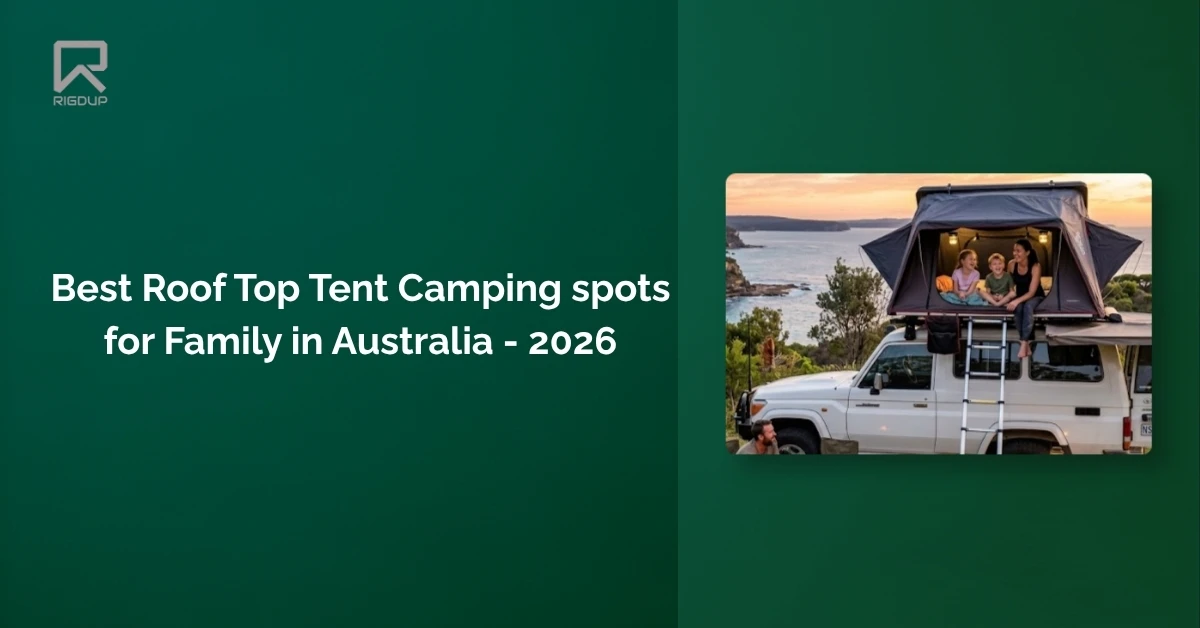
Thinking about taking your family on a proper Aussie adventure this year? More Australian families are swapping caravan parks for rooftop tent camping and it’s easy to understand the appeal. The best rooftop tent camping spots for families in Australia are spread right across the country.
From Queensland’s ancient gorges to WA’s stunning coastline, your next family trip is closer than you think. To help you plan faster, here’s a quick snapshot of the top spots — then we’ll break each one down properly, covering facilities, access, seasonal tips, and how to set your rig up right for the whole family.
- Girraween National Park (QLD) – Toilets, water, flat sites, walking trails
- Carnarvon Gorge (QLD) – Toilets, water, shaded sites, gorge walks
- Kosciuszko National Park (NSW) – Powered sites, toilets, water, alpine scenery
- Warrumbungle National Park (NSW) – Toilets, water, dark sky reserve, basic amenities
- Grampians / Gariwerd (VIC) – Toilets, water, easy road access, rock formations
- Cape Range National Park (WA) – Shaded sites, toilets, Ningaloo snorkelling access
- Karijini National Park (WA) – Gorges, waterholes, basic to full facilities
- Flinders Ranges (SA) – Powered sites, toilets, outback scenery
- Litchfield National Park (NT) – Waterfalls, swimming holes, toilets – dry season only
What Makes a Camping Spot Right for Families in a Roof Top Tent?
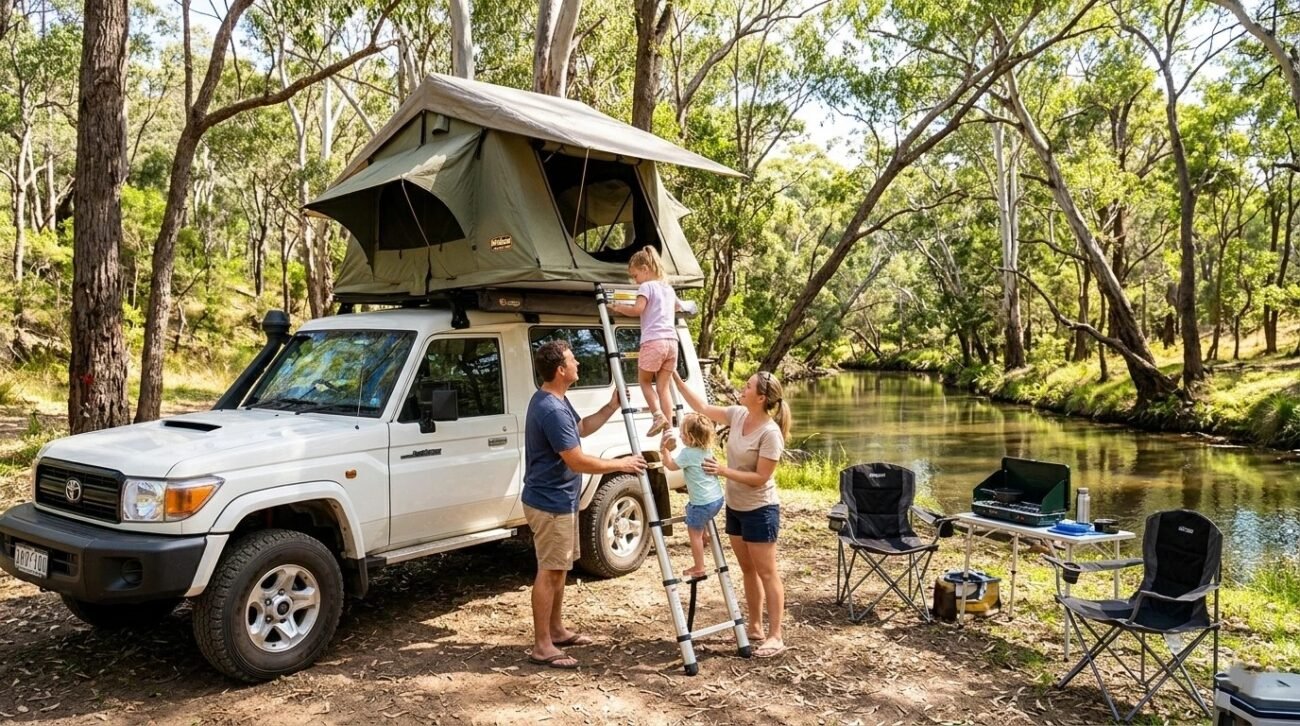
- Flat and stable ground is the first thing I check. Your vehicle must sit level for safe sleeping and ladder use.
- Easy vehicle access matters more than people think. Tight tracks make RTT setup stressful, especially with kids around.
- Toilet access or clean bush toilets reduce hassle. Families do not enjoy long night walks in the dark.
- Safe surroundings are critical. Avoid steep drops, strong river currents, or areas known for aggressive wildlife.
- Shade and airflow keep the tent cooler. RTTs trap heat faster than ground tents during summer afternoons.
- Distance from crowds helps kids sleep better. Busy caravan parks can get noisy late into the night.
- Water access is useful for cleaning and quick swims. I prefer calm creeks over rough beaches for families.
- Mobile signal or nearby towns give peace of mind. It helps if something goes wrong with the vehicle.
- Fire safety zones matter in Australia. Always check local fire rules before setting up a cooking area.
- Space for awnings or annex setups adds comfort. Families need extra room for gear and kids to move.
From experience, the best family RTT spots feel simple and stress free. If setup feels rushed or unsafe, it is not the right place.
Which Roof Top Tent Camping Spots in Queensland Are Best for Families?
| Location | Key Facilities for Families |
|---|---|
| Cylinder Beach Campground | Toilets, showers, calm beach, easy access tracks |
| Inskip Peninsula Recreation Area | Beach camping zones, toilets, fishing spots, open space |
| Daintree Rainforest Campgrounds | Basic amenities, shade, wildlife experience, guided tours |
| Big4 Adventure Whitsunday Resort | Pools, playgrounds, powered sites, family facilities |
Queensland is perfect for RTT trips because access tracks are generally forgiving. Sand driving spots like Inskip need tyre pressure control. I usually drop to 16 to 18 PSI. That keeps the ride smooth and prevents getting stuck.
For families, I lean toward places like Cylinder Beach. It offers calm water and easy setup zones. Daintree is amazing, but humidity can cause condensation inside RTTs. Ventilation matters there.
Which Spots in New South Wales Should Families Put on Their List?
| Location | Key Facilities for Families |
|---|---|
| Diamond Head Campground | Toilets, beach access, open grassy sites |
| Jervis Bay Holiday Park | Showers, calm beaches, kid friendly zones |
| Glenworth Valley Campground | Activities, toilets, wide open camping areas |
| Hat Head National Park Campgrounds | Basic facilities, river access, quiet environment |
NSW offers a mix of coastal and bush camping. I often recommend Diamond Head for first time RTT families. The ground is firm, which helps keep the vehicle level.
Jervis Bay stands out for calm water and clean amenities. That makes a big difference with young kids. Glenworth Valley adds activities, which keeps children busy without needing to leave camp.
Where Should Families Go RTT Camping in Victoria?
| Location | Key Facilities for Families |
|---|---|
| Tidal River Campground | Toilets, showers, walking tracks, safe beaches |
| Lake Eildon National Park Campgrounds | Boat access, toilets, large campsites |
| Marengo Holiday Park | Powered sites, ocean views, family amenities |
| Bimbi Park | Wildlife, playground, clean facilities |
Victoria weather can change quickly, so RTT durability matters here. I always check wind ratings before heading to coastal spots like Marengo.
Tidal River is one of my top picks. It balances facilities and nature perfectly. Lake Eildon suits families who enjoy water activities. Wide sites make RTT setup easy and safe.
From experience, Victoria trips need better planning, but the rewards are worth it.
What Are the Best Family RTT Spots in Western Australia?
Western Australia is genuinely on another level for rooftop tent camping. I have driven thousands of kilometres across this state with my family, and it never stops impressing. The sheer scale of WA means proper planning matters more here than anywhere else.
Distances between spots are long, so I always pre-plan fuel stops carefully. The reward for that extra planning is some of the most breathtaking camping in the country. Facilities at major national parks are solid and well-maintained for families.
| Spot | Region | Toilets | Water | Road Type | Kids’ Highlight |
|---|---|---|---|---|---|
| Cape Range NP | Exmouth Coast | Yes | Yes | Sealed + gravel | Ningaloo snorkelling, shaded sites |
| Karijini NP | Pilbara | Yes | Yes | Sealed + gravel | Gorges, natural waterholes |
| D’Entrecasteaux NP | South West WA | Yes | Limited | Gravel | Wild coast, quiet beaches |
| Fitzgerald River NP | Esperance Region | Yes | Yes | Gravel | Spring wildflowers, coastal cliffs |
Cape Range is my personal favourite in WA. Snorkelling Ningaloo with my kids was genuinely one of the best family camping moments I have ever had.
Are There Family-Friendly RTT Spots in South Australia Worth Visiting?
South Australia is consistently underrated in the rooftop tent community. I think most people overlook it because the Outback feels intimidating for families. But SA actually has some beautifully accessible camping that is perfect for families with kids.
The Flinders Ranges alone is worth the drive from Adelaide. Facilities at key spots are well-maintained and surprisingly comfortable. I always tell families to visit SA in autumn or spring to avoid extreme heat.
| Spot | Region | Toilets | Water | Road Type | Kids’ Highlight |
|---|---|---|---|---|---|
| Flinders Ranges NP | Northern SA | Yes | Yes | Sealed + gravel | Wilpena Pound, native wildlife |
| Innes NP | Yorke Peninsula | Yes | Yes | Sealed road | Beaches, surf, coastal walks |
| Belair NP | Adelaide Hills | Yes | Yes | Sealed road | Easy access, family walking trails |
| Lincoln NP | Eyre Peninsula | Yes | Yes | Gravel | Sea lions, quiet beaches |
Innes National Park was a surprise hit with my family. The coastal scenery is stunning and the drive in from Adelaide is completely manageable.
What About the Northern Territory – Is It Safe for Family RTT Camping?
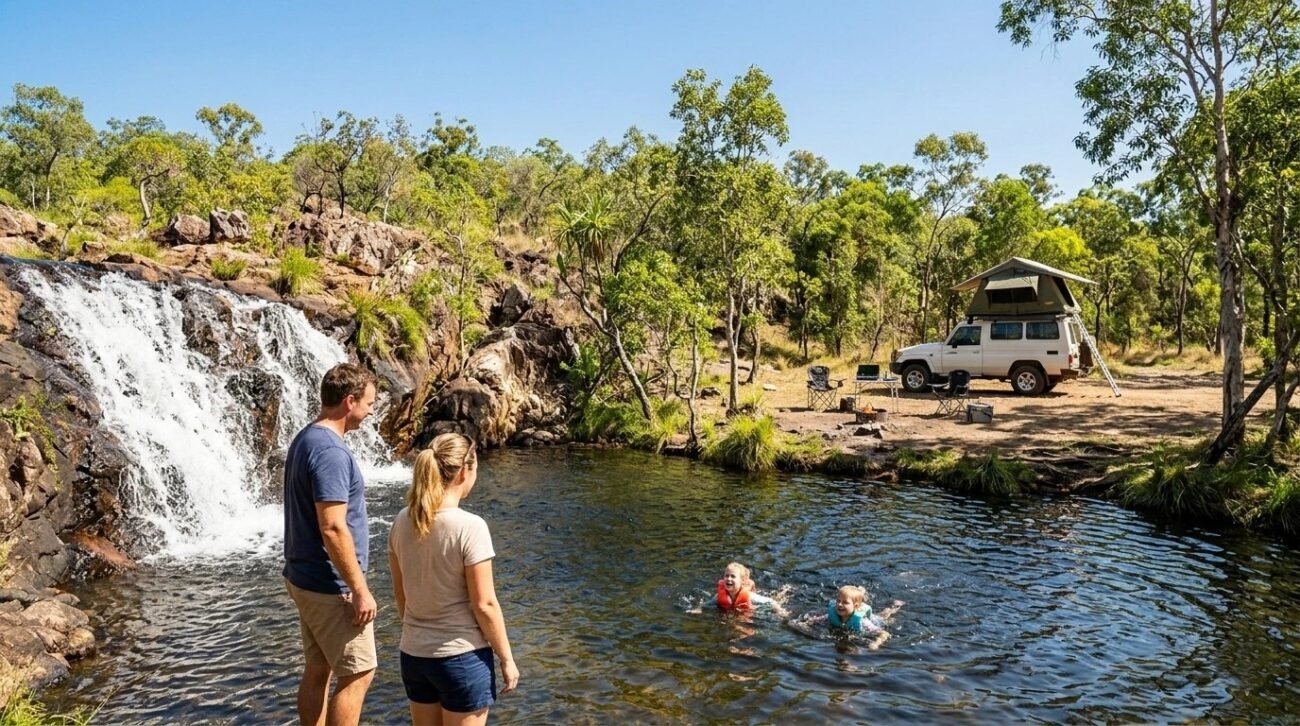
The Northern Territory is absolutely worth visiting as a family, but it demands more respect than any other state. I have camped the NT twice with my family and both trips required serious advance planning. The key rule is timing.
You visit the Top End only during dry season, between May and September. The wet season brings dangerous flooding, extreme humidity, and saltwater crocodile activity near waterways. The Red Centre around Uluru is more forgiving year-round but still gets extremely hot in summer months.
Litchfield National Park near Darwin is my top NT pick for families. The waterfalls and swimming holes are stunning during dry season. Always check Parks NT crocodile safety signage before letting kids near any water.
Mobile coverage is limited across most of the NT, so I always carry a satellite communicator. The NT rewards careful families with some of the most unforgettable camping in Australia. Preparation separates a great NT trip from a dangerous one.
Which Camping Spots Are Easy to Reach Without a Serious 4WD?
This question comes up constantly from families who are new to rooftop tent camping. I started out in a standard Toyota RAV4 before upgrading, so I understand the concern completely. The good news is that many of Australia’s best family camping spots are fully accessible on a standard all-wheel-drive or even a high-clearance two-wheel-drive vehicle.
You do not need a lifted Landcruiser to have an incredible family camping experience. Sealed or well-graded gravel roads cover most top-tier national park campgrounds across the country.
| Spot | State | Road Type | Vehicle Needed |
|---|---|---|---|
| Grampians NP | VIC | Sealed road | Any vehicle |
| Girraween NP | QLD | Sealed + light gravel | Any vehicle |
| Cape Hillsborough NP | QLD | Sealed road | Any vehicle |
| Innes NP | SA | Sealed + gravel | Standard AWD |
| Warrumbungle NP | NSW | Sealed + gravel | Standard AWD |
My RAV4 handled every spot in this table without any issues. Starting on easy-access spots builds your family’s camping confidence before tackling harder terrain.
Which Spots Are Best for Families Who Want Real Off-Road Adventure?
Once my family got comfortable on easy-access sites, we started pushing further out. Real off-road RTT camping rewards you with total solitude and genuinely wild landscapes. But it demands a capable vehicle, recovery gear, and honest self-assessment of your driving skill.
I run a 200 Series LandCruiser with a 2-inch lift, 33-inch all-terrains, and a MaxTrax recovery kit. You need at minimum a proper 4WD with a high-clearance setup before attempting these spots with kids on board.
| Spot | State | Difficulty | Vehicle Needed | Kids’ Highlight |
|---|---|---|---|---|
| Guy Fawkes River NP | NSW | Moderate 4WD | High-clearance 4WD | Remote gorge, swimming holes |
| Karijini NP (Dales Gorge) | WA | Moderate 4WD | High-clearance 4WD | Gorge swimming, waterfall pools |
| Litchfield NP (off-track) | NT | Moderate 4WD | Capable 4WD | Waterfalls, dry season tracks |
| Coorong NP (beach driving) | SA | Soft-sand 4WD | Deflated tyres required | Beach camping, bird life |
| Innamincka Regional Reserve | SA | Hard remote | Fully equipped 4WD | Outback history, Cooper Creek |
Guy Fawkes River was our family’s first real off-road trip. The tracks were challenging but the gorge swimming holes made every corrugated kilometre completely worth it.
Do These Camping Spots Have the Facilities Kids Actually Need?
Facilities make or break a family camping trip. I have pulled into remote spots with tired kids expecting toilets, only to find nothing. That experience changed how I research every single trip now. The honest answer is that major national park campgrounds across Australia are well-equipped.
Spots like Wilsons Promontory, Girraween, and Cape Range all have flushing toilets, tap water, and defined camp sites. These are the spots I recommend to families who are still building their camping routine.
The further from major park hubs you go, the less you can rely on fixed facilities. Pit toilets replace flushing ones. Tank water replaces town pressure. Remote spots often have nothing at all. My personal rule is simple.
If I am camping with kids under ten, I only go where flushing toilets and running water are confirmed. Once the kids are older and the routine is established, roughing it becomes part of the adventure rather than a source of stress at 10pm.
When Is the Best Time of Year to Take the Family RTT Camping in Australia?
Timing your trip correctly is one of the most important decisions you will make. Australia is a massive country with completely different climate zones. Getting the timing wrong means either extreme heat, flooding rain, or dangerous conditions for kids. I plan every family trip around a simple rule. Match the season to the region, not just the school holidays.
Queensland and the Northern Territory demand dry season visits between May and September. The Top End wet season from October to April brings flooding, humidity, and serious safety risks near water.
Western Australia is best between April and October before the Pilbara heat becomes extreme. Victoria and New South Wales are brilliant in spring from September to November and autumn from March to May. These shoulder seasons deliver mild temperatures, fewer crowds, and stunning natural colour. South Australia suits the same shoulder season windows.
I personally avoid school holiday peak weeks at major spots. Booking pressure is intense and the solitude that makes RTT camping special disappears fast during those periods.
Are These Spots Free or Do You Need to Book in Advance?
Booking and cost planning is something families often overlook until the last minute. I made that mistake at Wilsons Promontory once and missed out completely.
Popular national park campgrounds across Australia require advance bookings, especially during school holidays and long weekends. Free camping does exist but usually means fewer facilities and more remote access. Here is a practical breakdown of what to expect.
| Spot | State | Cost | Booking Required | Booking Platform |
|---|---|---|---|---|
| Girraween NP | QLD | Paid | Yes | QLD National Parks |
| Carnarvon Gorge | QLD | Paid | Yes | QLD National Parks |
| Sundown NP (Ramsay’s Crossing) | QLD | Free | No | Self-register on site |
| Kosciuszko NP | NSW | Paid | Yes | NSW National Parks |
| Coolah Tops NP | NSW | Free | No | Self-register on site |
| Grampians NP | VIC | Paid | Yes | Parks Victoria |
| Barmah NP (select sites) | VIC | Free | No | No booking needed |
| Cape Range NP | WA | Paid | Yes | DPaW WA |
| Karijini NP | WA | Paid | Yes | DPaW WA |
| Flinders Ranges NP | SA | Paid | Yes | SA National Parks |
| Innamincka Regional Reserve | SA | Free | No | Self-register on site |
| Litchfield NP | NT | Paid | Yes | Parks NT |
| Keep River NP | NT | Free | No | Self-register on site |
I always book a minimum of six weeks ahead for school holiday periods. Last-minute availability at top spots is rare and stressful with a family depending on you. Free spots are brilliant for spontaneous trips but always carry extra water and supplies since facilities are minimal or non-existent.
Sonnet 4.6
Extended
How Many Nights Should Families Plan for Each Destination?
Trip length is something I badly underestimated during my early camping years. Consequently, arriving somewhere spectacular and leaving the next morning feels rushed. Also, drive time to remote spots cuts into your first and last days.
Therefore, for family RTT trips, I generally plan a minimum of two nights at any destination over three hours away. For close-to-home spots, like Dharawal in NSW or Belair in SA, a single overnight works well as a shakedown trip.
For mid-range destinations such as Girraween or the Grampians, three nights lets your family settle in and explore properly. Meanwhile, major destinations like Karijini, Cape Range, or Carnarvon Gorge deserve five to seven nights. These places reward slow travel. For instance, my family spent six nights at Cape Range and still didn’t see everything.
Finally, for the Northern Territory or a multi-state road trip, I recommend ten to fourteen days. This ensures you experience it fully without burning everyone out. Planning ahead and pacing your journey makes camping trips genuinely enjoyable.
What Rooftop Tent Setup Actually Works for a Family of 4 or More?
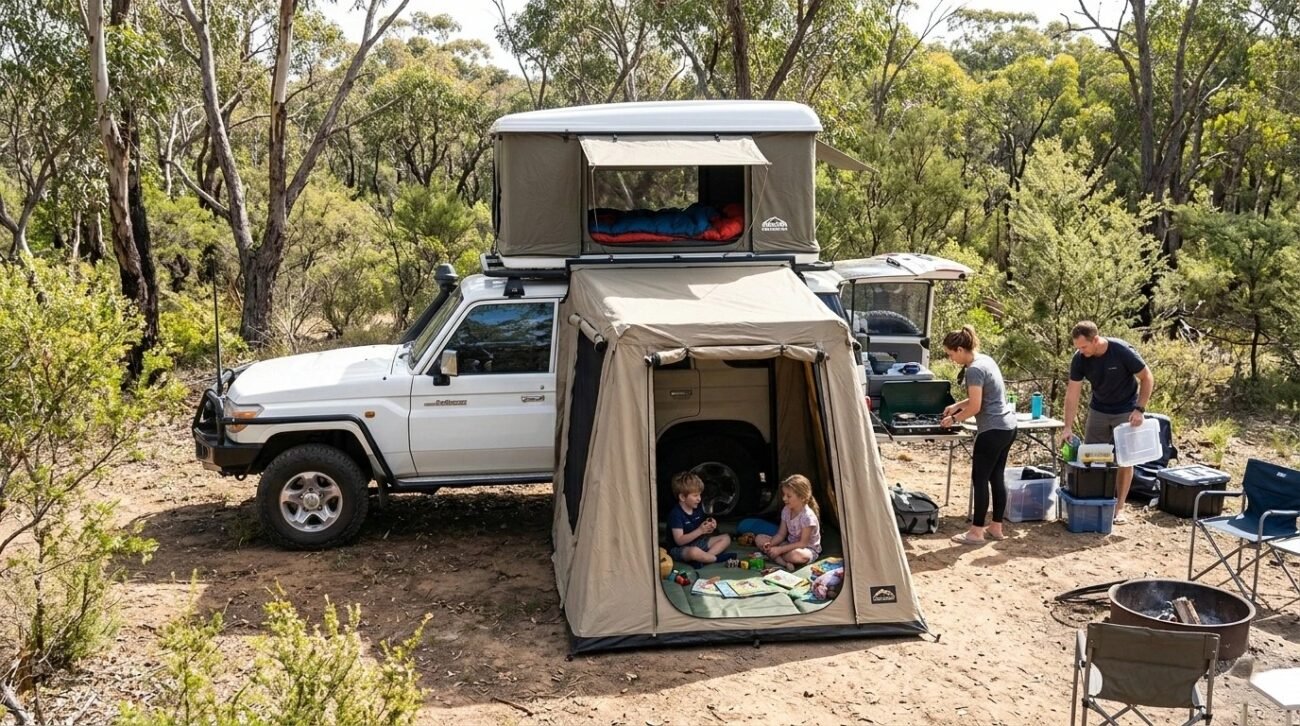
This is the question I get asked most often at camping expos and in online forums. The honest answer is that a single rooftop tent alone rarely works comfortably for a family of four.
A standard 1400mm x 2100mm RTT, which is the most common size, sleeps two adults comfortably or two adults and one small child at a squeeze. Once you add a second or third child, you need a system, not just a tent.
My current setup pairs an ARB Simpson III hardshell RTT on the roof rack with a Darche ECHO 3 ground tent attached via the annex. The kids sleep in the ground tent, which connects directly to the annex of the RTT. This gives everyone personal space and makes the morning routine dramatically easier.
Hardshell tents are my strong preference for families because setup takes under sixty seconds. After a long drive with restless kids, that speed matters enormously. Check your roof rack’s dynamic load rating carefully before purchasing.
Most quality racks handle 150 kilograms static but only 70 to 80 kilograms while driving. Exceeding that rating while loaded with luggage is a real and dangerous mistake families commonly make.
What Should Families Pack That Most People Forget on RTT Trips?
I have forgotten critical items on more trips than I care to admit. The obvious gear always makes the bag. It is the small, practical items that consistently get left behind. After years of family RTT trips, I built a master checklist specifically around what kids and rooftop setups actually demand. These forgotten items below have saved my family from genuinely miserable nights and stressful mornings in the bush.
| Forgotten Item | Why It Matters | Practical Usage |
|---|---|---|
| Rubber-backed step stool | RTT ladders are steep for small kids | Safe independent climbing for children |
| Portable shower (Joolca HOTTAP) | No hot water at most remote sites | Post-hike wash for muddy kids |
| Microfibre towels x2 per person | Drying space is extremely limited in RTT | Fast drying, compact storage |
| Headtorch per child (Petzl Tikka) | Kids wake at night and need independence | Safe toilet trips without waking parents |
| Annexe groundsheet | Dirt and moisture enter the annexe constantly | Clean play and sleep surface for kids |
| Collapsible washing basin | Dishes and kids’ clothes need washing daily | Saves water, keeps camp organised |
| Insect net for RTT door | Mozzies enter fast at dusk in QLD and NT | Uninterrupted sleep without chemical sprays |
Packing the step stool was genuinely a game-changer for my youngest. She went from needing help every single time to climbing up independently within one trip.
What Are the Biggest Mistakes Families Make on Their First RTT Camping Trip?
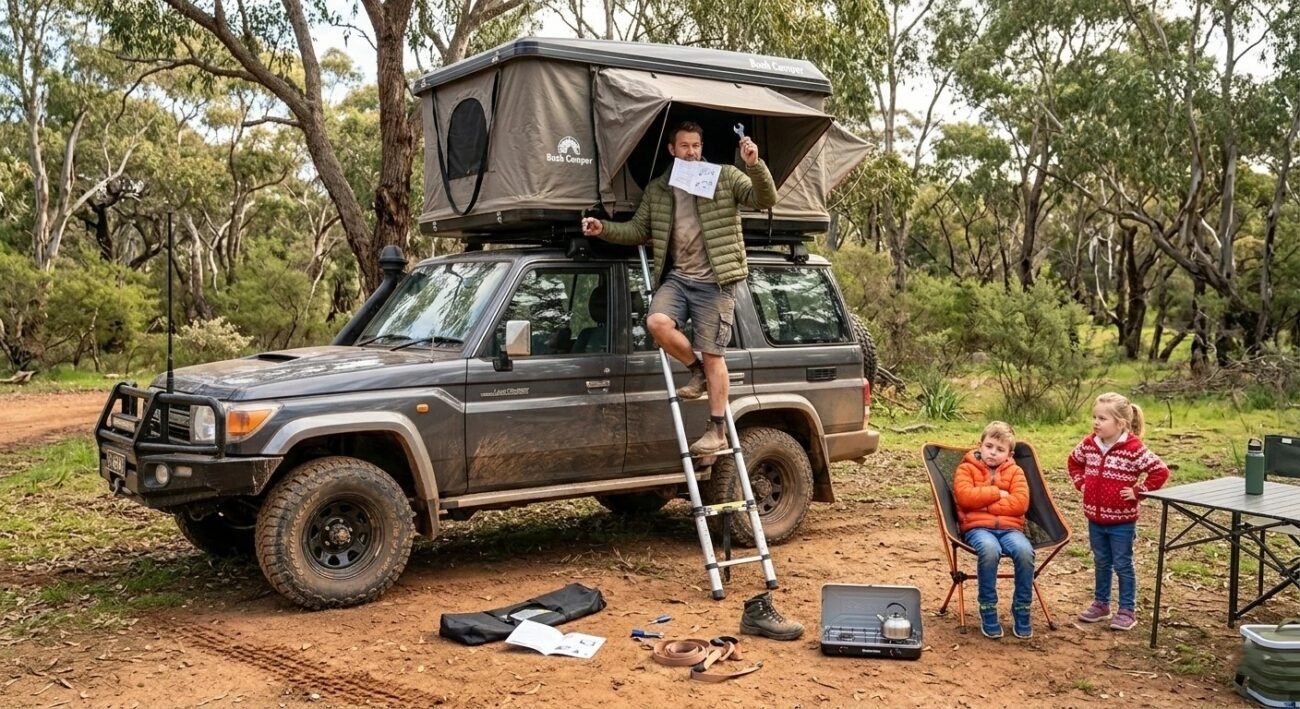
Every family makes mistakes on their first RTT trip. I made nearly all of these myself before experience taught me better. The difference between a brilliant first trip and a disaster usually comes down to a handful of avoidable decisions. Here is what I see families get wrong most consistently.
- Choosing a remote spot for trip one: Start close to home. A two-hour drive beats a six-hour drive with first-night setup stress.
- Underestimating setup time: A new RTT with an annexe takes forty-five minutes the first few times. Practice at home first.
- Forgetting to check roof rack load ratings: Exceeding dynamic load limits while driving is genuinely dangerous. Always verify before loading.
- Skipping a shakedown night: One night in the backyard reveals every missing item before you are three hundred kilometres from a hardware store.
- Overloading the itinerary: Families need slower pace than solo travellers. Build in full rest days between driving days.
- Ignoring weather forecasts: Australian weather shifts fast. I always check the Bureau of Meteorology app the morning of departure.
- No satellite communicator: Mobile black spots cover most great camping areas. A Garmin inReach is non-negotiable for my family.
My worst first-trip mistake was attempting Carnarvon Gorge with zero RTT experience. Setup took ninety minutes in the dark with two frustrated kids watching on.
Are There RTT-Friendly Campgrounds Inside Australia’s National Parks?
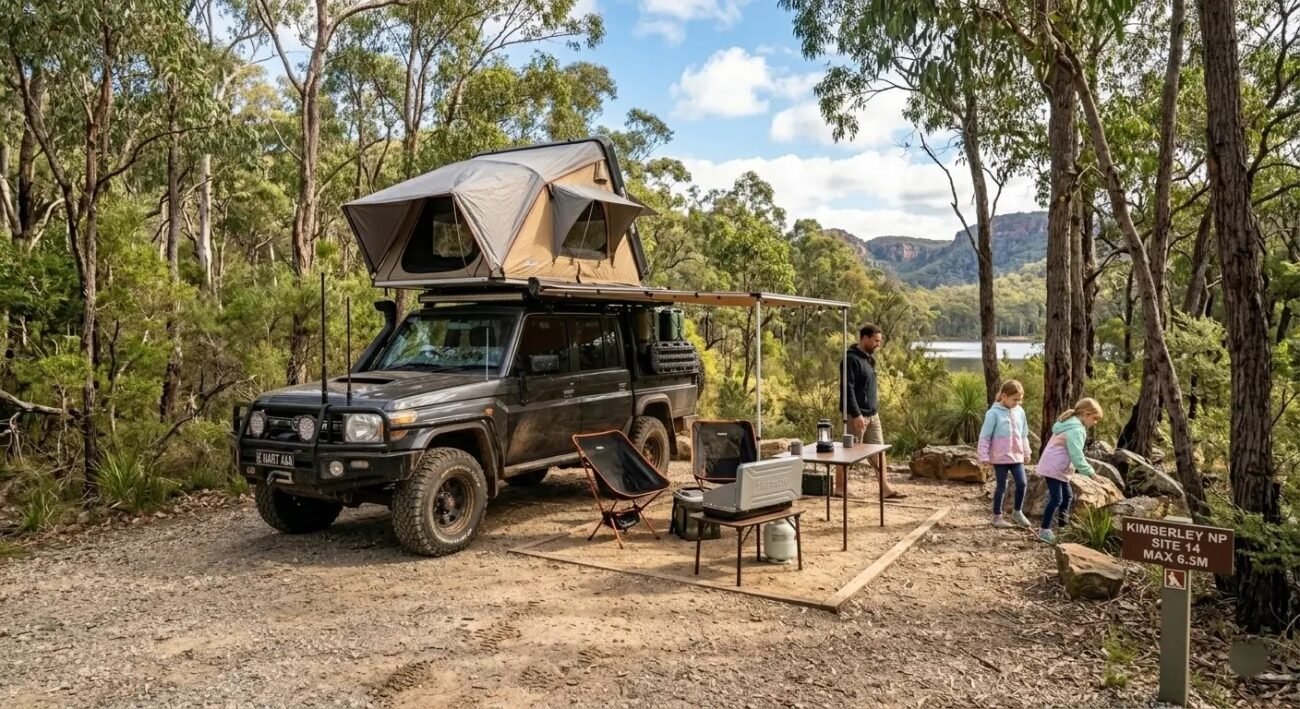
This question matters more than most people realise. Not every national park campground is designed with rooftop tents in mind. RTTs sit significantly higher than ground tents, which creates real problems with low tree branches, overhead power lines, and designated site height restrictions.
I have arrived at campgrounds before where my ARB Simpson III genuinely could not fit under the entry boom gate. That experience taught me to always check clearance heights when booking.
The good news is that most major national park campgrounds across Australia accommodate RTTs without issues. Parks Victoria, QLD National Parks, and NSW National Parks all list site types on their booking platforms.
Look specifically for “drive-in sites” or “vehicle-based camping” categories. These almost always have adequate overhead clearance. Grampians, Kosciuszko, Cape Range, and Girraween all handle RTT setups comfortably from my personal experience.
I always email the park directly before visiting a new site. Rangers are genuinely helpful and will confirm clearance heights and site suitability. That five-minute phone call has saved my family from several potential disasters over the years.
Which Spots Have the Best Stargazing for Kids?
Stargazing is one of those unexpected camping experiences that genuinely stops kids in their tracks. My daughter saw the Milky Way for the first time at Warrumbungle and went completely silent for about two minutes.
That moment alone justified the entire trip. Australia has some of the darkest skies on Earth, which makes rooftop tent camping the perfect platform for sky watching. You can literally lie on your RTT mattress with the rainfly open and stare straight up.
| Spot | State | Dark Sky Rating | Best Months | Kids’ Experience |
|---|---|---|---|---|
| Warrumbungle NP | NSW | Gold Tier (certified) | April to September | Telescope programs, ranger talks |
| Flinders Ranges | SA | Excellent dark sky | March to October | Milky Way visibility, total quiet |
| Karijini NP | WA | Outstanding | May to September | Zero light pollution, brilliant clarity |
| Innamincka Reserve | SA | Exceptional remote | April to September | Southern Cross, shooting stars |
| Undara Volcanic NP | QLD | Very good | May to August | Lava tube tours plus night sky |
Warrumbungle is my absolute top pick. It is Australia’s only certified Dark Sky Park and the difference in sky quality compared to anywhere near a city is remarkable.
Can You Do a Multi-Stop RTT Road Trip With Kids Across Australia?
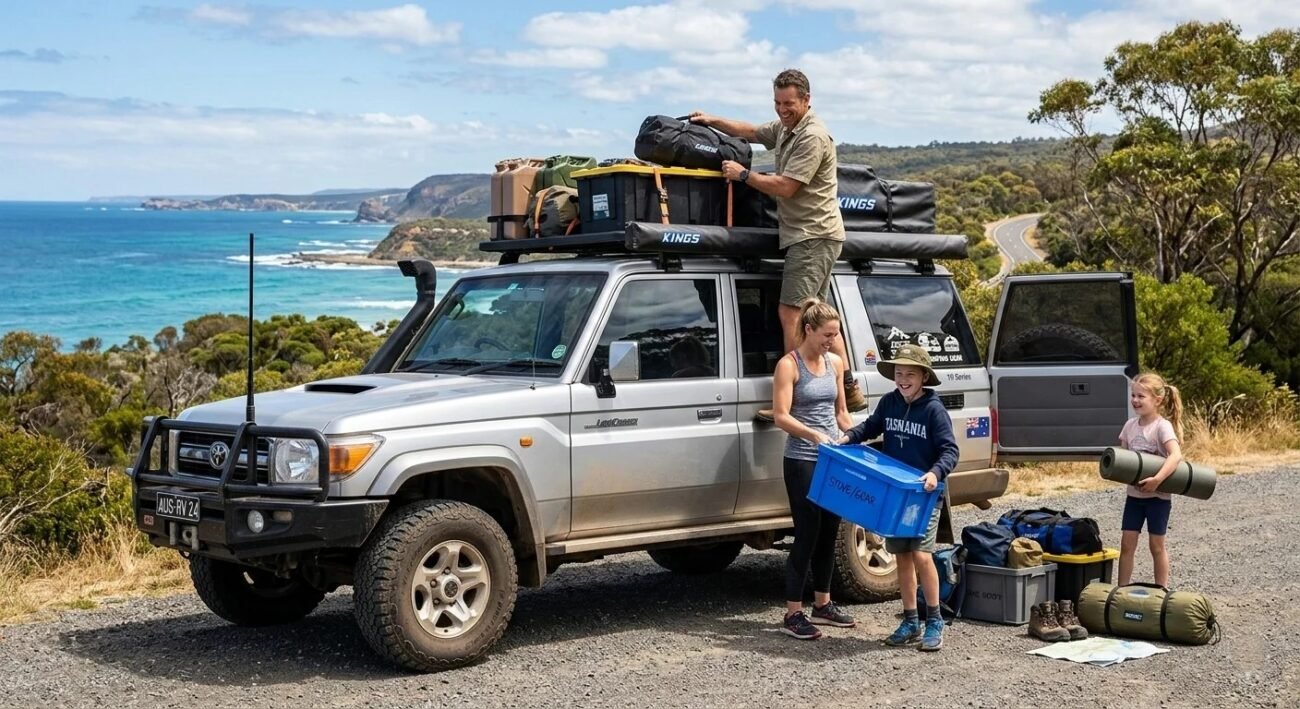
A multi-stop RTT road trip with kids is absolutely achievable and genuinely one of the best family experiences Australia offers. I completed a three-week Queensland to New South Wales loop with my family two years ago.
It changed how all of us think about travel permanently. The key is building the trip around driving limits that respect the kids, not just the destination list. I cap driving days at four hours maximum when travelling with children. Beyond that, everyone arrives tired and nobody enjoys setting up camp.
My suggested starter loop for families covers Girraween in QLD, then south to Warrumbungle in NSW, across to Grampians in VIC, and back up via the coast. That circuit takes three weeks comfortably and hits stunning variety without punishing anyone.
Space your driving days with full rest days in between. Kids need time to actually play in each spot rather than just pass through. Always carry a minimum of two days’ extra food and water beyond your plan.
Road closures, sick kids, or a spot you love too much to leave are all real possibilities. The families I know who plan tight itineraries always regret it. The ones who build in flexibility always want to go longer.
Warpping Up
Australia genuinely has some of the best rooftop tent camping in the world. From Queensland’s ancient gorges to WA’s stunning Ningaloo coastline, the options for families are extraordinary. The key is matching the right spot to your family’s experience level, vehicle, and the time of year you travel.
I started RTT camping with my family on a simple overnight at Wilsons Promontory. That one trip completely changed how we travel as a family. We have not stayed in a caravan park since. The progression from easy-access national parks to real off-road adventures happened naturally over a few years. It does not have to happen all at once for your family either.
Start close to home. Book early. Do one shakedown night in the backyard before you go. Take fewer nights on your first real trip than you think you need. Build from there. The spots in this guide will still be there when you are ready for the next level.
If you are still deciding where to start, my honest suggestion is Girraween National Park in Queensland or Grampians in Victoria. Both are accessible, well-facilitated, and genuinely stunning for kids and adults alike.
Check the national park booking platforms now before the 2026 school holiday windows fill up. The best sites go fast and your family deserves the best experience possible. Want to discover the best Camping Destinations & Adventures in Australia? here.
FAQs
Queensland is a brilliant starting point for families. The road access is manageable, facilities are reliable, and the landscapes are genuinely stunning. Western Australia offers the most dramatic scenery but requires more planning. Most families find Queensland and Victoria the easiest states to begin their RTT journey comfortably.
Not always. Many top family RTT spots are accessible in a standard AWD or high-clearance vehicle. Spots like Grampians, Girraween, and Innes National Park are all sealed or well-graded gravel roads. A proper 4WD only becomes necessary when you start chasing remote locations well off the main tracks.
A standard 1400mm x 2100mm RTT sleeps two adults comfortably. For a family of four, I recommend pairing an RTT with an annexe room or a separate ground tent for the kids. Brands like ARB, Darche, and Ironman 4×4 all offer quality family-compatible RTT and annexe combinations suited to Australian conditions.
Yes, with the right precautions. Choose spots with flushing toilets, reliable water, and confirmed mobile or satellite coverage. Always use a secure ladder with grip tape for young kids. Avoid crocodile-risk waterways in the NT and Far North QLD. With good preparation, RTT camping is a brilliant and safe experience for young families.