
Best Lightweight Roof Top Tent For Australian in 2026

Is your roof rack rating quietly ruining your camping plans? A heavy tent can push you over your vehicle’s limit before you’ve packed a single bag. That’s why finding the best lightweight rooftop tent for Australians in 2026 actually matters not just for safety, but for fuel economy, solo setup ease, and long-term reliability on rough Aussie tracks. The good news? There are some genuinely impressive options available locally this year. Here are the top picks worth your attention:
- Rigdup 1.4m Roof Top Tent: Best overall for Australians; 38kg aluminium honeycomb base, 320gsm ripstop poly-cotton canvas, 70mm memory foam mattress, integrated solar panel, YKK zippers, and crossbars included. Priced at $3,200 AUD with a 1-year warranty.
- iKamper Skycamp Mini: Best hard shell for compact vehicles; under 42kg with fast solo setup.
- Darche Panorama 1400: Best Aussie-brand soft shell; solid UV resistance and great ventilation.
- Kings Kwiky MKII Hard Shell RTT: Best budget hard shell under $1,500 AUD.
- OzTent Tagalong Tent: Best for ultralight setups; one of the lightest soft shells available locally.
Not sure which one suits your rig and budget? This article walks you through honest comparisons, vehicle compatibility, Aussie-specific conditions, and practical buying tips – so you leave with a clear answer, not more confusion.
What Makes a Roof Top Tent Truly “Lightweight” in 2026?
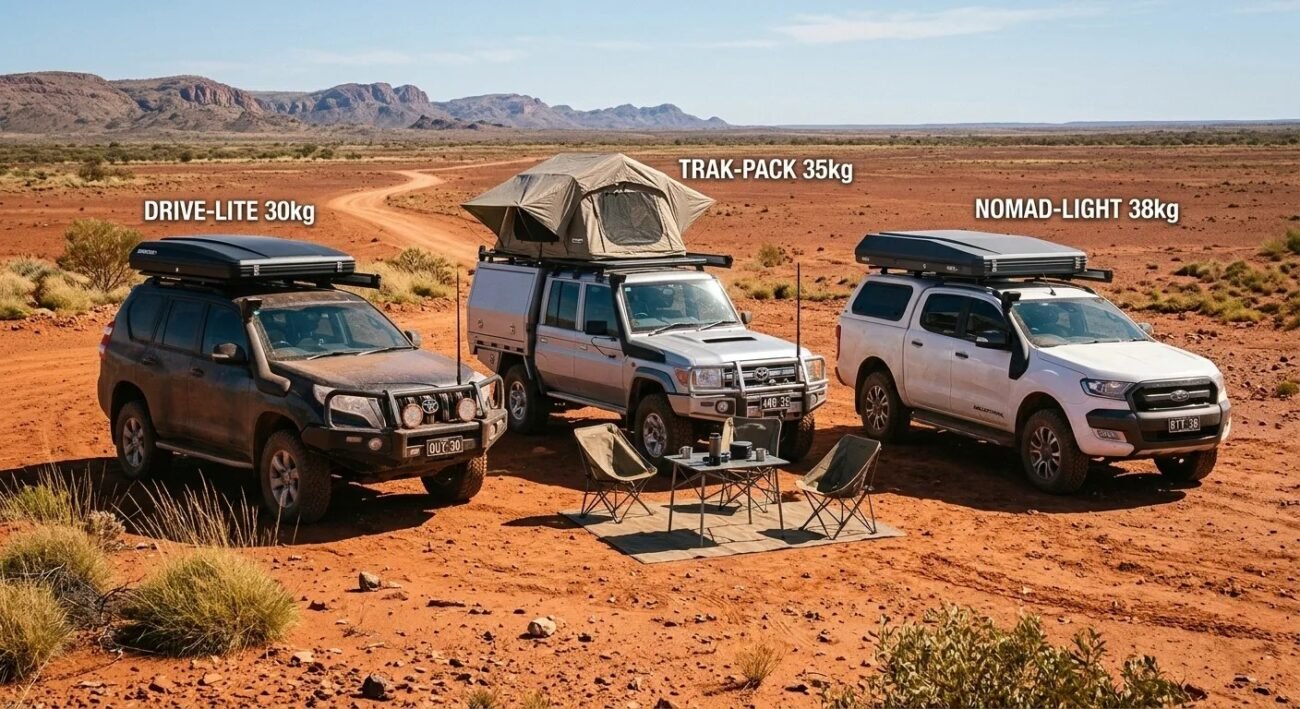
The word “lightweight” gets thrown around a lot in RTT marketing. But real benchmarks exist, and they directly affect your roof load rating.
- Under 40kg is the general lightweight threshold across most RTT categories in 2026.
- Under 30kg qualifies as ultralight, usually achieved through fibreglass or composite shells.
- Aluminium honeycomb bases reduce weight significantly while maintaining rigidity and insulation value.
- 320gsm poly-cotton canvas hits the sweet spot between durability and reduced overall fabric weight.
- Packed height matters as a tall closed profile adds wind drag and dynamic load stress on drives.
- Dynamic load rating drops when tent weight rises, especially on corrugated outback tracks.
- Ladder weight is often ignored, but a solid aluminium ladder adds 3 to 5kg easily.
- Mounting hardware, like included crossbars, also adds directly to your total roof payload.
Manufacturers in 2026 are using smarter composites and tighter build tolerances. Weight savings are genuine now, not just a marketing claim. Always weigh the full setup, not just the tent shell alone.
Which Lightweight RTTs Are Best for Australian Conditions?
Australian conditions are brutal on gear. Heat, UV, red dust, corrugated dirt roads, and remote distances demand far more than most overseas reviews ever test for. These five tents handle it well.
| Tent | Weight | Why Best for Australia | Key Benefits |
|---|---|---|---|
| Rigdup 1.4m RTT | 38kg | Aluminium honeycomb base handles heat and corrugations well | Solar integration, 70mm memory foam, YKK zippers, crossbars included, $3,200 AUD |
| iKamper Skycamp Mini | 42kg | Hard shell protects against dust ingress on long outback tracks | Fast 60-second setup, compact profile, strong UV-rated shell |
| Darche Panorama 1400 | ~38kg | Aussie brand with local warranty and UV-tested canvas | Great ventilation, wide openings, built for hot climates |
| Kings Kwiky MKII | ~40kg | Best value hard shell sold through Aussie retail stores | Budget-friendly, aluminium shell, decent waterproofing for the price |
| OzTent Tagalong | ~28kg | Lightest option here, ideal for crossover SUVs | Quick setup, low profile, suits vehicles with lower load ratings |
Every tent above is available through Australian retailers or local distributors. Local support genuinely matters when you are 500km from the nearest town.
Hard Shell vs Soft Shell – Which One Is Actually Lighter?
Most people assume soft shell always wins on weight. The reality in 2026 is more nuanced, and the gap is closing faster than most buyers realise.
| Feature | Hard Shell | Soft Shell |
|---|---|---|
| Average Weight | 38 to 55kg | 25 to 45kg |
| Lightest Available | ~35kg (fibreglass composite) | ~20kg (nylon with aluminium frame) |
| Shell Material | Fibreglass or ABS plastic | Poly-cotton canvas or ripstop nylon |
| Setup Time | 30 to 60 seconds | 2 to 5 minutes |
| Packed Height | Low profile, better aerodynamics | Bulkier when folded |
| Dust Resistance | Excellent, fully sealed shell | Moderate, depends on zip quality |
| Price Range (AUD) | $1,500 to $4,000+ | $800 to $2,500 |
| Best For Australia | Outback, dusty tracks, solo travel | Budget travellers, lighter vehicles |
Soft shells are lighter on paper, but hard shells win on outback practicality. Dust sealing protects your mattress and bedding on long unsealed roads. That matters more than 5kg when you are camping remote.
To know more about Hard Shell vs Soft Shell rooftop tents, kindly visit here.
How Do You Know If a Roof Top Tent Is Safe for Your Vehicle’s Roof?
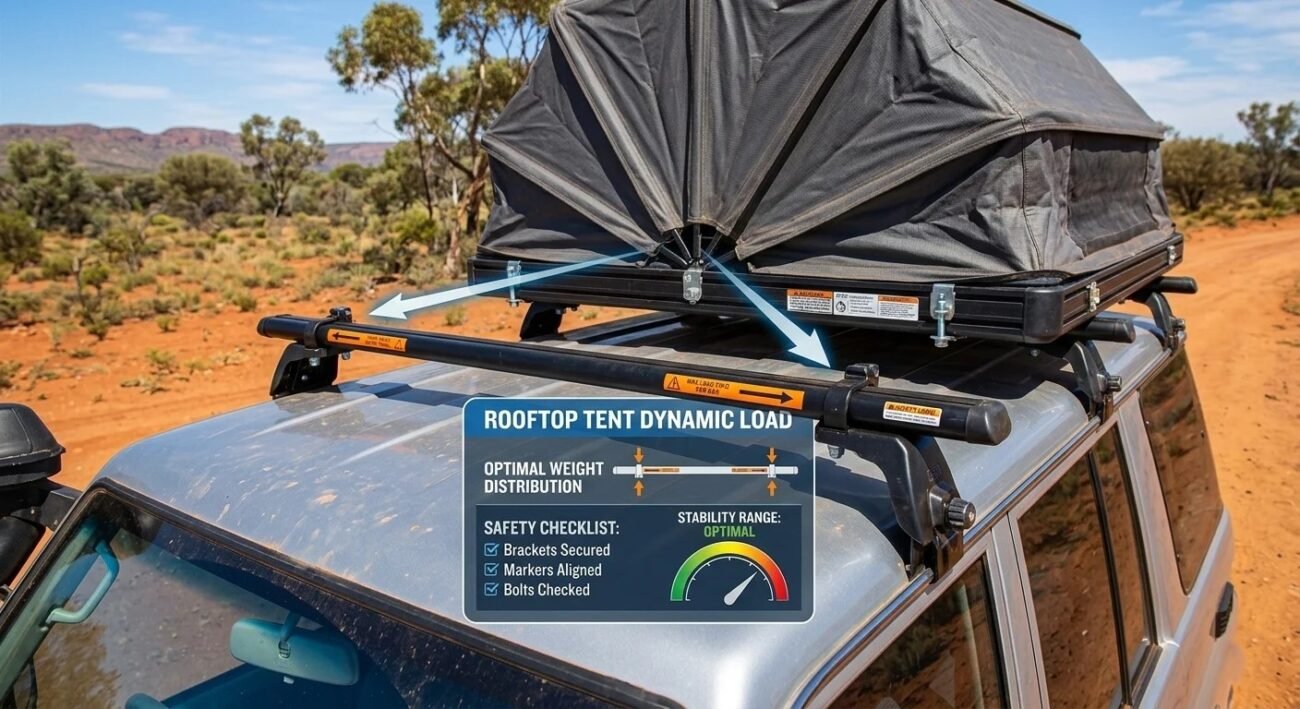
Your vehicle has two roof load ratings, and most buyers only check one. That single oversight can damage your car or cause a dangerous failure at highway speed.
- Static load rating is the weight your roof supports while the vehicle is completely stationary.
- Dynamic load rating is the limit while the vehicle is moving, and it is always significantly lower.
- Dynamic rating is the one that matters for real-world RTT use and daily driving safety.
- Most popular Aussie vehicles have dynamic roof limits ranging from 75kg to 100kg total.
- Total roof payload includes the tent, rack, crossbars, and any gear stored on top.
- Crossbar spread must meet the tent manufacturer’s minimum, usually between 800mm and 1,100mm apart.
- Roof rack certification matters because an uncertified rack voids your tent warranty and vehicle insurance.
- Always check your owner’s manual for the exact roof load rating before purchasing any rooftop tent.
Getting this wrong is not just expensive. It is a genuine safety risk every single time you drive.
What’s a Fair Price for a Quality Lightweight RTT in Australia?
Price in the Australian RTT market varies wildly, and cheap options often cost more long-term through repairs and replacements.
Budget tier (under $1,200 AUD) gets you a basic soft shell with thin canvas and basic zippers. Setup is slower and UV resistance is usually minimal. These suit occasional weekend campers on lighter vehicles.
Mid-range ($1,200 to $2,500 AUD) is where most Australians find real value. Canvas quality improves noticeably, zippers become more reliable, and base materials get sturdier. This tier handles regular outback use without falling apart after one season.
Premium ($2,500 to $4,000+ AUD) covers tents like the Rigdup 1.4m RTT at $3,200. You get aluminium honeycomb bases, 70mm memory foam mattresses, YKK zippers, integrated solar panels, and crossbars included. That full kit value justifies the price completely for serious travellers.
Import pricing from overseas can look cheaper online. But add shipping, import duties, and zero local warranty support, and the savings disappear fast. Buying locally protects your investment properly.
Which RTT Brands Actually Ship and Support Customers in Australia?
Local support is not a bonus feature. It is essential when you are dealing with a warranty issue 600km from the nearest city.
| Brand | Origin | Australian Support | Warranty | Best Known For |
|---|---|---|---|---|
| Rigdup | Australia | Direct local support | 1 Year | Solar integration, aluminium honeycomb base, full kit value |
| Darche | Australia | Nationwide dealers | 2 Years | UV-tested canvas, heat-rated fabrics, wide ventilation |
| OzTent | Australia | Strong retail network | 2 Years | Ultralight designs, quick setup, crossover SUV compatibility |
| Kings (4WD Supacentre) | Australia | Retail stores nationally | 1 Year | Budget-friendly hard shells, accessible spare parts |
| iKamper | South Korea | Australian distributor | 2 Years | Hard shell engineering, compact packdown, premium finish |
| Thule | Sweden | Authorised Aussie dealers | 3 Years | Build quality, aerodynamic design, roof rack compatibility |
Brands without Australian distributors are a genuine risk. Warranty claims become international shipping nightmares. Always confirm local service exists before purchasing. Rigdup and Darche remain consistently strong choices for buyers who want reliable local backup on remote Aussie trips.
How Quick Is the Setup – Can You Really Do It Alone?
Marketing videos show perfect two-minute setups on flat ground with good lighting. Reality on a tired Friday evening after a long drive is a bit different. Here is what solo setup actually looks like step by step.
Step 1: Park on reasonably level ground and engage the handbrake fully before climbing up.
Step 2: Unclip the tent cover straps or release the hard shell latches along both sides.
Step 3: Push the shell open or unfold the soft shell panels outward until fully extended.
Step 4: Extend the ladder and lock it at your preferred angle, usually between 45 and 65 degrees.
Step 5: Unroll or unfold the mattress flat and let any memory foam expand for five minutes.
Step 6: Attach any annex panels or mosquito nets if you are staying more than one night.
Hard shell tents genuinely complete Steps 1 to 5 solo in under two minutes. Soft shells take closer to five minutes once you include ladder positioning and panel unfolding.
Read a full guide on the rooftop tent setup process here.
How Well Do Lightweight RTTs Handle Australian Heat and UV?
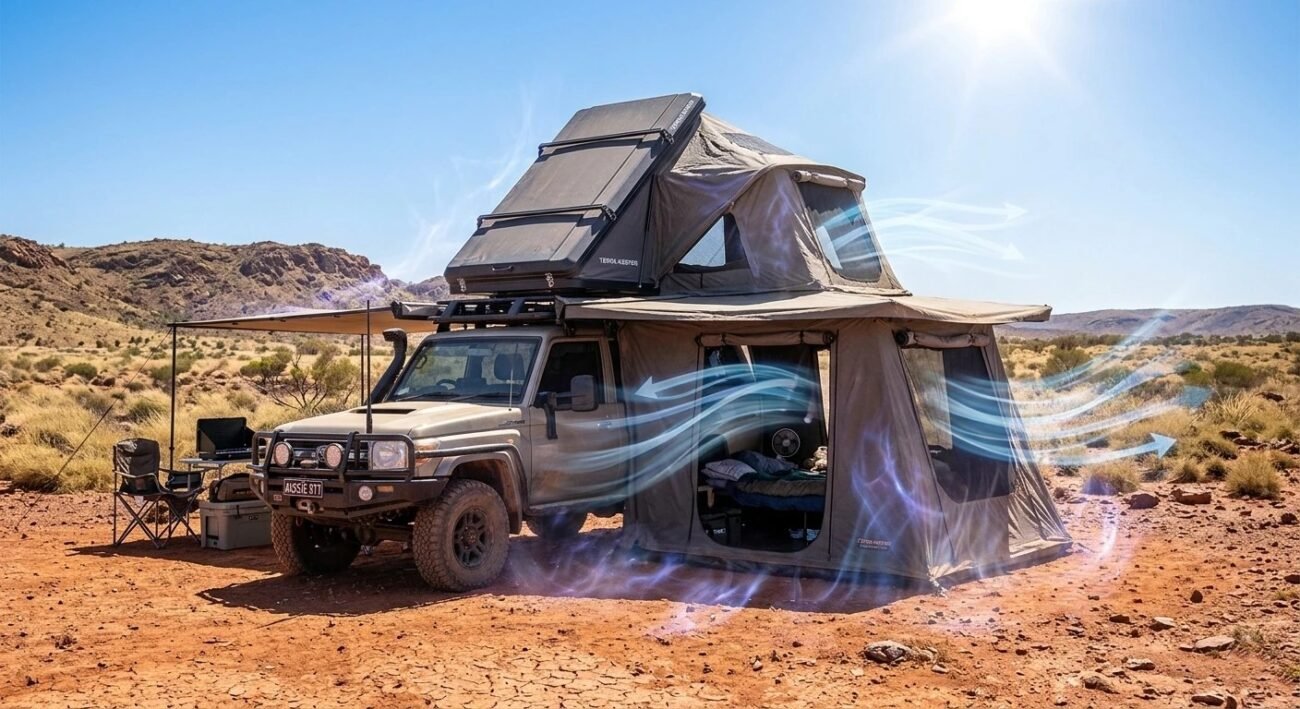
Australia’s UV index regularly hits 11 and above, and summer temperatures in the outback push past 45 degrees Celsius. Most imported RTTs are simply not engineered for those conditions.
Canvas weight directly affects heat performance. A 320gsm ripstop poly-cotton canvas, like the Rigdup uses, breathes far better than cheap nylon under direct sun. Thin nylon traps heat aggressively and degrades faster under prolonged UV exposure.
Ventilation design matters just as much as fabric rating. Tents with mesh windows on opposing sides create cross-flow airflow that drops internal temperature meaningfully. Without cross-ventilation, a closed tent in direct Queensland sun becomes genuinely uncomfortable by mid-morning.
Condensation becomes a real problem in coastal humid regions like Cairns or Darwin. Poly-cotton canvas absorbs and releases moisture naturally, reducing that wet-ceiling problem that pure nylon tents suffer from overnight.
UV degradation is cumulative. Cheap canvas loses waterproofing and tensile strength after two or three seasons of direct Australian sun exposure. Quality canvas with UV-stabilised thread and a proper hydrostatic rating above 2,000mm holds up far longer without re-treatment.
What Accessories Make a Lightweight RTT More Liveable?
A bare rooftop tent gets you sleeping off the ground. The right accessories turn it into a proper camp setup you actually enjoy spending time in.
| Accessory | Approx. Price (AUD) | Usage |
|---|---|---|
| Annex Room | $200 to $600 | Creates sheltered ground-level living and changing space |
| Mattress Topper (Memory Foam Upgrade) | $80 to $200 | Adds comfort for cold nights or longer trips |
| 12V LED Strip Lighting | $30 to $80 | Practical interior lighting without draining battery heavily |
| Insulated Liner / Thermal Blanket | $100 to $250 | Reduces heat in summer and cold in alpine conditions |
| Solar Blanket or Panel Mount | $150 to $400 | Powers devices overnight without running the vehicle engine |
| Waterproof Gear Bag (Under-Tent) | $60 to $120 | Stores shoes, wet gear, and muddy camp items below |
| Mosquito Net Extension | $40 to $90 | Essential for tropical Queensland, Northern Territory, and coastal camping |
| Anderson Plug Extension Lead | $25 to $60 | Connects tent power setup to vehicle battery easily |
Accessories add weight, so choose carefully against your roof load rating. Prioritise the annex and lighting first. They deliver the biggest daily comfort improvement without pushing your payload over the limit.
What Are the Most Common RTT Mistakes Australians Make?
These mistakes keep coming up across Australian camping forums, Facebook groups, and first-hand conversations at campsites. Most are completely avoidable with a bit of preparation beforehand.
- Ignoring the dynamic load rating is the most dangerous mistake. Static ratings look generous until you hit corrugations at 80km/h.
- Buying crossbars with incorrect spread causes the tent base to flex and crack over time. Always check the manufacturer’s minimum crossbar spacing requirement.
- Skipping a test setup at home means your first real attempt happens in the dark after a long drive.
- Not re-waterproofing canvas after the first season leads to leaks that feel random but are actually preventable.
- Choosing a tent purely by closed weight without checking packed height causes clearance problems in car parks and low-clearance tracks.
- Leaving the tent open during rain without sealing zippers lets water track along zip teeth and drip inside.
- Storing the tent damp is the single fastest way to grow mould through canvas fibres permanently.
- Buying from overseas sellers without local warranty turns a minor repair into an expensive international logistics problem.
Fix these before your first trip, not after your first problem appears on the road.
How Do You Maintain a Lightweight Tent So It Lasts Outback Trips?
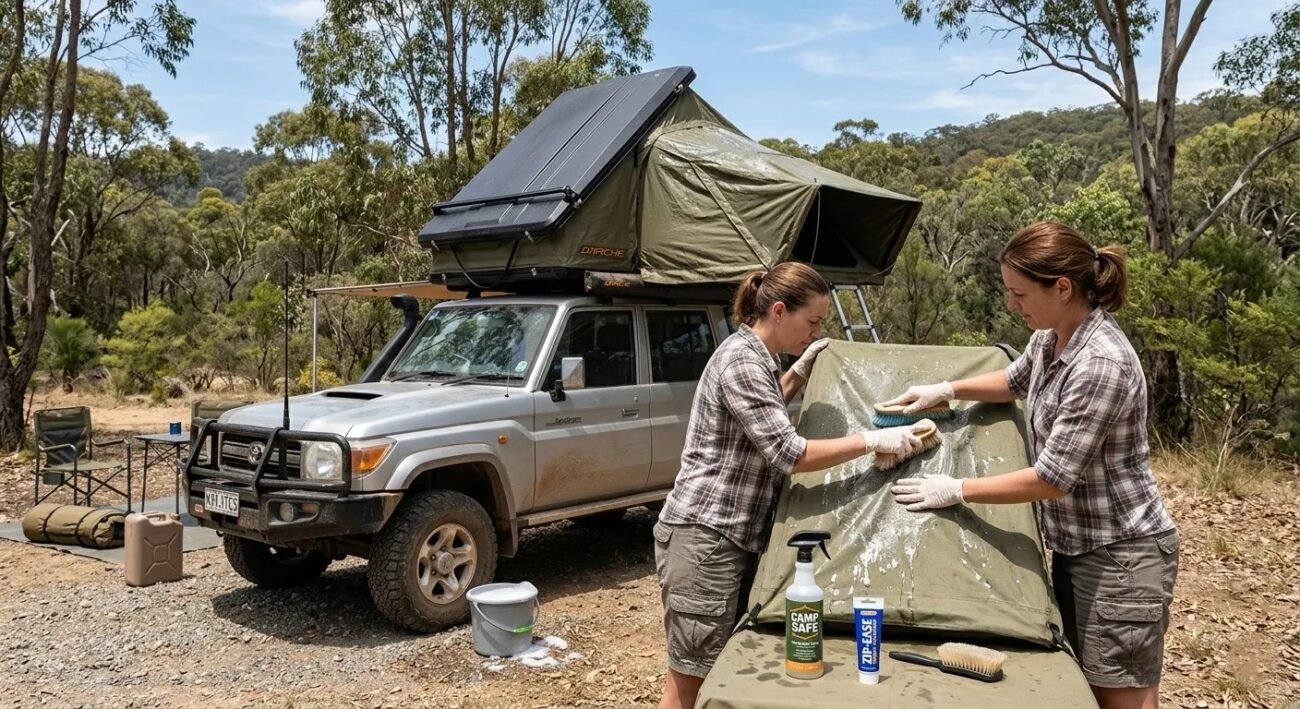
Good maintenance is not complicated. It is mostly consistent habits done after every trip rather than one big annual clean.
- Dry the tent completely before packing it away after every single use without exception.
- Brush loose red dust off the canvas before folding to prevent abrasive wear on fabric threads over time.
- Clean canvas with mild soap and cool water only. Harsh detergents strip the natural waterproofing treatment permanently.
- Never use a high-pressure hose directly on canvas seams as it forces water through needle holes and weakens stitching.
- Lubricate YKK zippers with a dry zipper lubricant every three to four trips to prevent binding and early failure.
- Inspect hinge points and mounting bolts for corrosion or movement after every outback trip on unsealed roads.
- Re-treat canvas waterproofing once per year using a product like Nikwax Canvas Proof, especially before wet season travel.
- Check ladder feet rubber caps regularly as they crack in UV and cause scratches on vehicle paintwork.
- Store the tent in a ventilated space rather than a sealed shed to prevent moisture buildup between trips.
Which Lightweight RTT Is Right for Your Setup? (Quick Decision Guide)
After years of testing tents and talking to Aussie campers at remote sites, I keep coming back to the same conclusion. There is no single perfect RTT for everyone, but the decision gets simple when you match the tent to your actual setup honestly.
If you drive a compact SUV with a lower roof rating, prioritise weight above everything else. The OzTent Tagalong suits you well there. If budget is the main concern, Kings Kwiky MKII delivers surprising value for regular weekend trips.
For couples doing serious outback travel, I would genuinely point you toward the Rigdup 1.4m RTT. The aluminium honeycomb base handles corrugations better than most competitors I have tested. The 70mm memory foam makes a real difference after a long drive. The integrated solar panel and Anderson plug setup means you are not scrambling for power solutions separately. Crossbars come included, which saves you another $200 to $400 upfront.
At $3,200 AUD, it is not the cheapest option. But when you add up what you get as a complete kit, the value stacks up honestly for anyone planning regular Australian outback travel. Discover detailed Roof Top Tent Comparisons & Reviews by visiting this guide.
FAQs
The lightest options currently available locally sit around 20 to 28kg. The OzTent Tagalong is among the lightest soft shell tents sold through Australian retailers. Always confirm the full packed weight, including ladder and mounting hardware, before purchasing.
Yes, but you must check the RAV4’s dynamic roof load rating first. Most crossover SUVs allow between 75kg and 100kg total. Choose a tent under 30kg to leave enough payload for your rack, crossbars, and gear combined.
For outback and remote camping, absolutely yes. You sleep away from snakes, spiders, and wet ground. Setup is faster and campsite options expand dramatically. For short weekend trips close to home, a quality ground tent still offers better value per dollar spent.
A well-maintained RTT with 320gsm canvas and quality zippers lasts eight to twelve years in Australian conditions. UV degradation and zipper failure are the two most common reasons tents retire early. Annual re-waterproofing and zipper lubrication significantly extends lifespan.
A properly mounted tent on a certified rack causes no damage under normal use. Damage occurs when crossbar spacing is wrong, dynamic load limits are exceeded, or mounting bolts are not checked regularly. Inspect your mounting hardware every three to four outback trips.