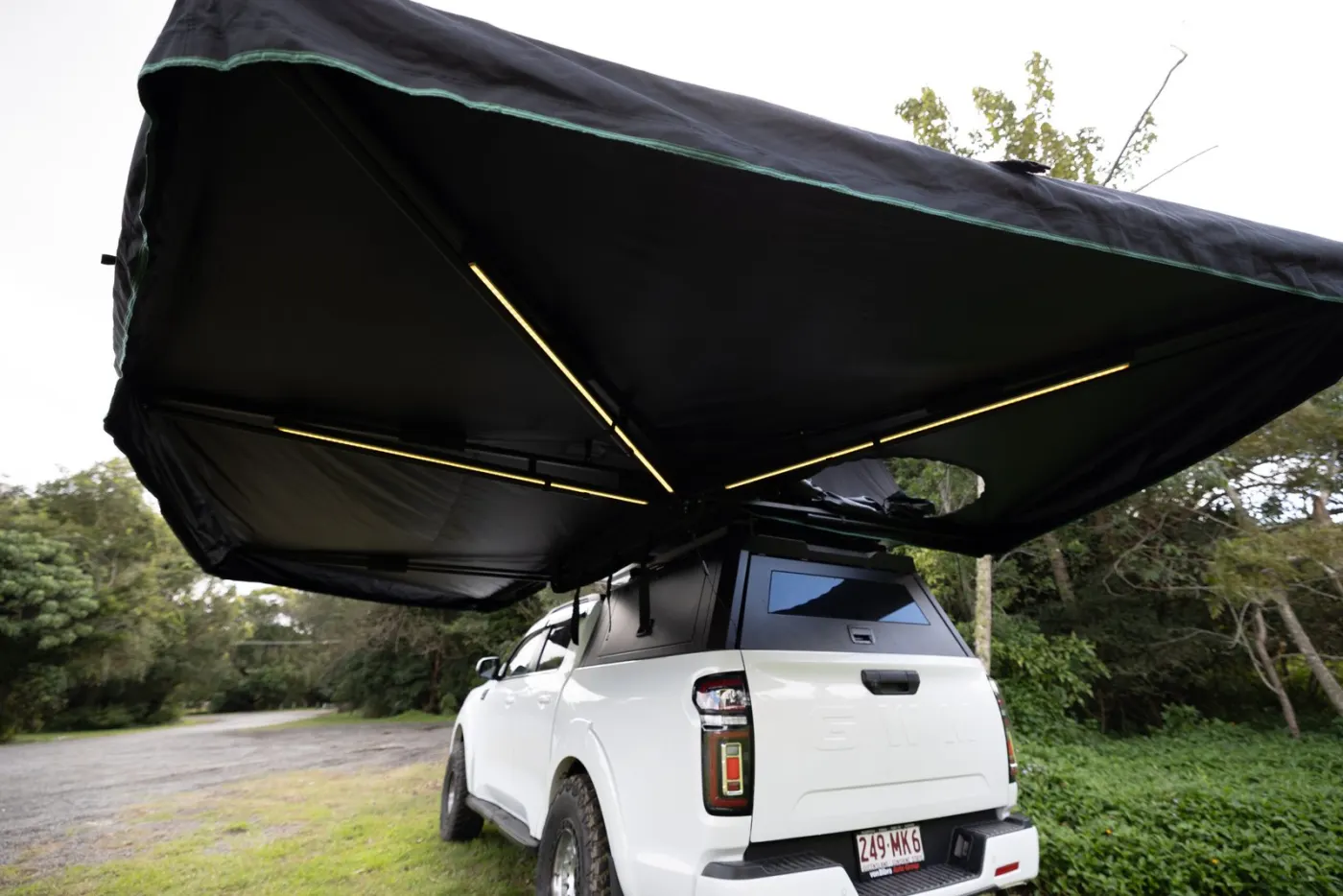
Good roof top tent bedding is a fitted sheet, a light doona or an unzipped sleeping bag, and compressible pillows, all thin enough to stay inside when the tent closes. Keep it dry: air it every morning, take it out between long breaks, and never leave damp bedding folded in a closed tent.
Leaving the bedding in is a big part of the appeal of a roof top tent. You open it, climb up, and the bed is made. That only works if the bedding fits under the lid and doesn't turn musty between trips. Here's how to get both right.
What Bedding Works Best in a Roof Top Tent?
Bedding that packs flat, dries fast and suits the season. Thick, puffy house bedding looks comfy but often stops the lid closing, and heavy cotton takes ages to dry after a damp night.
| Option | Good for | Watch out for |
|---|---|---|
| Fitted sheet | Keeping the mattress cover clean, a home bed feel | Check the size against your mattress |
| Light doona | Couples, mild to cool nights, easy to fold flat | Thick winter doonas can stop the lid closing |
| Sleeping bags | Cold trips, each person sets their own warmth | Bulky ones won't fit packed, so store them in the car |
| Double sleeping bag | Couples who want one bed, cold nights | Bulk, and hard to dry in one go |
| Camping pillows | Compress flat and stay in the tent | Some feel thin if you're used to house pillows |
| Wool or fleece blanket | An extra layer you can add or remove | Wool holds weight when wet |
A good setup for most couples: a fitted sheet, one light doona that stays in the tent, and a blanket or sleeping bags in the car for cold nights. Mattress choice is its own question. Many tents come with foam, and this post is about what goes on top of it.
How Much Bedding Fits in a Roof Top Tent When It's Closed?
Less than you'd think, and the one sure way to know is to close the tent with your bedding inside. Every hardshell has a fixed gap between the mattress and the lid, and the mattress, folded canvas and bedding all share it.
Take the RIGDUP Nomad 1.4M as an example. It's 18 cm tall closed, measured on the outside, and the mattress is 70mm memory foam. So the space left for bedding is under 11 cm, before you allow for the shell, the base and the canvas that folds in. We don't publish a figure for how much bedding fits, because it depends on how you fold it.
Test it at home before your first trip:
- Make the bed the way you'll use it: sheet, doona, pillows
- Close the tent slowly and watch for the lid catching
- Check every latch closes with no force
- If you have to push, take something out
- Check the canvas isn't caught in the seal or the latches
Never force a lid shut over bedding. It strains the gas struts, the latches and the canvas, and a lid that isn't sealed can let rain and dust in on the highway. If your full kit won't fit, keep the thin layers in the tent and carry the bulky ones in a dry bag in the car.
What Size Sheets Fit a Roof Top Tent Mattress?
Measure your mattress first, because roof top tent mattresses aren't standard bed sizes. Many are longer and narrower than a house bed.
The Nomad 1.4M is 210 x 145 cm inside. A standard Australian double is about 137 x 187 cm, and a queen about 153 x 203 cm, so both are shorter than that space. A queen fitted sheet is the closer match. Its extra width and deep corner pockets often give enough spare fabric to cover a thin mattress. Try one at home before you buy a set for the tent.
Other options:
- Custom fitted sheets: some makers sell sheets cut for one tent model. Measure your mattress and look for a maker who sews to size
- A flat sheet tucked under: folds thinner than a fitted sheet and fits any size
- Poly-cotton or bamboo blends: dry faster than heavy cotton flannelette after a humid night
Thin sheets also matter for closing the lid. A heavy flannelette set can take up room you need for the doona.
Should You Use a Doona or a Sleeping Bag in a Roof Top Tent?
Use a doona for most trips and a sleeping bag for cold ones. A doona feels like home, folds flat and suits two people sharing. A sleeping bag is warmer for its weight and seals out drafts, which matters when the tent sits up in cold air.
If you buy sleeping bags, read the temperature rating properly. Many bags are rated to ISO 23537, which gives a comfort figure, a lower limit and an extreme figure. Rab explains that the comfort rating is the lowest temperature for a good night's sleep, and the extreme figure is for emergencies only. So pick a bag whose comfort rating is at or below the coldest night you expect.
A few tips that help in a roof top tent:
- Synthetic fill keeps more warmth when damp than down. It suits humid coasts and nights with condensation
- Down packs smaller and is lighter, but needs to stay dry
- Unzip a rectangular bag and use it as a doona on mild nights. It folds flatter than it packs in its sack
- Layer up: a light doona plus a blanket is easier to adjust than one heavy doona
Whatever you use, cold comes up from below too. A sheet on the mattress plus a blanket underneath you helps on cold nights.
What Pillows Should You Use in a Roof Top Tent?
Compressible pillows that squash flat suit bedding that stays in the tent. A full house pillow can take up most of the space you have under the lid.
- Foam camping pillows squash down and spring back. They stay in the tent well
- Inflatable pillows pack the thinnest. Let the air out before you close the lid
- Your house pillows are fine if they fit. Many people carry them in the car and throw them up at night
Use pillowcases you can wash, and swap them each trip. Pillows take a lot of sweat and are often the first thing to smell musty.
How Do You Keep Roof Top Tent Bedding Dry and Mould Free?
Air it every morning and never leave it damp in a closed tent. You breathe out and sweat moisture all night, and bedding soaks up much of it. Fold the tent up with damp bedding inside and it sits dark, warm and wet.
That's what mould needs. The Victorian Better Health Channel says mould grows where there is moisture and poor ventilation, and fabric gives it something to feed on. It can also bother people with asthma or allergies.
On the trip:
- Open the tent vents at night, even when it's cool
- Throw the doona back in the morning so the mattress breathes
- Hang the doona and pillows over a chair or the awning in the sun while you have breakfast
- Keep wet clothes and towels out of the tent
- If it's raining on pack day, take the bedding out and carry it in the car
For more on why condensation builds up, see our guide to stopping condensation and mould in a roof top tent.
Should You Leave Bedding in Your Roof Top Tent Between Trips?
For a weekend gap, yes, if it went in dry. For longer stretches, take it out. A tent sitting on a car for weeks heats up in the day and cools at night, and any moisture in the bedding has nowhere to go.
A simple routine after each trip:
- Open the tent within a day of getting home
- Take the bedding out and wash the sheets and pillowcases
- Air the doona and pillows in the sun
- Leave the tent open for a few hours so the mattress dries
- Put the bedding back only when everything is bone dry
If you camp most weekends, leaving clean, dry bedding in the tent is fine. In humid places like Brisbane, Cairns or Darwin, check it more often. A musty smell is your early warning. If mould has already reached the canvas, see how to clean a canvas roof top tent.
What Bedding Should You Pack for Cold or Hot Trips?
Pack for the coldest night you expect, and keep the extra layers in the car. A roof top tent sits in moving air with cold under the floor, so it can feel cooler than a tent on the ground.
| Trip | In the tent | In the car |
|---|---|---|
| Hot and humid (north coast, summer) | Fitted sheet, light cotton sheet, thin pillows | Nothing extra |
| Mild (most of the year) | Fitted sheet, light doona, pillows | A blanket |
| Cold (alpine, desert nights, winter) | Fitted sheet, doona, pillows | Sleeping bags rated for the night, wool blanket, beanies |
Check the forecast low before you leave, not just the day temperature. Desert and inland nights can drop a long way after a hot day. Our list of what to pack for an Aussie 4WD trip covers the rest of the kit.
FAQs
Can you leave a sleeping bag in a roof top tent?
Yes, if it fits under the lid without forcing it and it's dry. Unzip it and lay it flat rather than leaving it stuffed. Take it out between long breaks so it can air.
Do you need a mattress protector in a roof top tent?
A thin, breathable protector keeps sweat off the foam and is easier to wash than a mattress cover. Avoid fully waterproof plastic ones. They trap moisture between you and the foam.
What's the best bedding for a couple in a roof top tent?
One light doona over a fitted sheet suits most couples. It's warm enough for mild nights and folds flatter than two sleeping bags. Add a blanket or sleeping bags from the car on cold nights.
How often should you wash roof top tent bedding?
Wash sheets and pillowcases after each trip, like you would at home. Air the doona and pillows in the sun each trip and wash them when the care label allows.
Can You Keep the Bed Made in a Hardshell Roof Top Tent?
Yes, as long as the bedding fits under the lid and goes in dry. That's one of the big draws of a hardshell. The Nomad 1.4M is a clamshell hardshell that sleeps 2, with a 210 x 145 cm inside and a 70mm memory foam mattress. It goes up in about 60 seconds, so the bed is ready almost as soon as you stop. See the RIGDUP Nomad 1.4M roof top tent.