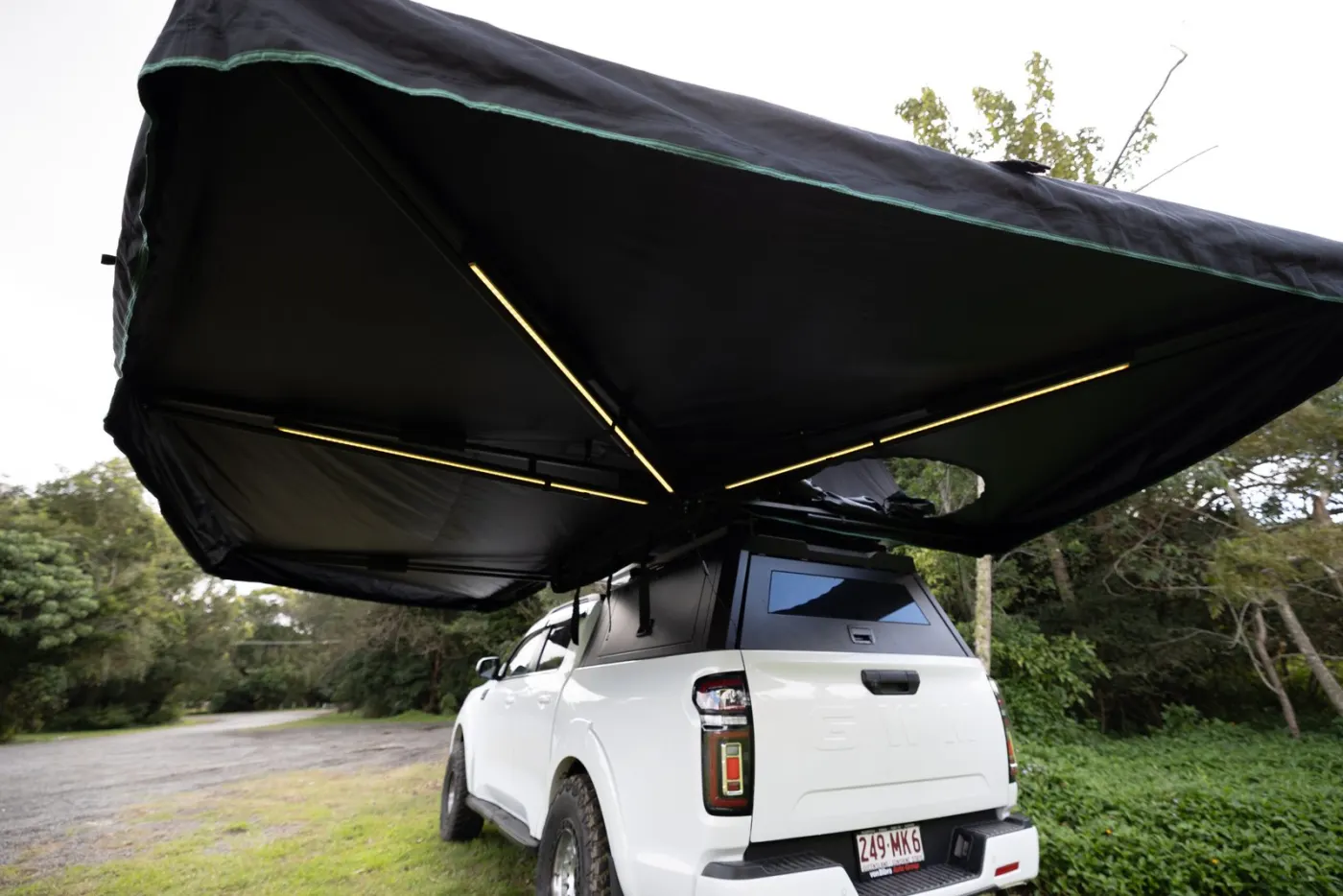
The safe way to heat a roof top tent is to keep yourself warm, not the air: good insulation underneath, warm bedding, dry clothes and a tent that is not damp inside. Never run a fuel or gas heater inside a closed tent. It can fill the space with carbon monoxide, a gas you cannot see or smell.
This guide covers how to stay warm on cold Australian nights, why a flame inside a tent is so dangerous, how to deal with condensation, and what to leave out of the plan. It sticks to safe methods and plain advice.
Is It Safe to Use a Gas or Fuel Heater Inside a Roof Top Tent?
No. Never run a gas or fuel heater inside a closed tent, a roof top tent included. A burning fuel appliance uses up oxygen and can make carbon monoxide, which can build up in a small space, and you can be asleep before you notice anything wrong.
The key points:
- You cannot detect carbon monoxide. It has no colour, taste or smell.
- Open vents do not make it safe. A cracked window or door flap does not clear the risk in a small tent.
- Sleeping makes it worse. Early signs such as headache, dizziness and nausea are easy to miss, or to put down to the cold.
- "Outdoor use only" means outdoors. If a heater, stove or lantern says that, it does not belong inside a tent, however cold it gets.
- The rule covers everything that burns. Gas heaters, camp stoves, lanterns, charcoal and fuel burners all count.
This is general safety advice and not medical advice. Read the label and manual for any appliance you own, and follow your appliance maker's camping advice. If anyone in a tent has a headache, feels dizzy or sick, get into fresh air at once and call 000.
How Do You Stay Warm in a Roof Top Tent Without a Heater?
Stop heat leaving your body, and block the cold from below. Most cold in a roof top tent comes up through the mattress and in through the walls, and you can fix most of it with what you pack.
- Insulate underneath. The mattress is where you lose heat. Our roof top tent mattress guide covers thickness, foam and toppers.
- Layer your bedding. A sleeping bag or doona suited to the night, with a liner or blanket on top. Our roof top tent bedding guide has more on what to pack for a cold trip.
- Go to bed warm. Eat a proper meal, get changed into dry sleepwear and warm up before you climb in. A bed does not make heat, it keeps what you bring.
- Keep your head and feet covered. A beanie and warm socks matter more than a thick jumper.
- Keep the tent dry inside. Damp air feels colder, and damp bedding loses its warmth.
- Close it up. Zip up doors and windows, then leave a small vent open for air (more on that below).
What Insulation Does a Roof Top Tent Have?
It depends on the tent. Fabric weight, the base build and the mattress all play a part, but a tent is a shelter, not a heated room. Check the maker's page for any warmth claim, and plan your warmth around bedding and camp spot.
Here are the Nomad 1.4M specs:
| Nomad 1.4M | Detail |
|---|---|
| Fabric | 320gsm ripstop poly-cotton, PU3000mm, UV50+ |
| Shell and base | Aluminium shell, aluminium honeycomb base |
| Mattress | 70mm memory foam |
| Inside | 210 x 145 cm, sleeps 2 |
| Power | USB-C, USB-A and 12V socket, 255W solar panel included |
| Weight | 72 kg |
| Warranty | 2 year |
A tent is a shelter, not a heated room, so plan your warmth around your bedding and your camp spot, and check the forecast low.
What Should You Pack for a Cold Night?
- A sleeping bag rated below the forecast low.
- A thermal base layer, a beanie and warm socks.
- A hot water bottle, filled before bed.
- A spare dry set of sleepwear.
Want warmth before bed? Warm up beside a fire or stove outside, then climb in.
Why Does a Roof Top Tent Get Damp on Cold Nights?
You breathe out moisture all night, and it condenses on the cold fabric and under the mattress. This is normal, and it gets worse the colder and stiller the night is. A damp tent feels colder and wets your bedding.
Ways to cut it down:
- Leave a small vent or window open, even on a cold night. It lets damp air out. Keep it away from the wind side.
- Do not cook or dry wet gear inside the tent.
- Use a condensation mat or breathable base layer under the mattress if your tent allows it.
- Lift the mattress in the morning to let the underside air out.
- Open the tent in the sun when you pack up, and dry it before it is closed for storage.
This sits against the need to stay warm, so find the balance. A little airflow with warm bedding beats a sealed tent that drips. Our full guide to preventing condensation and mould covers the fix in detail.
Can You Use a 12V Electric Blanket or Heater in a Roof Top Tent?
Possibly, if the maker says it is made for it. A 12V device draws a lot of power for heat, and it needs a proper battery, fuse and cable. Read the maker's instructions for any device you consider, and make sure it says it is safe for sleeping use.
Some questions to ask before buying:
- How many watts or amps does it draw, and for how long will your battery run it?
- Does it have auto shut-off and overheat protection?
- Does the maker say it can be used in a tent, or while you sleep?
- Is the wiring fused and rated for the load?
Electric heat has no exhaust, so it avoids the carbon monoxide problem. It still needs to be used the way the maker intends. The Nomad 1.4M has a 12V socket and a 255W solar panel included. Check the draw of any device against what your battery and wiring can supply. Our guide to roof top tent solar panels covers the power side.
Where Should You Camp to Stay Warmer?
Pick a spot that blocks wind and does not trap cold air. Cold air sinks, so low ground, creek beds and open flats are colder than a gentle rise or a spot behind trees or a bank.
- Park with the vehicle between the tent and the wind where you can.
- Avoid dips and hollows where cold air pools overnight.
- Choose a spot that gets the early morning sun, so the tent dries and warms sooner.
- Check the forecast overnight low for where you are going, not only for where you started.
Inland and high country nights can be much colder than the day suggests, so pack for the coldest night you might see, not the average.
FAQs
Can I use a gas heater in a roof top tent?
No. Never run a gas or fuel heater inside a closed tent. It can cause carbon monoxide poisoning, even with a vent open.
How do I keep a roof top tent warm in winter?
Insulate under you with a good mattress, use layered bedding, go to bed warm and dry, and keep the inside of the tent dry. Choose a sheltered spot.
Does condensation make a roof top tent colder?
Yes. Damp air and wet bedding lose warmth fast. A small vent and a dry start to the night help.
Is an electric blanket safe in a roof top tent?
Only if the maker says it is made for it, and it is powered correctly. Check the instructions for your device.
Does the Nomad 1.4M come with a heater?
No. The Nomad 1.4M has a 70mm memory foam mattress, USB-C and USB-A ports, a 12V socket and a 255W solar panel included. See the product page for what is in the box.
What Are the Nomad 1.4M Specs?
The Nomad 1.4M is a clamshell hardshell with gas struts. It has 70mm memory foam and 320gsm ripstop poly-cotton, and it sleeps 2. See the Nomad 1.4M roof top tent for the full specs.