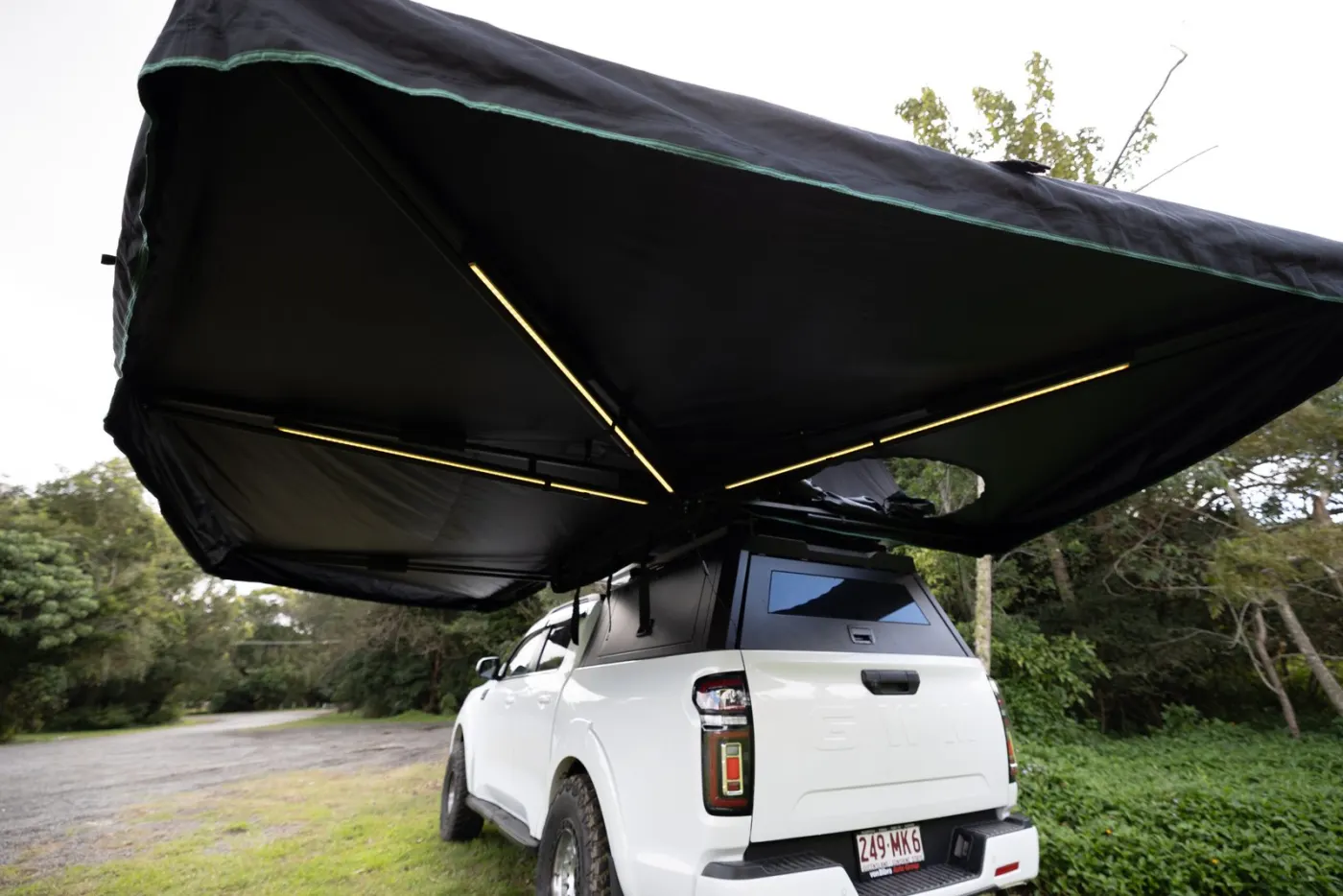
A roof top tent is cheaper to own, lighter, and easier to park and store. A camper trailer gives you more storage and living space, but it needs towing, registration and a place to keep it. Which one is right comes down to how many nights you camp a year, how rough your tracks are, who does the towing, and where it lives between trips.
Both work well. Here's an honest look at where each one wins.
Is a Roof Top Tent or a Camper Trailer Better?
Neither is better for everyone. A roof top tent suits people who camp light, move often and want to keep the vehicle simple. A camper trailer suits people who want a big, kitted-out base camp and don't mind towing it.
The biggest difference is what you are buying. A roof top tent is a bed that sits on your vehicle. A camper trailer is a bed, a kitchen, storage and a second set of wheels that you pull behind it. That extra capability comes with extra things to own, move and look after.
| Question | Roof top tent | Camper trailer |
|---|---|---|
| Cost to own | Lower. One purchase, no registration | Higher. Registration, tyres, bearings, servicing |
| Storage at home | Sits on the car, or on a rack in the garage | Needs a space for the whole trailer |
| Parking and city use | Easy, though you need to watch height | Harder. Longer to park, reverse and turn |
| Living space and kitchen | Bed only. Kitchen and storage go in the vehicle | Often a built-in kitchen and lots of storage |
| Rough tracks | Goes where the vehicle goes | Needs an off road trailer, and it can limit the route |
| Setup time | Quick, and the bed can stay made | Usually longer, though some are quick too |
| Who can tow or drive it | Anyone who can drive the vehicle | Needs a driver confident with a trailer |
If most rows lean one way for you, that's your answer. If they split, read the sections below.
Is a Roof Top Tent Cheaper Than a Camper Trailer?
Yes, for most people it is cheaper to own, and the gap is usually bigger over the years than on the day you buy. We won't put figures here, because prices change. Check each maker's own page for the current price.
The reason is what comes after the purchase. A trailer is a vehicle in its own right. It needs registration, a roadworthy check where your state asks for one, tyres, wheel bearings and brakes looked after, and a spot to park it. A roof top tent has no wheels and no registration. Its running costs are mostly a clean and the odd check of the bolts.
There's a second saving that is easy to miss. A roof top tent needs only the bed. A trailer comes with built-in gear, which is handy, but you pay for it whether you use it or not. If your fridge and stove already fit in the vehicle, a tent gives you just the bed.
Which Is Easier to Park, Store and Drive?
A roof top tent is easier on all three. It adds weight and height to the vehicle, but you drive, park and reverse it much like you do now. A trailer changes how you drive, park and store everything.
With a roof top tent, the main things to watch are height and weight. Check the tent's closed height against low car parks, garages and tree branches. Check the weight against your roof rack and your vehicle's roof load rating, because both have a limit. Our guide to roof rack weight limits for roof top tents explains what to look for. For a hardshell like the RIGDUP Nomad 1.4M, the closed height is 18 cm and the tent weighs 72 kg, so those are the numbers to compare with your own rack and vehicle.
With a trailer, you also have these to plan for:
- A towing limit: your vehicle has a maximum it can tow. Check the vehicle maker's own figure and the trailer's loaded weight before you buy
- Somewhere to keep it: a driveway, side access or a storage yard. Some councils and strata schemes have rules, so check yours
- Reversing: in a tight campsite or a car park, a trailer is harder to reverse than a car
- Fuel and speed: towing uses more fuel and is slower on hills and in wind
If you live in a unit, a townhouse or a street with no room, that storage point alone can decide it.
Which Is Better on Rough Tracks?
A roof top tent goes wherever your vehicle goes, so it suits rough tracks, sand and tight bush camps. A trailer follows behind, so the track, the turns and the creek crossings have to suit the trailer too.
Off road camper trailers are built for rough ground, but a trailer adds a second set of wheels and a hitch to worry about. Soft sand, steep descents, tight turns and deep ruts are all harder with something behind you.
A roof top tent has its own catch. The weight sits high, so the vehicle's handling changes, and you have to watch low branches. On corrugations, bolts and mounts should be checked regularly. These are manageable, and most people find them easier than towing on the same track.
If your trips are mostly sealed roads and formed camp grounds, this matters less. Our roof top tent vs ground tent post covers the other tent choice.
What Do You Give Up With a Roof Top Tent?
Mainly space and built-in storage. A roof top tent is a bed, so the kitchen, the chairs, the water and the gear all need to live in or on the vehicle, or under an awning.
Day to day, that means:
- Less room to cook out of the weather: a freestanding 270 degree awning fixes much of this
- A ladder every night, including night-time toilet trips. Some people don't mind. With young kids or bad knees, it can be a deal breaker
- Careful packing: all the gear lives in the vehicle
- A set number of beds: a bigger family may need a trailer, a second tent or a mix
A trailer, on the other hand, can swallow a family's gear and still have room. If you're a family of four or five who camp for a week at a time, that matters a lot.
What Do You Give Up With a Camper Trailer?
You give up simplicity. You have a second vehicle to register, store, maintain and tow, which means more cost and more to go wrong, in return for more space.
Not every vehicle suits every trailer, so check the maker's own spec for both. A trailer also can't sit on the roof, so it needs a permanent home, and it's harder to nip into town or change plans at the last minute.
Who Is a Roof Top Tent Best For, and Who Needs a Trailer?
A roof top tent suits people who camp light and often. A trailer suits people who camp long and heavy. Match yourself to the lists below.
A roof top tent tends to suit you if:
- You camp a handful of weekends a year, or you go often but travel light
- You have nowhere to keep a trailer
- You want to keep the vehicle easy to park and drive every day
- You go on rough or sandy tracks and don't want something behind you
- You'd rather spend less to own and look after the setup
A camper trailer tends to suit you if:
- You camp for weeks at a time and want a full kitchen and storage built in
- You have the space to keep it and a vehicle rated to tow it
- You are a bigger family who need space for gear and sleeping
- You'd like to leave the trailer set up at a site and use the vehicle for day trips
Some people want a bit of both. Some trailers can also carry a tent. We cover that in our rooftop tent for trailer guide.
How Do You Decide?
Ask yourself four plain questions, and be honest with your answers.
- How many nights a year will you camp? A few weekends points to a tent. Months on the road points to a trailer
- How rough are your tracks? Rougher points to a tent
- Who will tow, and can your vehicle do it? If nobody wants to, or the vehicle can't, a tent wins
- Where will it live? If there's no spare space, a tent wins
If three or four answers point one way, go with it. If the answers split, hire or borrow one for a weekend before you spend any money. A night in each tells you more than any list.
Where Does RIGDUP Fit?
If a roof top tent is where you're heading, the RIGDUP Nomad 1.4M is a clamshell hardshell that sleeps two, is up in about 60 seconds. See the RIGDUP Nomad 1.4M roof top tent.
If you've decided a trailer suits you better, the RIGDUP Off Road Camper Trailer is built to order and is a pre-order.